

Some gemstones are beautiful. Some are meaningful. Rhodonite is both — and it manages to be both in a way that feels genuinely personal. That warm rose pink, streaked with black manganese veining like ink spreading through watercolor paper, is one of the most recognizable and distinctive looks in the entire gemstone world. No other stone looks quite like rhodonite, and no other stone carries quite the same combination of emotional depth and grounded, practical energy.
Rhodonite is known as the stone of compassion, emotional healing, and love in action. Not the dreamy, idealized version of love — but love as a practice. Love as forgiveness. Love as the courage to heal old wounds, release old grudges, and show up fully present in your relationships and in your own life. It is a stone for people who are serious about their emotional growth and who want a beautiful, meaningful companion on that journey.
In this complete guide we cover everything about rhodonite — what it is, how it forms, its physical properties, its deep meaning and symbolism, its healing and metaphysical benefits, how it compares to similar stones, its price range, how to use it, how to sleep with it, how to care for it, and answers to the most common questions. By the end of this guide, you will know rhodonite completely.
What Is Rhodonite?
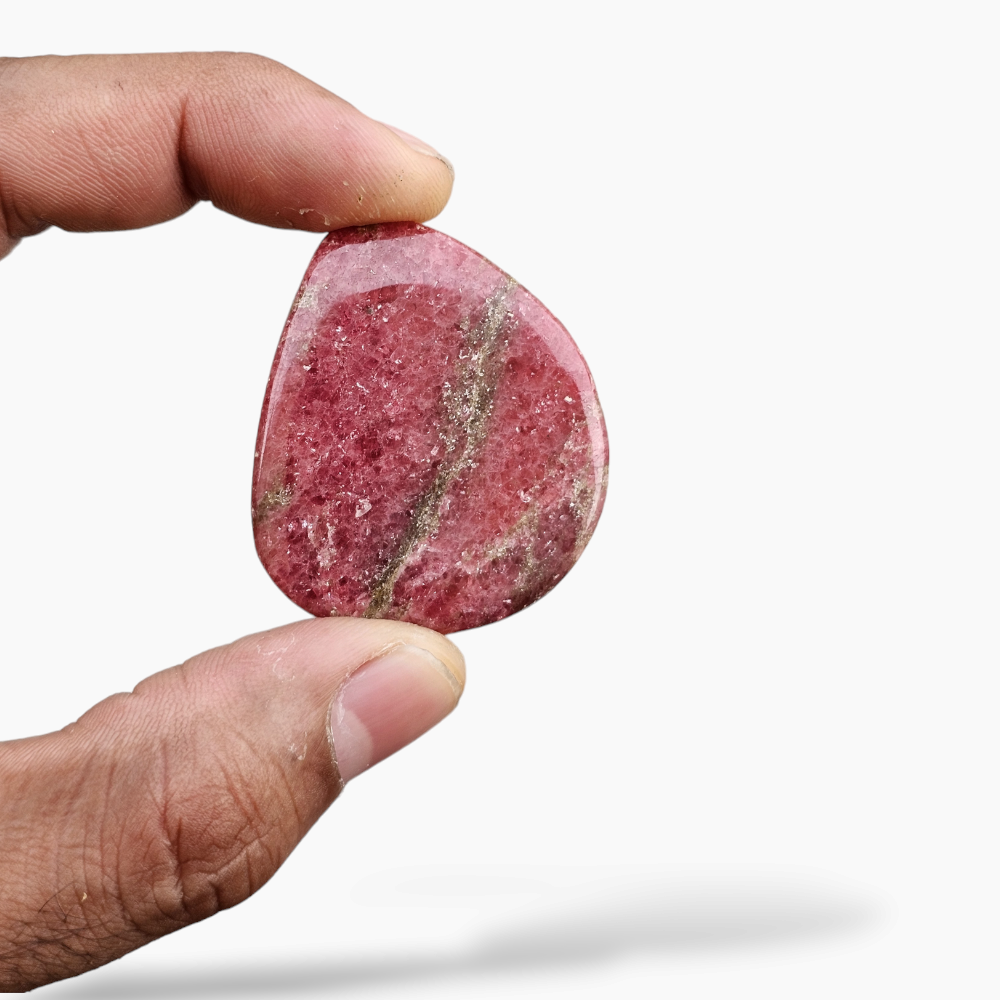
Rhodonite is a manganese inosilicate mineral with the chemical formula (Mn,Fe,Mg,Ca)SiO₃. Its name comes from the Greek word rhodon, meaning rose — a perfect reference to its characteristic rose pink to deep red color. The stone belongs to the pyroxenoid mineral group and is found in metamorphic rocks, often alongside other manganese-bearing minerals.
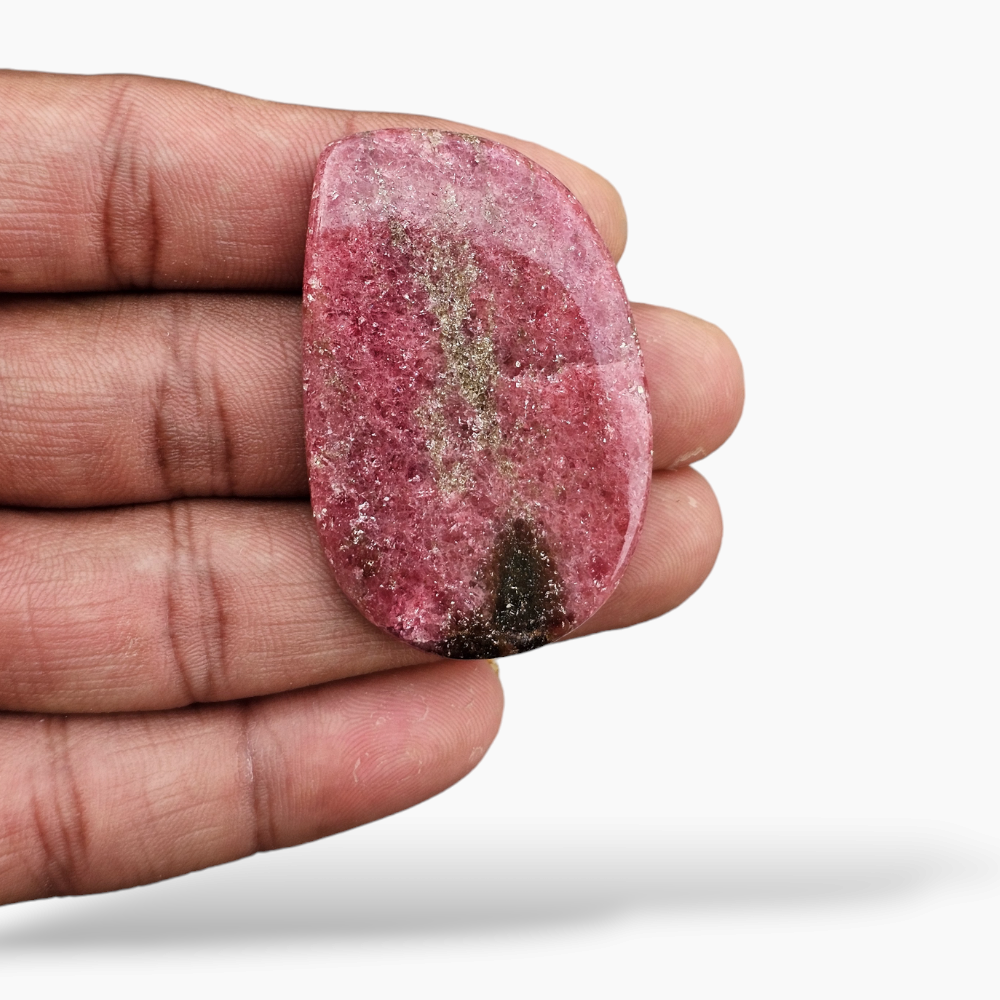
What makes rhodonite visually distinctive is not just its pink color but the dramatic black veining that runs through most specimens. This black material is manganese oxide — essentially a natural oxidation product of the same manganese that gives rhodonite its pink color. As the stone weathers and oxidizes over geological time, manganese oxide forms along crystal boundaries and fractures, creating the striking black pattern that contrasts so beautifully against the pink base.
Rhodonite ranges in color from pale, soft pink to vivid rose, deep red, and brownish red. The most commercially popular specimens display a rich, medium-dark pink with bold, well-defined black veining. Rare specimens exist that are a pure, uninterrupted deep pink or red with minimal black — these are the most prized for faceted gemstone use.
Major sources of rhodonite include Russia (which produced some of the most spectacular historical specimens, used extensively in Russian imperial decorative arts), Australia, Sweden, Tanzania, Peru, Canada, and the United States. The Ural Mountains in Russia historically produced massive rhodonite boulders used to create some of the most extraordinary decorative objects in the world, including vases, columns, and ornamental pieces now housed in the Hermitage Museum in St. Petersburg.
How Rhodonite Forms
Rhodonite forms primarily through regional metamorphism — a geological process in which existing rocks are transformed by intense heat and pressure deep within the earth's crust, causing minerals to recrystallize into new forms without melting completely.
Specifically, rhodonite forms when manganese-rich sedimentary rocks — particularly manganese carbonate deposits — are subjected to metamorphic conditions. The heat and pressure cause chemical reactions between the manganese compounds and silicate minerals in the surrounding rock, producing manganese silicate crystals — rhodonite.
Rhodonite also occurs in hydrothermal veins associated with ore deposits, where hot mineral-rich fluids carrying dissolved manganese and silica precipitate rhodonite crystals as they cool. This type of formation tends to produce better-crystallized specimens with more vivid color.
The black manganese oxide veining forms later, as surface weathering processes cause some of the manganese in the outer portions of the stone to oxidize. This is why rhodonite specimens found closer to the surface of the earth tend to have more pronounced black veining, while deeply buried material may be more uniformly pink.
Physical Properties of Rhodonite
Chemical formula: (Mn,Fe,Mg,Ca)SiO₃ — manganese inosilicate with variable iron, magnesium, and calcium content.
Hardness: 5.5 to 6.5 on the Mohs hardness scale. This is a respectable hardness — harder than rhodochrosite (3.5 to 4) but softer than quartz (7), rubies and sapphires (9), and diamonds (10). It is durable enough for most jewelry applications with reasonable care, though rings should be handled more carefully than pendants or earrings.
Color: Rose pink to deep red, almost always with black manganese oxide veining. Color variations depend on the ratio of manganese to iron, magnesium, and calcium in the crystal structure. Higher pure manganese content produces brighter, more vivid pink. Iron shifts the color toward brownish or dark red tones.
Transparency: Typically opaque to translucent. Rare transparent facet-quality crystals exist but are uncommon and command collector prices.
Luster: Vitreous to pearly on polished surfaces.
Crystal system: Triclinic — forming tabular crystals that are often striated.
Cleavage: Perfect in two directions — meaning sharp impacts can cause it to split along flat planes. Handle with care, particularly in ring settings.
Specific gravity: 3.4 to 3.7 — noticeably dense for its size.
Composition: Beyond manganese, rhodonite typically contains varying amounts of iron, magnesium, calcium, and occasionally zinc and other trace elements. This variable composition is what creates the range of colors and the characteristic black veining.
Rhodonite Meaning: Love, Compassion, and Emotional Courage
If you want to understand what rhodonite means, think about what it actually looks like. A warm, living pink — full of passion and heart energy — cut through by black lines that speak of difficulty, contrast, and the reality that nothing beautiful in life comes without its shadows. Rhodonite does not pretend that love is easy or that emotional healing is painless. It holds both the beauty and the complexity together, honestly and without apology.
This is why rhodonite's meaning centers on compassion in the fullest sense — the ability to hold space for the whole of human experience, including the painful parts, with warmth and love rather than judgment or avoidance. It is associated with the courage to forgive — others and yourself. With the wisdom to learn from past wounds rather than being defined by them. With the mature understanding that love is not just a feeling but a practice, a daily choice, an active expression of care.
In many metaphysical traditions, rhodonite is specifically called the stone of compassion or the rescue stone — because it is believed to help people in emotional crisis find their footing again, reconnect with their own inner strength, and remember who they are beyond the pain they are currently experiencing.
The black veining in rhodonite is sometimes interpreted metaphysically as the integration of shadow — the acceptance and transformation of the darker aspects of experience into something that enriches rather than destroys. Just as the black in rhodonite does not diminish the beauty of the pink but actually enhances it by contrast, our difficult experiences, when processed and integrated, can deepen rather than damage our capacity for love and connection.
Rhodonite Spiritual Meaning
Spiritually, rhodonite is associated with the heart chakra — the energy center governing love, compassion, forgiveness, and emotional connection — as well as the root chakra, which governs grounding, safety, and stability. This dual chakra association is unusual and significant. It means rhodonite bridges the spiritual and the practical — it connects high heart energy to grounded, real-world action.
In spiritual practice, rhodonite is used to cultivate what might be called embodied compassion — love that is not abstract or idealized but expressed concretely in how you treat yourself and others in daily life. It supports the development of genuine self-esteem — not the defensive, performative kind, but the quiet, grounded confidence of someone who knows their own worth and does not need external validation to feel complete.
Rhodonite is also associated with truth — specifically the courage to speak honestly, to express authentic thoughts and feelings clearly, and to maintain integrity even when it would be easier to stay silent. Many practitioners recommend it for people who struggle with communication in relationships or who find it difficult to express their real feelings to the people who matter to them.
In various spiritual traditions, the stone is connected to themes of purpose and service — helping the wearer discover and move toward their true calling, particularly if that calling involves caring for or serving others in some way. Healers, counselors, teachers, parents, and anyone whose life work centers on compassionate service often feel a strong resonance with rhodonite energy.
Rhodonite Healing Benefits and Properties
Rhodonite carries a rich tradition of believed healing properties spanning emotional, physical, and spiritual dimensions. The following reflects traditional crystal healing beliefs — please see the medical disclaimer at the end of this article.
Emotional Balance and Stability
The most celebrated property of rhodonite in crystal healing tradition is its ability to promote deep emotional balance. The stone is said to calm emotional agitation, reduce the intensity of reactive emotions, and help the wearer maintain a centered, grounded perspective even during highly charged situations. For people who tend toward emotional volatility, overwhelming anxiety, or difficulty regulating their responses to stress, rhodonite is considered one of the most supportive and stabilizing stones available.
Healing Emotional Wounds from the Past
Rhodonite has a particularly strong reputation for helping people heal from past emotional trauma — old wounds from childhood, past relationships, loss, and disappointment that continue to affect present-day life. The stone is believed to gently bring these old wounds to conscious awareness where they can be acknowledged, processed, and released, rather than continuing to operate unconsciously and shape behavior in unhealthy ways. This is deeply important work, and many crystal healing practitioners consider rhodonite one of their most valuable tools for supporting clients through emotional healing processes.
Encouraging Forgiveness
One of rhodonite's most specific and powerful properties in metaphysical tradition is its association with forgiveness — one of the most difficult and most liberating emotional acts available to human beings. The stone is said to help dissolve old resentment, bitterness, and grudges, not by suppressing or minimizing what happened, but by creating the emotional spaciousness necessary to genuinely release the hold that past hurts have on the present. This quality makes it particularly valuable for healing damaged relationships, resolving long-standing conflicts, and moving forward from painful history.
Attracting Love and Deepening Relationships
Rhodonite is strongly associated with love in crystal healing tradition — both attracting new love and deepening existing relationships. By healing old emotional wounds, building self-worth, encouraging forgiveness, and promoting genuine emotional openness, the stone naturally creates conditions in which love can flourish more easily. Many people use rhodonite specifically when they are ready to welcome a meaningful relationship into their lives or when they want to bring greater depth, honesty, and compassion to an existing partnership.
Reducing Fear and Building Courage
Rhodonite is believed to be a powerful stone for reducing fear — particularly the fear of vulnerability, the fear of being hurt again after past pain, and the various anxieties that prevent people from living fully and engaging deeply with others. By grounding scattered fear-based energy and replacing it with a sense of inner strength and safety, the stone helps its wearer face challenges and uncertainties with greater courage and equanimity.
Encouraging Goals and Purposeful Action
Beyond its emotional healing properties, rhodonite is associated with practical motivation — helping the wearer clarify their goals, maintain focus on what truly matters, and move forward with purpose and direction even when facing obstacles or uncertainty. It combines heart energy (caring deeply about what you are doing) with grounded practicality (actually doing it), making it a uniquely effective stone for people who want their work and their values to be genuinely aligned.
Promoting Mental Peace and Reducing Stress
The stone's grounding and balancing energy is said to have a significant effect on mental stress and anxiety. By calming emotional reactivity, reducing fear-based thinking, and promoting a more balanced and centered mental state, rhodonite helps create the conditions for genuine mental peace — not the forced, surface-level calm of suppression, but the deep quiet that comes from actually feeling safe and emotionally grounded.
Supporting Hearing and Ear Health
Some crystal healing traditions associate rhodonite with ear health and the auditory system, believing that the stone supports healthy hearing and can be beneficial for people experiencing ear-related issues. This is a traditional belief — please consult a medical professional for any genuine hearing concerns.
Supporting Better Sleep
Rhodonite's calming, grounding, and fear-reducing properties make it a popular choice for people who struggle with sleep. The stone is believed to quiet an overactive mind, reduce the anxiety and fear that often make sleep difficult, and promote a sense of deep safety and relaxation that allows the body to rest fully. Many people place rhodonite under their pillow or on their bedside table specifically for this purpose. Its believed ability to reduce nighttime fears and support deep, restful sleep makes it one of the more commonly recommended stones for sleep support in crystal healing tradition.
Physical Healing Associations
In traditional crystal healing, rhodonite is associated with a range of physical healing benefits including support for the heart and circulatory system, relief from joint pain and inflammation, support for the nervous system during periods of stress, and general immune system strengthening. These are traditional beliefs and should be understood as complementary support alongside proper medical care, not as replacements for it.
Rhodonite in Jewelry: Style and Versatility
Rhodonite is one of the most versatile and wearable gemstones available. Its warm pink color pairs beautifully with a wide range of metals and complements virtually every skin tone. Here is how it works across different jewelry types.
Silver settings are the most classic and popular choice for rhodonite. The cool tone of silver creates a striking contrast with the warm pink of the stone, making the color pop dramatically and giving the piece a sophisticated, contemporary feel.
Rose gold settings create a harmonious, tonal combination where the metal and stone share a similar warm, rosy warmth — producing an elegant, romantic look that is particularly popular in engagement rings and anniversary jewelry.
Yellow gold settings add a warm, rich contrast that makes the pink appear deeper and more vivid — a classic, luxurious look that works beautifully in statement pieces.
Rhodonite is used in rings, pendants, earrings, bracelets, necklaces, and cufflinks. Its bold, distinctive appearance means it works equally well as a statement centerpiece or as an accent stone alongside other gems. It pairs particularly beautifully with clear quartz, rose quartz, and black onyx in multi-stone designs.
Sleeping With Rhodonite: What to Expect
Sleeping with rhodonite is a popular practice in crystal healing tradition, and for good reasons. The stone's believed properties align perfectly with the needs of a good night's sleep — calming an overactive mind, reducing anxiety and fear, promoting emotional security, and encouraging the deep relaxation necessary for truly restorative rest.
Many people who sleep with rhodonite report experiencing more vivid and meaningful dreams, particularly dreams with emotional content that seems to reflect the inner healing work the stone is supporting. Some practitioners believe this is the stone encouraging deeper processing of emotional material during the unconscious hours of sleep.
To sleep with rhodonite, place it under your pillow, on your bedside table within arm's reach, or on a nightstand nearby. Before sleeping, hold it briefly, take a few slow breaths, and set a simple intention — for peaceful sleep, for emotional healing, for freedom from fear, or whatever feels most relevant. Then place it where you have chosen and allow yourself to relax.
If you find the stone's energy too stimulating for sleep — some people find heart-centered stones activate emotions in a way that temporarily makes sleep more difficult — move it further from the bed and experiment with distance until you find what works for you.
Rhodonite Price Guide
Rhodonite is one of the more affordable gemstones available, making it an excellent choice for anyone who wants a beautiful, meaningful stone without a significant investment.
Tumbled stones and small decorative pieces: Small tumbled rhodonite stones typically range from $2 to $15 each depending on size and quality. These are widely available and make excellent starter pieces for anyone new to working with rhodonite.
Cabochon-cut stones for jewelry: Well-cut cabochons with good color and attractive black veining typically range from $5 to $25 per carat. Exceptionally vivid pieces with particularly striking patterns may reach higher prices.
Faceted transparent stones: These are significantly rarer and more expensive — fine faceted rhodonite can range from $20 to $100+ per carat depending on color intensity and clarity.
Carved and decorative objects: Rhodonite spheres, eggs, carvings, and decorative objects range widely from $10 to $200+ depending on size, quality, and craftsmanship.
Collector specimens: Fine crystal specimens, particularly from Russian sources, can reach several hundred to several thousand dollars for museum-quality pieces.
Factors that increase value: Rich, vivid pink or red color, bold and well-defined black veining with attractive patterns, larger size, high polish quality, rarity of transparent specimens, and provenance from noted sources like Russia.
Factors that reduce value: Pale or washed-out color, excessive black that overwhelms the pink, surface cracks or chips, dull polish, and small size.
Rhodonite vs Rhodochrosite: The Complete Comparison
These two stones are frequently confused because of their similar names and pink colors. Here is everything you need to know to tell them apart and understand their different qualities.
Color appearance: Rhodonite is typically a more muted, earthy rose pink with bold black veining. Rhodochrosite tends toward a brighter, more vivid raspberry pink with creamy white banding. The black veining of rhodonite versus the white banding of rhodochrosite is the clearest visual distinction.
Hardness: Rhodonite (5.5 to 6.5 Mohs) is significantly harder and more durable than rhodochrosite (3.5 to 4 Mohs). Rhodonite is considerably better suited for everyday jewelry wear.
Chemical composition: Rhodonite is a manganese silicate. Rhodochrosite is a manganese carbonate. These are fundamentally different mineral types with different physical properties and behaviors.
Price: Both are generally affordable. Rhodochrosite at fine quality — particularly transparent faceted stones — tends to command higher prices than comparable rhodonite.
Metaphysical energy: Rhodonite is grounded, practical, and focused on compassionate action, forgiveness, and emotional courage. Rhodochrosite is softer, more heart-opening, and focused on unconditional love and self-love. Both are heart chakra stones but with different flavors of energy.
How to Cleanse and Care for Rhodonite
Cleansing methods: Rhodonite can be cleansed with brief exposure to running water — its hardness of 5.5 to 6.5 makes it more water-tolerant than softer stones like rhodochrosite. Moonlight cleansing overnight on a windowsill is gentle and effective. Sound cleansing with singing bowls or bells works well. Selenite charging plates are excellent for both cleansing and recharging.
Physical care: Clean rhodonite jewelry with warm soapy water and a soft brush, then rinse and dry thoroughly. Avoid ultrasonic cleaners, steam cleaners, and harsh chemicals. Store separately from harder gemstones that could scratch the surface. Remove rhodonite rings before gardening, gym work, or any activity involving significant impact or abrasion. Avoid extended exposure to strong sunlight which can occasionally cause slight fading in some pink stones over long periods.
Frequently Asked Questions About Rhodonite
Is rhodonite suitable for everyday wear?
Yes, with reasonable care. Its hardness of 5.5 to 6.5 makes it more durable than softer stones like rhodochrosite or malachite. Pendants, earrings, and bracelets are excellent for everyday wear. Rings require more care — choose a protective setting and remove the ring before activities that expose it to impact or abrasion.
What is rhodonite good for spiritually?
Rhodonite is associated with heart chakra activation, emotional healing, compassion, forgiveness, self-love, courage, and purposeful action. It is particularly valued for helping people heal from emotional wounds, release old grudges, reconnect with their sense of purpose, and bring greater love and authenticity to their relationships and daily life.
Can I wear rhodonite in water?
Brief exposure to water is generally fine for rhodonite. Avoid prolonged submersion and salt water, which can damage the surface over time. Remove rhodonite jewelry before swimming, bathing, or water sports.
What zodiac signs is rhodonite associated with?
Rhodonite is most commonly associated with Taurus and Gemini in Western astrology. Its grounding, heart-centered energy resonates with Taurus's need for emotional security and appreciation of beauty, and its communication-enhancing properties align with Gemini's focus on authentic expression and connection.
Can rhodonite help with anxiety?
In crystal healing tradition, yes — rhodonite is considered a supportive stone for anxiety due to its grounding, calming, and fear-reducing properties. However, for clinical anxiety disorders, please consult a qualified mental health professional. Crystal work is a complementary practice, not a medical treatment.
How is rhodonite different from rose quartz?
Rose quartz is a soft, pale pink quartz with a gentle, universally loving energy — often associated with universal love and self-care. Rhodonite has a more complex, emotionally specific energy associated with healing wounds, forgiveness, and compassionate action. Rose quartz is the stone of gentle, unconditional love; rhodonite is the stone of love expressed through emotional courage and deliberate action. They are complementary rather than competing stones.
Does rhodonite need to be activated before use?
In crystal healing tradition, many practitioners recommend cleansing a new stone first to clear energies accumulated during handling and transport, then setting a personal intention — holding the stone, breathing slowly, and mentally dedicating it to your specific purpose. This process, sometimes called programming, is believed to align the stone's energy with your personal intentions.
Is rhodonite good for relationships?
Yes — it is one of the most specifically relationship-focused stones in crystal healing tradition. Its associations with compassion, forgiveness, emotional honesty, and love in action make it valuable for healing relationship wounds, deepening emotional intimacy, improving communication between partners, and creating the conditions for more authentic, fulfilling connections.
Where to Buy Genuine Rhodonite
At Raza Gems, we specialize in genuine natural gemstones sourced with full transparency. Whether you are looking for rhodonite for jewelry, personal healing work, gifting, or collection, we offer a carefully selected range of natural stones across all quality levels and price points. Explore our complete collection of rhodonite stones and our full range of certified natural gemstones.
Final Thoughts
Rhodonite is a stone for people who understand that the most important work in life is often the internal work — the healing, the forgiving, the learning to love more fully and more honestly. Its bold pink and black appearance is not accidental. It is a visual metaphor for everything it represents: warmth and depth together, beauty and complexity inseparable, love made more meaningful by the reality of everything it has had to come through.
Whether you wear it for its stunning appearance, carry it for its emotional support, or place it by your bed for peaceful sleep — rhodonite is a stone that gives generously to anyone who takes the time to work with it. And in a world that can be hard on the heart, that kind of generous, grounded companionship is genuinely valuable.
Medical & General Disclaimer
This article is written for educational, informational, and entertainment purposes only. The information provided about rhodonite and its perceived healing, metaphysical, or energetic properties reflects traditional beliefs, cultural history, and crystal healing tradition — not scientific fact or medical advice. Crystal healing is a complementary practice and is not a substitute for professional medical treatment, psychological support, or any form of licensed healthcare. If you are experiencing any physical, emotional, or psychological health concerns — including heart conditions, anxiety, depression, sleep disorders, hearing problems, or any other medical issue — please consult a qualified medical professional. Do not delay or avoid seeking medical treatment based on anything in this article. Raza Gems makes no medical or therapeutic claims about any gemstone product. Always purchase gemstones from certified, reputable dealers and request independent verification before any significant purchase.