


Let’s explore the Ametrine in a friendly, easy‑to‑understand way—perfect for anyone curious. We’ll cover everything from what it is, where it’s found, to how much it’s worth, its benefits, properties and more.
Ametrine Benefits
Ametrine is loved not just for how it looks but also for what people believe it can do.
-
It’s said to bring balance and harmony, helping to calm mind and body.
-
Because it blends two stones’ energies, it’s thought to boost creativity, focus, and help with stress relief.
-
On a physical‑wellness side, some say it supports the immune system, circulation, and digestion.
-
It is also used to shift negative energy into positive energy and to protect one’s personal space energetically.
So, if you’re thinking of the phrase “ametrine benefits”, these are the main ideas: balance, mental clarity, creative boost, and energetic protection.
What Is Ametrine Stone
Ametrine is a unique and beautiful gemstone that belongs to the quartz family.
-
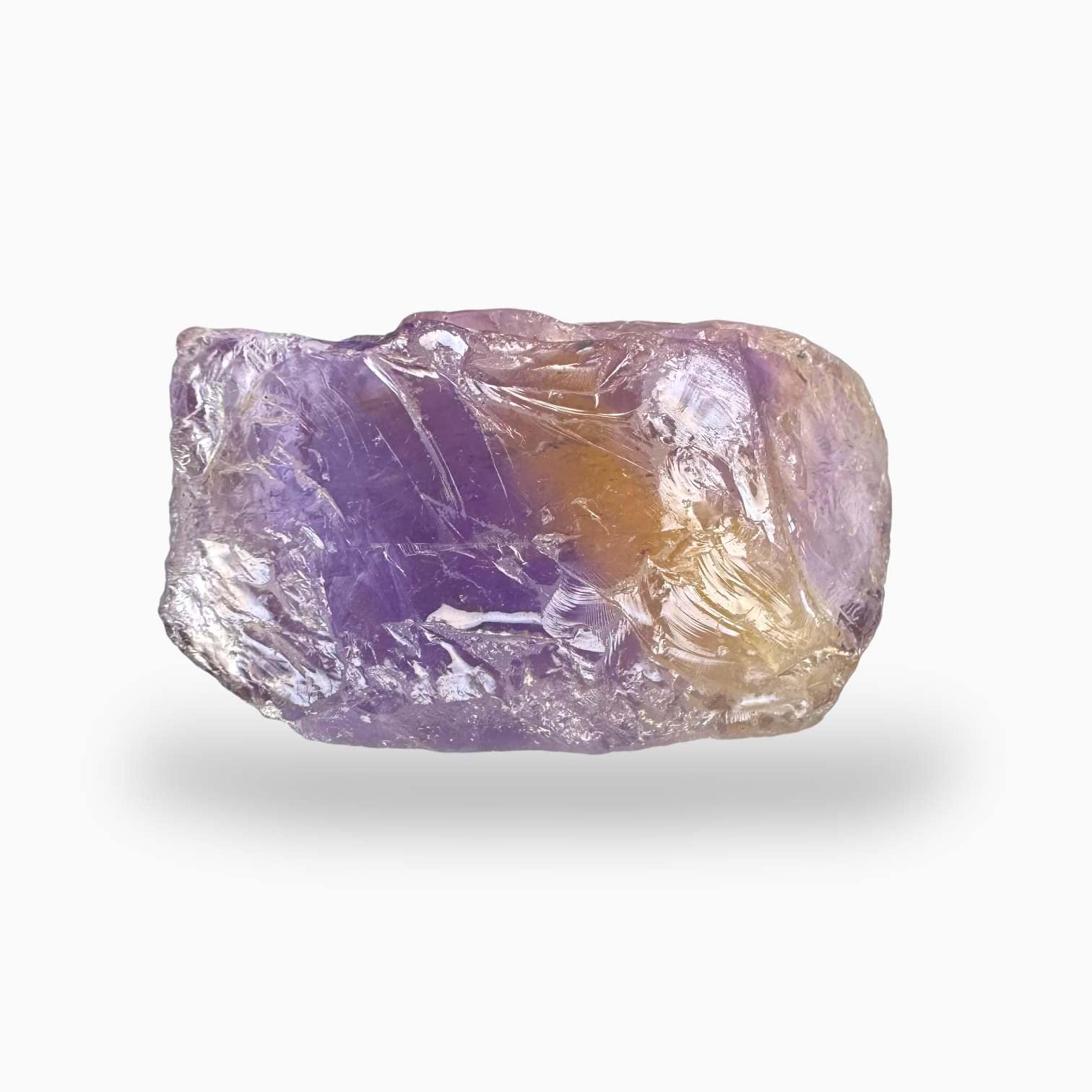
The name “ametrine” is a mix of “amethyst” + “citrine” — because the stone shows both purple (amethyst) and yellow/golden (citrine) colours in one crystal.
-
Chemically, it is silicon dioxide (SiO₂) like other quartz, but its colour zoning (purple + yellow) comes from iron in different oxidation states during formation.
-
Its beauty lies in how it naturally blends two colours into one gem, which is quite rare.
Where Is Ametrine Found
-
The main and most high‑quality source of natural ametrine is the Anahí Mine in Bolivia.
-
There are a few minor occurrences in other countries (such as Brazil, India) but in terms of gem‑quality, Bolivia is the star.
-
Because it’s rare that both amethyst and citrine colours form in the same crystal under exactly the right conditions, its origin is special and limited.
What Color Is Ametrine
-
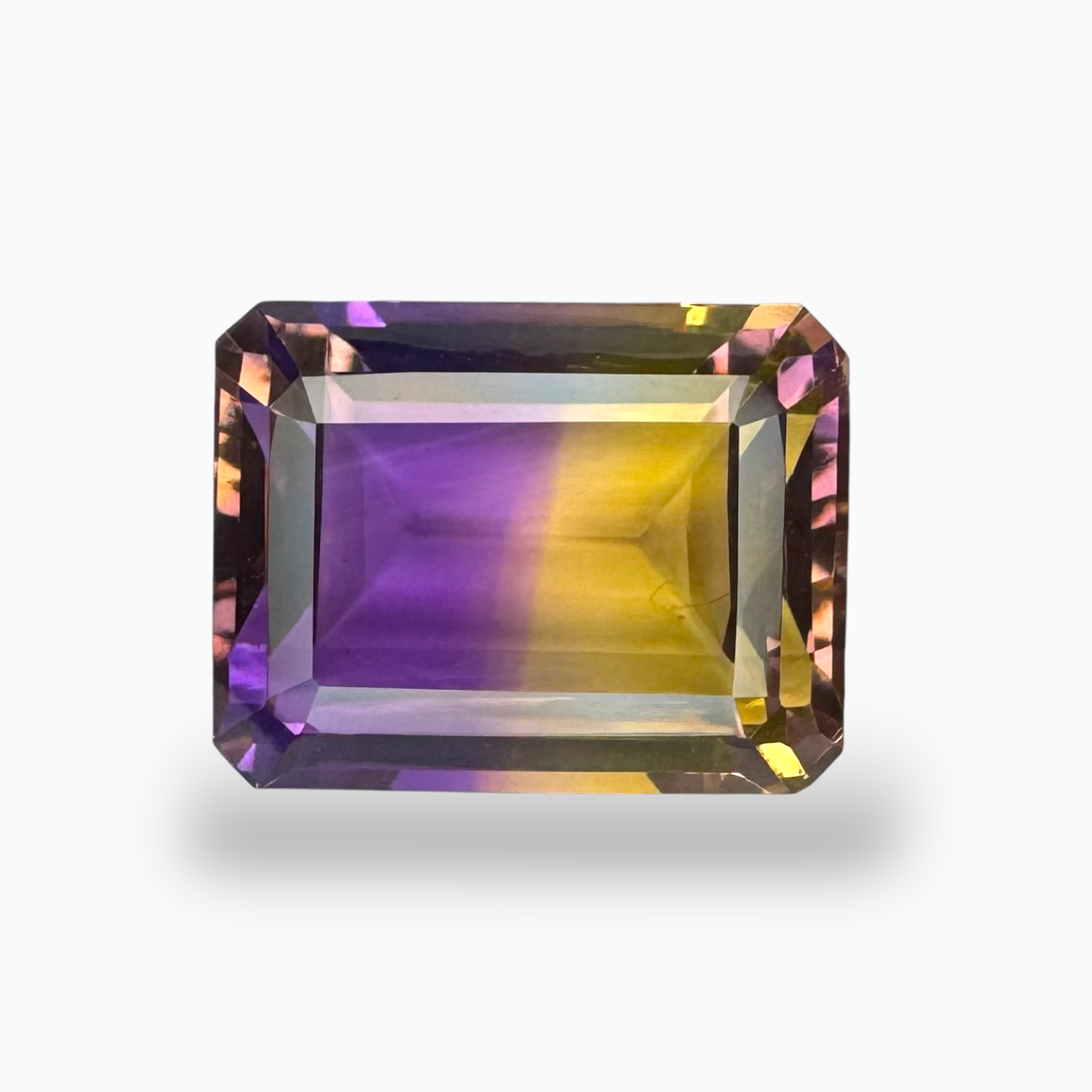
Ametrine’s signature look is purple plus yellow/golden in one gem.
-
Sometimes the colours are sharply divided (one side purple, one side yellow), other times more blended. Natural zoning is part of its charm.
-
Shades can vary: from pale yellow and lavender to deeper purple and strong golden. The stronger the contrast and clarity, the more visually striking the gem.
How Much Is Ametrine Worth
-
The value of ametrine depends on qualities like colour contrast, clarity, size (carat), and origin.
-
While it is rarer than standard quartz, it is generally more affordable than the top‑tier gemstone classics.
-
Gems with crisp, well‑defined purple and yellow zones, good clarity and decent size fetch higher prices. Less contrast, more pale colours = lower price.
Can Ametrine Go in Water
-
Yes — ametrine as a quartz variety is generally safe to have in contact with water (for cleaning, etc).
-
That said, like all gemstones, it’s prudent to avoid harsh chemicals, very hot water, or prolonged soaking because these may affect setting or finish.
-
So if you wear ametrine jewellery, having it exposed to daily water (washing hands, rain) is okay — just treat it with gentle care.
Ametrine Hardness
-
Ametrine has a hardness of 7 on the Mohs scale (same as amethyst and citrine).
-
This means it is fairly hard and suitable for many types of jewellery (rings, pendants) but still you should avoid heavy knocks or abrasive surfaces.
-
Its durability is quite good thanks to the quartz structure; no cleavage (breakage along planes) like some softer or more fragile stones.
Ametrine Stone Meaning
-
Symbolically, ametrine is considered a stone of balance — blending masculine (yellow/citrine) and feminine (purple/amethyst) energies.
-
It’s also thought to represent transformation and growth, helping the wearer move through change with clarity and inner strength.
-
In more spiritual terms, it is said to enhance intuition (because of the amethyst side) and manifestation (because of the citrine side) — making it a “bridge” between idea and action.
Ametrine Birthstone
-
Ametrine is not traditionally listed as one of the official birthstones for a particular month in most modern lists.
-
But because it carries dual energies, some people choose it personally if they feel drawn to it (regardless of birth month).
-
It can also make a meaningful gift for someone born under the zodiac signs of Libra or Pisces, as some sources suggest.
Ametrine Stone Properties
Here are some key properties of ametrine:
-
Chemical formula: SiO₂ (quartz) with iron impurities that cause colour bands.
-
Crystal system: trigonal (like quartz).
-
Hardness: 7 on Mohs scale.
-
Colour zoning: Purple + yellow. The intensity and contrast vary.
-
Clarity and appearance: Natural ametrine tends to have good clarity, though like all stones it may have inclusions.
-
Energetic/spiritual properties: balance, clarity, creativity, stress relief.
-
Care: Clean with mild soap/water; avoid extreme heat or sunlight for long exposure (may fade).
Difference Between Amethyst and Ametrine
Comparing Amethyst stone and ametrine helps clarify what makes ametrine special:
-
Amethyst is a purple variety of quartz alone. Its colour comes from iron and irradiation in the crystal.
-
Ametrine, on the other hand, has both purple (amethyst part) and yellow/golden (citrine‑type) colours in the same crystal. This dual colouring is what sets it apart.
-
In terms of value and rarity, ametrine is rarer because of the special conditions required for both colours to occur simultaneously in one stone.
-
Visually: If you see a stone with two distinct zones of purple and yellow in one gem, that’s a tell‑tale sign of ametrine.
-
In terms of meaning: Amethyst is associated mostly with calm, intuition, and spiritual awareness; citrine (and thus the yellow part of ametrine) with energy, prosperity, and manifestation. Ametrine combines these.