

Chrysoprase is an apple-green gemstone, a variety of chalcedony, and its colour comes from nickel. That fresh green is completely natural, even though many people assume it has been dyed.
In gem traditions, chrysoprase stone benefits centre on joy, good fortune, calm and love, which is why many people call it a "heart stone". Below you will find what it is, where it comes from, its colours, its meaning and how to care for it.
What is chrysoprase stone?
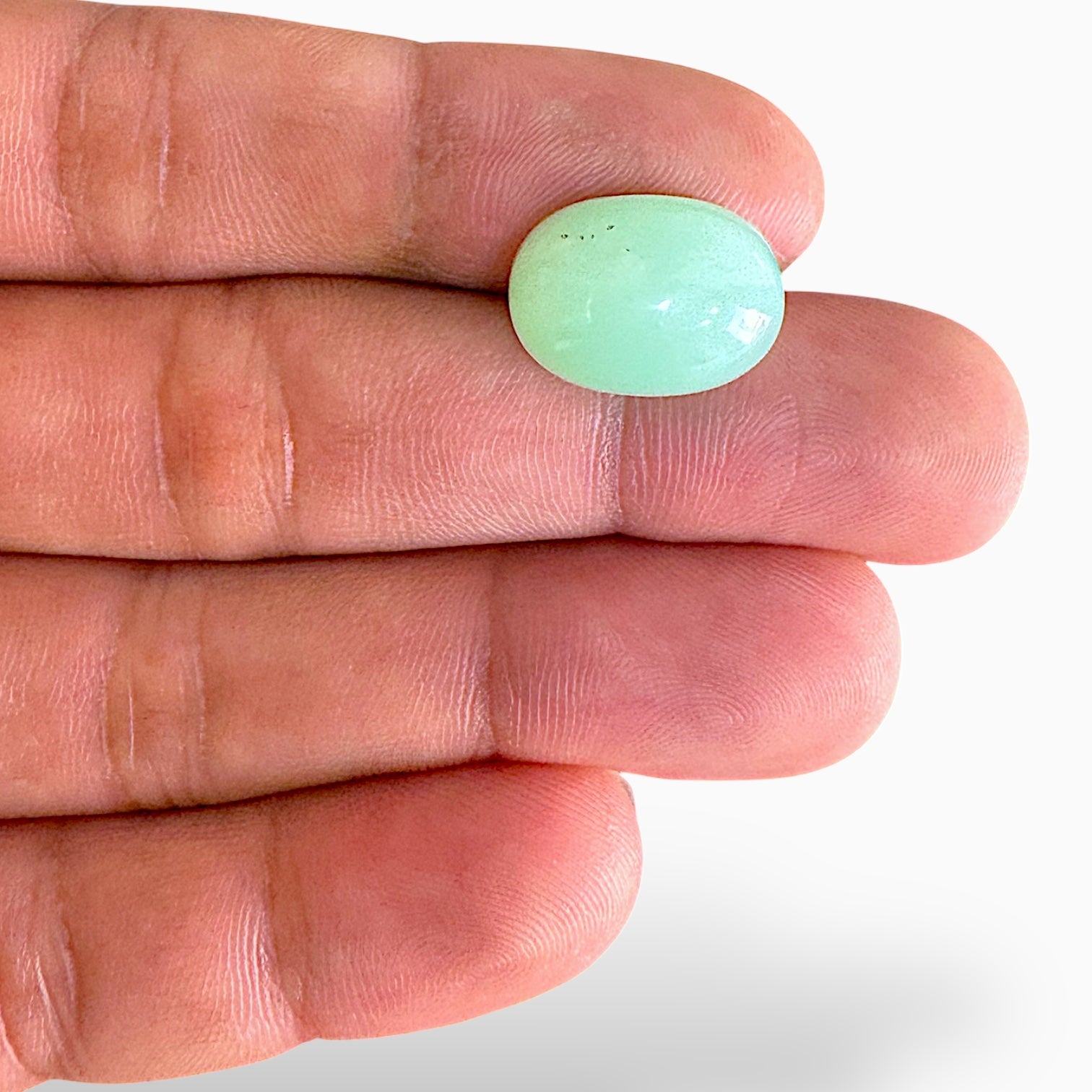
Part of the quartz family. Chrysoprase stone is a natural green variety of chalcedony, which belongs to the larger quartz mineral family.
A golden-green name. The name comes from two Greek words: "chrysos", meaning gold, and "prason", meaning leek. Together they describe a golden-green leek colour, though today chrysoprase is best known for its apple green.
Coloured by nickel. Most green stones get their colour from chromium or iron. Chrysoprase gets it from nickel, a rarer colouring agent, so its green looks unlike any other gem. No two stones look exactly the same.
Tough enough for daily wear. It sits at 6.5 to 7 on the Mohs hardness scale, which makes it a durable, practical stone.
Where does chrysoprase come from?
Chrysoprase is found on several continents, and each source gives a slightly different look.
- Australia: the most important source today. Stones from the Marlborough district in Queensland have the most vivid, saturated apple green, and the best come from here.
- Brazil: a range of greens, from light mint to deeper, richer tones.
- Germany and Poland: historic deposits, especially in Silesia, mined for centuries.
- United States: has deposits, though they matter less commercially today.
- Other sources: Russia, South Africa, India and Tanzania.
How chrysoprase forms in nature
It starts with nickel-rich rock. The process is linked to nickel deposits in a rock called serpentinite. Over long periods, this rock weathers and breaks down.
Silica does the rest. Silica-rich fluids move through the cracks and cavities. As they settle and harden, they carry nickel with them, locking the green colour inside the chalcedony. You can read more about these geological processes at GIA.
Why fine stones are rare. It takes a very specific mix of silica-rich water, nickel-bearing rock, and the right temperature and pressure. That is why high-quality deposits are rare, even though chrysoprase is found in many countries.
Chrysoprase stone colours
Most people picture apple green, but chrysoprase comes in several shades:
- Apple green: the classic colour. Bright, fresh and vivid, it is the most valued and sought after.
- Light mint green: a softer, cooler shade with a delicate look that suits minimalist jewellery.
- Medium bright green: a step deeper than apple green, with more richness.
- Deep forest green: the darkest shade, rarer than the lighter ones and striking in large cabochons.
- Yellow-green: a grassy shade. Some stones also show yellow or white spots, or a cloudy look.
What sets the value. The most valuable stones have an even, vivid apple-green colour and good translucency. Stones that are too pale or too dark are usually less desirable, though personal taste always plays a part.
Chrysoprase stone meaning
The ideas in this section and the next two are traditions and beliefs, shared for interest. They are not proven facts.
A stone of joy. In ancient times, chrysoprase was prized as a stone of joy, good fortune and clear thinking. The Greeks, Romans and Egyptians valued it highly, using it in royal jewellery and carved amulets for luck. Kings and queens wore it and said it brought peace and clear dreams.
A stone of optimism. It carries the feeling of spring: growth, renewal and good things on their way. It is linked with moving on from past difficulties without resentment, and so with fresh starts.
A stone of enterprise. It also stands for practical wisdom: not just dreaming of success, but having the clarity and confidence to work for it. That makes it a popular gift for a new business, a new relationship or a new mindset.
Chrysoprase stone benefits in tradition
These benefits come from a long history of gemstone use across many cultures. They are beliefs rooted in personal experience and old practice, not medical claims.
- Good fortune: worn for centuries as a stone of luck, prosperity and new opportunities.
- Emotional balance: said to bring a calm, grounding energy when feelings run high, so you respond with thought rather than react on impulse.
- Calm and clarity: linked with a quiet mind that makes better decisions. Many people keep it nearby while they work or study.
- Confidence: said to help you speak clearly and stand behind your ideas with real assurance.
- Self-esteem: associated with knowing your own worth and trusting your instincts.
- Everyday joy: linked with calm, grounding and finding joy in small moments, one reason it has stayed popular in crystal circles.
What "healing properties" means here. When crystal lovers talk about chrysoprase healing properties, they mean its traditional link with love, kindness and emotional balance. It is a meaningful keepsake, not a medical remedy.
Chrysoprase for love: why it is called a heart stone
All kinds of love. Chrysoprase is called a love stone, and not only for romance. It is linked with love for family, friends, animals and yourself.
Gentle, not pushy. In crystal traditions, it is seen as a soft stone that offers quiet comfort. People believe it helps the heart:
- let go of old hurt
- feel light and ready to love again
- trust people slowly
- forgive, show kindness and say sorry
- feel strong without becoming angry
Old beliefs. Long ago, people wore chrysoprase for happiness, and as a charm against heartbreak, jealousy and anger.
Chrysoprase and the heart chakra
In chakra traditions, the heart chakra is the energy centre in the middle of the chest, linked with love, trust and caring for others. In these traditions green is the colour of the heart, and crystal practitioners say chrysoprase opens the heart chakra slowly and gently.
Chrysoprase for calm
In crystal traditions, chrysoprase is linked with a calm mind and a feeling of safety. Many people who carry it say they feel more peaceful, joyful and hopeful, like having a quiet green friend in their pocket.
Chrysoprase for personal growth
Growth means learning and changing for the better. Chrysoprase is linked with:
- trying again after a mistake
- becoming kinder
- finding the strength to say yes or no
- following your heart
Who can wear chrysoprase?
Almost everyone. Chrysoprase is seen as a gentle stone for all ages: children, teenagers, adults and older people.
Many ways to keep it close. You can wear it as jewellery, carry it in a pocket, hold it during quiet moments or keep it on your bedside table.
Why chrysoprase is perfect for jewellery
Durable. At 6.5 to 7 on the Mohs scale, it resists everyday scratches well, so it suits rings, bracelets, necklaces and pendants for regular wear.
Cuts that show off the colour. It is most often cut as a cabochon, a smooth dome that shows its colour and translucency. It is also faceted for more sparkle, and carved into beads for necklaces and bracelets.
A soft, waxy shine. Its smooth lustre gives finished pieces a refined, natural feel that works in modern and vintage styles alike.
Silver or gold. Sterling silver brings out its cool green tones, while yellow gold gives a warmer, classic look. The colour flatters both light and dark skin tones.
Natural chrysoprase vs dyed chalcedony
Green chalcedony can be dyed to look like chrysoprase, so some stones on the market are not the real thing.
- Colour spread: natural chrysoprase is coloured by nickel, which gives a slightly uneven, natural-looking spread of colour. Dyed stones often look unnaturally even.
- Lustre: real chrysoprase has a waxy or resin-like shine.
- Fading: dye can fade with cleaning or sunlight. Natural chrysoprase keeps its colour for generations with proper care.
- Price: be careful of prices that seem too low for the quality offered.
- Seller and certificate: buy from a seller who clearly states the stone is natural, and ask for certification for a high-value piece.
How to care for chrysoprase stone
- Clean gently: use warm water, a little mild soap and a soft cloth or brush. Rinse well and pat dry.
- No harsh cleaning: avoid chemical cleaners, ultrasonic cleaners and steam cleaners, which can affect the surface and colour.
- Store it apart: keep it in a soft pouch or its own compartment, away from harder gems like diamonds, rubies and sapphires.
- Limit strong sun: long, direct sunlight can slowly lighten the green, especially in stones with higher water content.
- Take it off first: remove it before swimming, especially in chlorinated pools, and before cleaning, or using perfume and hairspray.
FAQs
What is chrysoprase's birth month?
Chrysoprase is linked with May, alongside emerald. For May birthdays, it is a beautiful and more affordable alternative with its own long history.
What zodiac sign is chrysoprase for?
In gemstone lore it is most strongly linked with Gemini, for its curious, communicative nature. Many people born under Taurus, Libra and Cancer also feel drawn to it for its link with emotional harmony.
Does chrysoprase attract money?
In traditional belief, it is a stone of good fortune said to open the way to financial growth and business success. Believers say it works best alongside clear intention and steady effort.
Is chrysoprase safe for children?
Yes, children can carry a small piece, and many families see it as a symbol of calm and quiet confidence at school. Children should not put it in their mouth, and it should be kept clean.
Can chrysoprase be kept by the bed?
Yes. In crystal traditions it is linked with a calm, peaceful mood, and many people keep it on a bedside table rather than wearing it overnight.
Gemstone traditions are cultural beliefs, not medical advice. See our gemstone and healing disclaimer.