

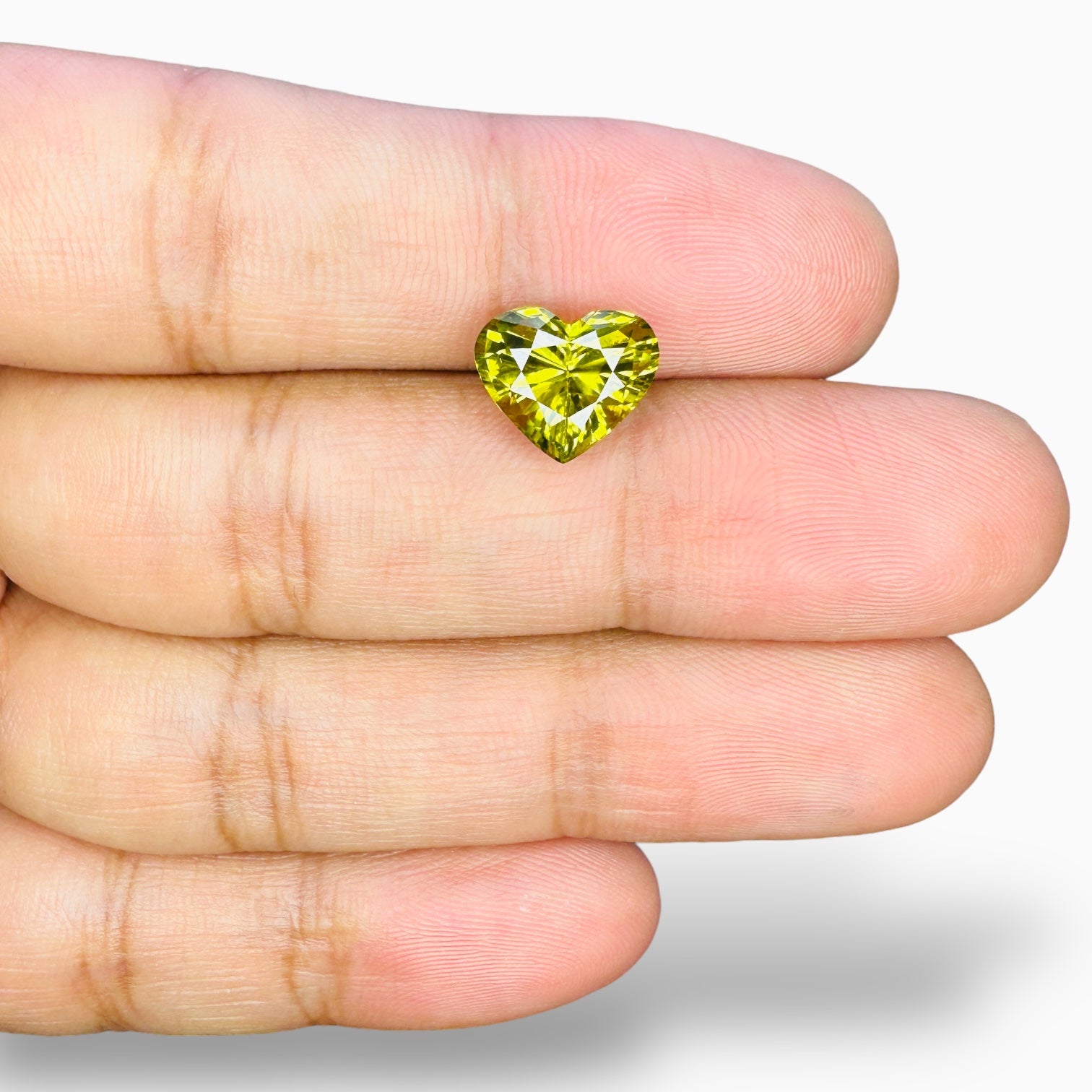
Chrysoberyl is a hard, natural gemstone that glows from honey gold to yellow-green. It scores 8.5 on the Mohs scale, so it is tough enough for everyday jewellery, and it comes in three famous forms: regular chrysoberyl, alexandrite and cat's eye.
In tradition, chrysoberyl gemstone meaning centres on luck, protection, courage and new beginnings. This guide covers what it is, where it comes from, its colours and price, the beliefs around it, and how to wear and care for it. You can see real stones in our chrysoberyl collection.
What is chrysoberyl gemstone?
A hard semi-precious stone. Chrysoberyl is a semi-precious gemstone loved for its warm golden to green colour. At 8.5 on the Mohs scale it is harder than most gems and does not damage easily.
The name means "golden beryl". It comes from the Greek chrysos, meaning gold, and beryllos, meaning beryl — a description of how the stone looks.
But it is not a beryl. Despite the name, chrysoberyl is a different mineral from beryl, the family of emerald and aquamarine. It is made of beryllium, aluminium and oxygen (beryllium aluminium oxide) and forms deep in the earth under great heat and pressure over millions of years.
Where does chrysoberyl come from?
It grows in hard rock. Chrysoberyl forms inside metamorphic and igneous rocks. The movement of the earth's tectonic plates creates the heat and pressure it needs.
The richest deposits are in Brazil, but it is mined in many places:
- Sri Lanka: some of the world's most beautiful, high-clarity chrysoberyl.
- Madagascar: a top source of transparent golden stones.
- Myanmar (Burma): known for rare colour-change chrysoberyl.
- Zimbabwe and Russia: reliable sources of quality stones.
- India and Tanzania: also known sources.
- Pakistan and the United States: smaller but notable deposits.
Rare in big sizes. Large, clean pieces are hard to find. Most stones are mined from open pits, where layers of earth are removed to reach the deposit.
Types of chrysoberyl
Regular chrysoberyl
The standard and most affordable type, from yellow-green to golden brown. Its warm, honey-like glow looks lovely in gold settings.
Alexandrite
The colour-change stone. Alexandrite is the rarest and most famous type of chrysoberyl. It looks green in daylight and turns red or purplish under indoor light, which makes it one of the most valuable gems on earth. See our alexandrite collection.
Cat's eye chrysoberyl
A moving line of light. Some stones show chatoyancy — a bright line that glides across the surface when you move the stone, like the slit of a cat's eye. It is very popular in Asian markets. Browse our cat's eye stones.
Chrysoberyl colours
- Honey gold: the classic, most popular shade.
- Yellow-green: bright and cheerful, good for daytime jewellery.
- Mint green: soft, elegant and modern.
- Brown-gold: earthy, warm and rich.
- Colourless: very rare and collectable.
A warm inner glow. Chrysoberyl is naturally very transparent, so light passing through it creates a glow that is hard to match. That makes it ideal for rings, pendants, earrings, bracelets and necklaces.
Chrysoberyl price
Chrysoberyl comes in a wide price range, so there is something for most budgets.
| Type | Price per carat |
|---|---|
| Standard chrysoberyl | $30 – $200 |
| High-quality standard | $200 – $1,000 |
| Cat's eye chrysoberyl | $500 – $3,000+ |
| Fine alexandrite | $10,000 – $70,000+ |
What affects the price?
- Colour: more vivid, pure colours cost more.
- Clarity: fewer inclusions mean a higher price.
- Carat weight: bigger stones are rarer and cost more.
- Cut: a skilled cut returns more light and adds value.
- Origin: Sri Lankan and Brazilian stones often carry a premium.
Good value for its hardness. Compared with diamonds or sapphires, chrysoberyl gives beauty and durability at a far more reasonable price.
Chrysoberyl meaning and symbolism
The ideas in this section are cultural beliefs and traditions, shared for interest. They are not proven facts.
Greece and Rome. Chrysoberyl was seen as a stone of self-discipline and sharp thinking. Warriors carried it for focus, and scholars kept it close before important work.
Core meanings. Across traditions, chrysoberyl is linked with:
- New beginnings and positive change
- Inner strength and clear feelings
- Protection from negative people and energy
- Hope, optimism and moving forward
- Fair judgement and honest thinking
Chrysoberyl in Vedic astrology
Linked with Ketu. In Vedic astrology, chrysoberyl — especially cat's eye — is the stone of Ketu, a "shadow planet". Some astrologers say wearing it keeps Ketu calm.
When it is suggested. In this tradition it is worn for luck, to remove negative influences, and to find a clear path after hard times — such as blocked money, feeling lost or a lack of growth. If you follow astrology, ask your own astrologer first.
Is chrysoberyl a lucky stone?
Many people believe so. Long ago, kings and warriors wore chrysoberyl, believing it would keep them safe in battle. Today many people still wear it as a lucky stone.
In crystal traditions it is linked with:
- Success: support when life feels slow or stuck.
- Money and abundance: it is a popular choice for people building a business or career.
- New chances: noticing new opportunities and paths forward.
- Fresh starts: a new job, a move to a new city or rebuilding after a tough time.
What science says. Science sees chrysoberyl as beryllium aluminium oxide: strong, beautiful, rare and good for jewellery. It says nothing about luck or energy — those ideas come from belief and tradition.
Chrysoberyl for protection, courage and confidence
A "small shield". In many traditions, chrysoberyl is seen as a protective stone. People believe it blocks bad energy, keeps away jealousy and guards the mind against negative thoughts. That is one reason it is often worn on the hand or around the neck.
A stone of courage. It is also known as a stone of courage and self-trust. Wearers say it reminds them to speak with strength, stand tall and say yes to big dreams.
Calm and kindness. Crystal traditions link chrysoberyl with a calm, clear mind, fair choices, gentle speech, patience and forgiveness. Many students and hard workers keep one close for focus.
The cat's eye belief
Seen as the strongest form. Many people believe cat's eye chrysoberyl is more protective than the regular stone. Traditional beliefs say it warns of danger before it comes, helps you see the truth, keeps evil away and wakes up the "third eye".
Who should wear chrysoberyl?
In tradition, chrysoberyl is often chosen by:
- People who want more success or money
- People going through a run of bad luck
- People starting something new or facing big changes
- Business people and travellers
- Students and workers who want focus
- Anyone born in June, the month chrysoberyl is associated with
How to wear and use chrysoberyl
As jewellery
The most popular way. In crystal traditions, wearing it against the skin is believed to let its energy flow best. Good choices include:
- Rings: always on show and easy to wear.
- Pendants: worn close to the heart.
- Bracelets: comfortable for every day.
- Earrings: subtle and pretty.
- Necklaces: linked in crystal traditions with the throat and communication.
In your home or office
Polished or carved pieces make good decorative items. Many people keep one on a desk, believing it fills the space with focused, positive energy.
During meditation
Some people hold chrysoberyl in the palm, or rest it gently on the forehead, during quiet meditation to help them focus.
How to care for chrysoberyl
- Clean gently: use warm water and a soft cloth, and give it a quick wipe after wearing to remove dust and oils.
- No harsh chemicals: avoid bleach, acetone and strong soap.
- Limit heat: do not leave it in strong, direct heat for long.
- Take it off for pools: remove it before swimming in chlorinated pools or hot tubs.
- Store it alone: keep it apart from diamonds and other hard stones to avoid scratches.
FAQs
Is chrysoberyl an expensive gemstone?
It depends on the type. Standard chrysoberyl starts from around $30 per carat. Rare forms like alexandrite can reach tens of thousands of dollars per carat.
What is the difference between chrysoberyl and alexandrite?
Alexandrite is a rare variety of chrysoberyl that changes colour — green in daylight and red under indoor light. Regular chrysoberyl stays one colour, and alexandrite costs far more.
Is chrysoberyl the same as cat's eye?
Cat's eye chrysoberyl is one type of chrysoberyl. It shows a moving line of light across its surface, which is why it is also called the "cat's eye stone".
What is the birth month for chrysoberyl?
Chrysoberyl is associated with June, so it makes a meaningful gift for anyone born in that month.
Is chrysoberyl a natural gemstone?
Yes. Chrysoberyl is a natural mineral formed in the earth, and it has been valued in jewellery for centuries.
Gemstone traditions are cultural beliefs, not medical advice. See our gemstone and healing disclaimer.