

Natural pearls are formed when a tiny irritant, like a grain of sand, gets inside an oyster or mussel. The animal coats it in layer after layer of a shiny substance called nacre. After about 2 to 5 years, a pearl is born.
That is why pearl stones are so special: they are not mined from the earth or made by machines, but grown by sea and river creatures. Let's go through the process step by step.
What are natural pearls?
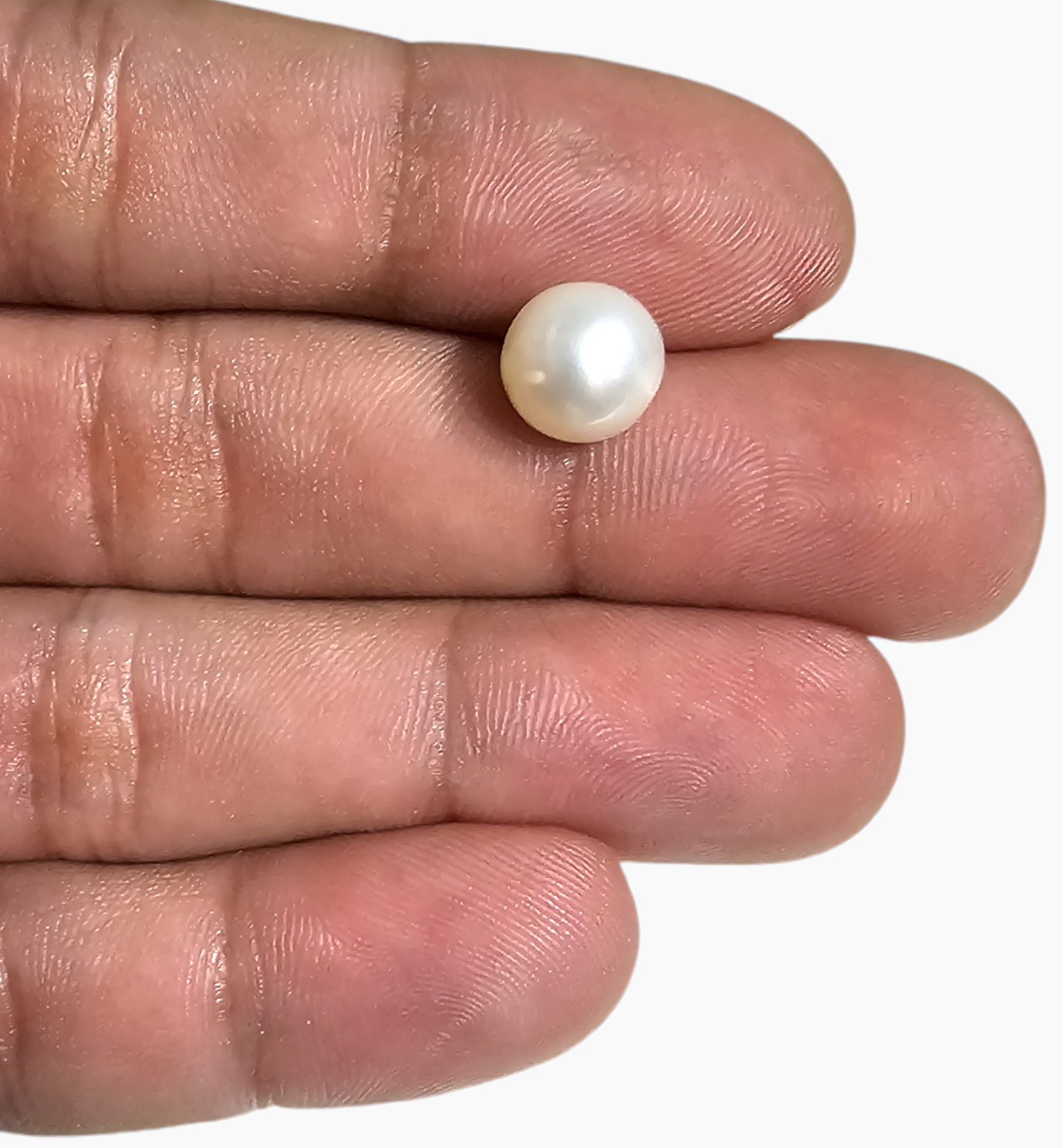
Gems grown inside a shell. Natural pearls form inside the shells of oysters and mussels. These creatures make pearls as a way to protect themselves.
Made only by nature. No machines or human hands help to create a natural pearl. Each one is shaped by the animal and the water it lives in.
How are natural pearls formed? Step by step
1. It starts with a tiny irritant
A small particle gets inside the oyster's shell. It might be a grain of sand, a tiny piece of shell or even a little parasite. This is called an irritant, and it bothers the oyster.
2. The oyster protects itself
Inside its shell, the oyster is soft and delicate. To protect itself, it uses a natural substance called nacre (say it "nay-ker").
3. Nacre covers the irritant
The oyster coats the irritant with nacre to make it less irritating. Nacre is smooth and shiny, and it is what gives pearls their glowing look.
4. Layer after layer
The oyster does not stop at one coat. It keeps adding layer after layer, and each one makes the pearl smoother and shinier.
5. A pearl is born
Once the irritant is fully covered by many layers, a pearl has formed. The more layers there are, the bigger and more beautiful the pearl becomes.
How long does it take to make a pearl?
It usually takes 2 to 5 years for a pearl to form. The time depends on the size of the pearl and the type of oyster.
Is pearl the only gemstone made by living organisms?
Pearls are often called the only gemstone created by living organisms. Most gemstones are mined from rock deep in the earth. Pearls grow inside living creatures in the water.
This is what makes them unique: every natural pearl is the result of an animal's slow, patient work.
Why do pearls have different shapes and colours?
Shape. Not all pearls are perfectly round. Some are oval, teardrop-shaped or irregular. The shape depends on the irritant and how the nacre is layered around it.
Colour. The colour depends on the type of oyster and the water it lives in. Pearls can be:
- White: classic and timeless.
- Pink: soft and delicate.
- Golden: warm and luxurious.
- Black: bold and mysterious.
- Lavender: unique and eye-catching.
- Green: yes, even green pearls exist.
Types of natural pearls
- Saltwater pearls: made by oysters that live in the ocean. Akoya, South Sea and Tahitian pearls are examples.
- Freshwater pearls: made by mussels that live in rivers and lakes. They come in many shapes and colours.
Where do pearls come from?
Pearls are found in oceans, seas and rivers. The oysters that make them live in warm, clean waters. Famous sources include:
- The Persian Gulf: known for high-quality natural pearls.
- The Indian Ocean: another famous home of natural pearls.
- Australia: famous for South Sea pearls.
- Japan: famous for Akoya pearls.
- China: a major source of freshwater pearls.
Why are natural pearls so rare?
Few oysters have one. Out of thousands of oysters, only a few have a pearl inside. Pearls also take a long time to form.
Most pearls today are cultured. Most pearls sold now are farmed, which means people help oysters and mussels grow them. These are called cultured pearls. Natural pearls are still very rare and precious.
The history of pearls
One of the oldest gems. People have loved pearls for over 4,000 years. In ancient times they were symbols of wealth and beauty, and kings and queens wore them to show their power.
Still a favourite. Today, pearls remain one of the most popular choices for jewellery.
Quick pearl facts
- Pearl is the birthstone for June.
- Pearls are made of calcium, the same element found in our bones.