

You are holding a moonstone in your hand. It glows softly in the light — a gentle, floating shimmer that seems to move as you tilt it. It is one of the most beautiful optical effects in the entire gemstone world. But is what you are holding a real moonstone — or a very convincing imitation?
This is one of the most common questions in the gemstone world, and it is an important one. Real moonstone is a natural mineral with genuine beauty, unique optical properties, and centuries of cultural and healing significance. Fake moonstone — made from glass, plastic, or synthetic materials — can look convincing to an untrained eye, but it will never have the same depth, quality, or authentic energy as the real thing.
In this complete guide, you will learn exactly how to tell a real moonstone from a fake one — using simple tests you can do at home, what to look for when buying, what real moonstone looks like in all its colors, and how to make sure you always get what you are paying for.
What Is Moonstone — And Why Is It Special?
Before we talk about spotting fakes, it helps to understand what makes real moonstone so distinctive. Moonstone is a member of the feldspar mineral group — specifically a potassium aluminium silicate called orthoclase. It forms when two feldspar minerals (orthoclase and albite) cool together and separate into thin alternating layers within the stone.
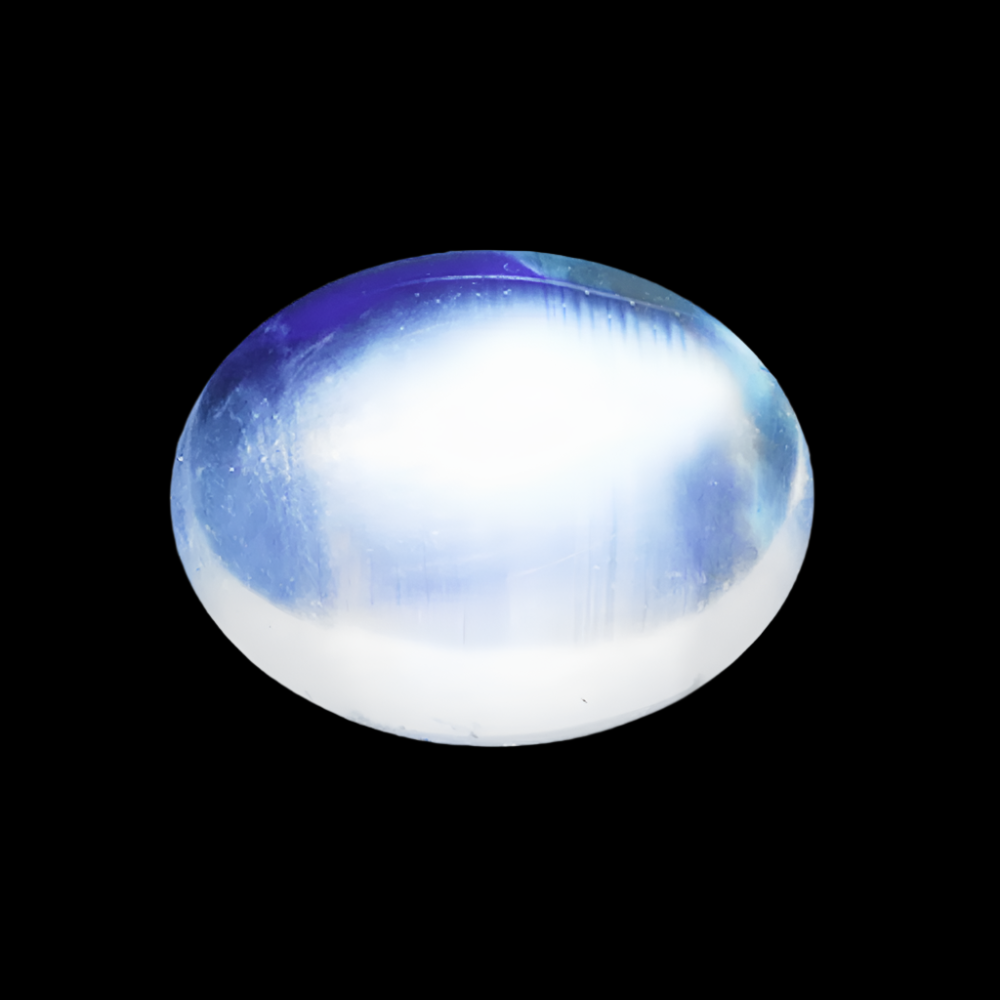
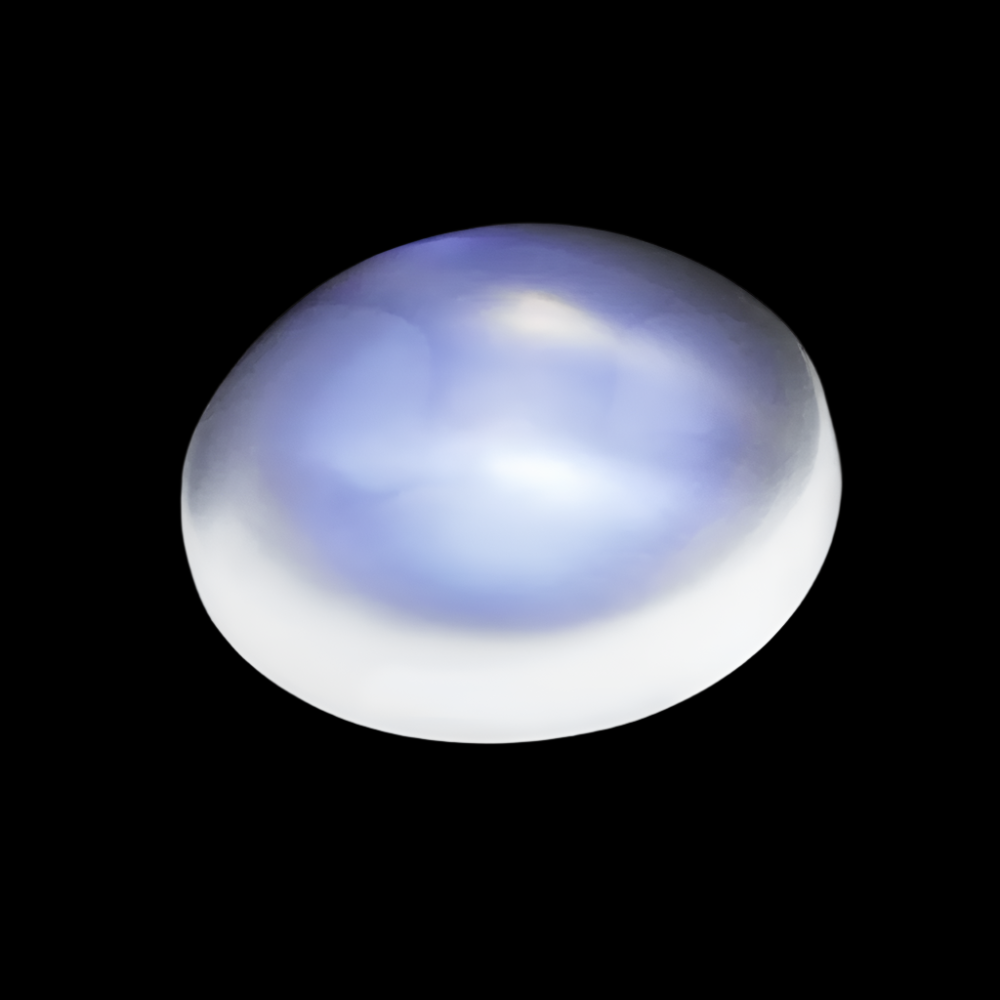
These alternating layers create the phenomenon that makes moonstone unlike any other gemstone in the world — a soft, billowing light effect called adularescence. When light enters the stone, it scatters between the layers and produces a glowing, floating shimmer that appears to move beneath the surface of the stone as you change the viewing angle. It is not a reflection on the surface — it is a glow that comes from within.
This internal glow is what ancient Romans and Greeks believed was actually moonlight trapped inside the stone. It is what gives moonstone its name, its mythology, and its enduring appeal. And it is also — crucially — exactly what is almost impossible for fakes to replicate convincingly.
Moonstone is found naturally in India, Sri Lanka, Myanmar, Madagascar, Australia, and parts of Europe and the United States. The most prized variety — colorless with a vivid blue adularescence — comes primarily from India and Sri Lanka.
Real vs Fake Moonstone — Complete Comparison
Here is a clear, side-by-side comparison of the key differences between real and fake moonstone. This table will help you quickly identify what you are looking at.
|
Feature |
Real Moonstone |
Fake Moonstone |
|
Adularescence |
Soft, floating blue-white glow that moves with light angle |
Bright, uniform glitter — never floats or moves naturally |
|
Color |
Subtle, slightly uneven — no single colour is perfectly uniform |
Overly vivid, perfectly uniform — looks almost painted |
|
Clarity |
Contains natural inclusions, tiny cracks or 'centipede' patterns |
Perfectly clear — no inclusions at all |
|
Temperature |
Stays noticeably cool to the touch even after holding |
Warms up quickly — reaches body temperature almost immediately |
|
Weight |
Heavier than glass or plastic — has a solid, dense feel |
Lighter than expected — plastic fakes feel hollow |
|
Scratch Test |
Hard stone (6–6.5 Mohs) — not scratched by fingernails |
Plastic scratches easily with a fingernail |
|
Price |
Moderately priced — never extremely cheap |
Suspiciously cheap — often under $5 per piece |
|
Surface |
Slight waxy or glassy lustre — not mirror-bright |
Overly shiny or mirror-like — unnatural appearance |
How to Test Moonstone at Home — 7 Simple Methods
You do not need a laboratory to test whether your moonstone is real. Here are seven reliable methods you can use at home, right now, with no special equipment needed.
Test 1: The Adularescence Test — Watch the Glow Move
This is the most important and reliable test of all. Real moonstone has adularescence — the soft, billowing glow that appears to float beneath the surface of the stone. Here is how to test it properly.
✦ Hold the stone under a single light source — a torch or lamp works best
✦ Slowly tilt and rotate the stone while keeping your eye on the light reflection
✦ In a real moonstone, the glow will appear to move smoothly across the stone's interior — like a cloud passing across the moon
✦ The glow will shift and change as you change the angle — it is never static
✦ In a fake, the light reflection sits on the surface and moves mechanically — or it produces a glittery sparkle rather than a soft billowing glow
Real adularescence has a three-dimensional quality — it looks like the light is beneath the surface, not on it. This depth is almost impossible to fake convincingly in mass-produced imitations.
Test 2: The Temperature Test — Real Stone Stays Cool
Natural gemstones are generally poor conductors of heat — they stay cool much longer than glass or plastic when held in the hand. This makes the temperature test a surprisingly reliable quick test for moonstone authenticity.
✦ Hold the stone firmly in your closed fist for 30 seconds
✦ Open your hand and immediately notice the temperature of the stone
✦ A real moonstone will still feel noticeably cool — it takes significantly longer to warm up to body temperature
✦ A glass or plastic fake will feel warm — it heats up quickly when in contact with skin
This test is particularly useful for distinguishing real moonstone from plastic imitations, which warm up almost immediately.
Test 3: The Magnification Test — Look for Natural Inclusions
All real natural gemstones contain imperfections — tiny inclusions, micro-fractures, or internal features created during their formation over millions of years. This is actually one of the strongest signs that a stone is genuinely natural.
✦ Use a jeweller's loupe (10x magnification) or a good magnifying glass — even a smartphone macro camera works
✦ Look carefully into the stone's interior under good lighting
✦ In a real moonstone, you will typically see tiny inclusions, fine fracture patterns, or what gemologists call 'centipede inclusions' — parallel layers that look like tiny centipedes
✦ You may also see subtle colour variations or slight cloudiness in certain areas
✦ A fake — particularly glass or plastic — will look completely flawless inside: no inclusions, no patterns, perfectly uniform
Perfection is actually a red flag in natural gemstones. If a stone looks too perfect under magnification, it is almost certainly not natural.
Test 4: The Scratch Test — Real Moonstone is Hard
Moonstone rates between 6 and 6.5 on the Mohs hardness scale. This means it is harder than most common materials — and significantly harder than plastic.
✦ Attempt to scratch a hidden edge of the stone with your fingernail — fingernails are approximately 2.5 on the Mohs scale
✦ If your fingernail scratches the stone, it is almost certainly plastic — real moonstone cannot be scratched this way
✦ You can also try a copper coin (3 on Mohs) — it should not scratch real moonstone
✦ Note: this test should be done carefully on a non-visible part of the stone to avoid unnecessary damage
Caution: Never scratch the stone's primary surface or any set gemstone. Only test edges or backs that will not be visible in jewelry.
Test 5: The Weight Test — Real Stone Feels Dense
Natural gemstones have a specific gravity that makes them noticeably heavier than glass or plastic of the same size. This is one of the simplest and quickest tests.
✦ Hold the stone in your palm and feel its weight relative to its size
✦ A real moonstone should feel heavier than you might expect for its size — it has a solid, dense feel
✦ Plastic fakes feel noticeably light — almost hollow — compared to natural stone
✦ Glass fakes are closer in weight but still typically lighter than genuine moonstone
If you have access to a jeweller's scale, you can compare the actual weight against the expected weight for the stone's volume — but the hand test alone is quite telling once you have handled a few real stones.
Test 6: The Light Transmission Test — Real Stone Has Depth
Real moonstone is semi-transparent to translucent — light passes through it but is also scattered internally. This creates that characteristic depth that makes the glow appear three-dimensional.
✦ Hold the stone up to a bright light source and look through it
✦ In a real moonstone, the light passes through unevenly — some areas are more translucent, some less, and the glow appears in different depths depending on the angle
✦ In a glass fake, light passes through very uniformly and clearly — it looks almost like looking through window glass
✦ In a plastic fake, the light may not pass through at all, or passes through with a flat, uniform appearance
Test 7: The Price Test — Real Quality Has Real Value
Price is not a perfect indicator, but it is a useful one. Real moonstone of good quality is not free, and it is not extremely cheap.
✦ A genuine moonstone of reasonable quality (1–2 carats, good adularescence) will typically cost between $10 and $80 per stone — depending on color, clarity, and origin
✦ High-quality colorless blue sheen moonstone from Sri Lanka can cost $50 to $200 per carat
✦ If you are being offered moonstone at prices that seem too good to be true — $1 to $3 per stone — the stone is almost certainly not genuine natural moonstone
✦ This is especially true on mass-market websites where hundreds of identical stones are sold at extremely low prices
What Does Real Moonstone Look Like?
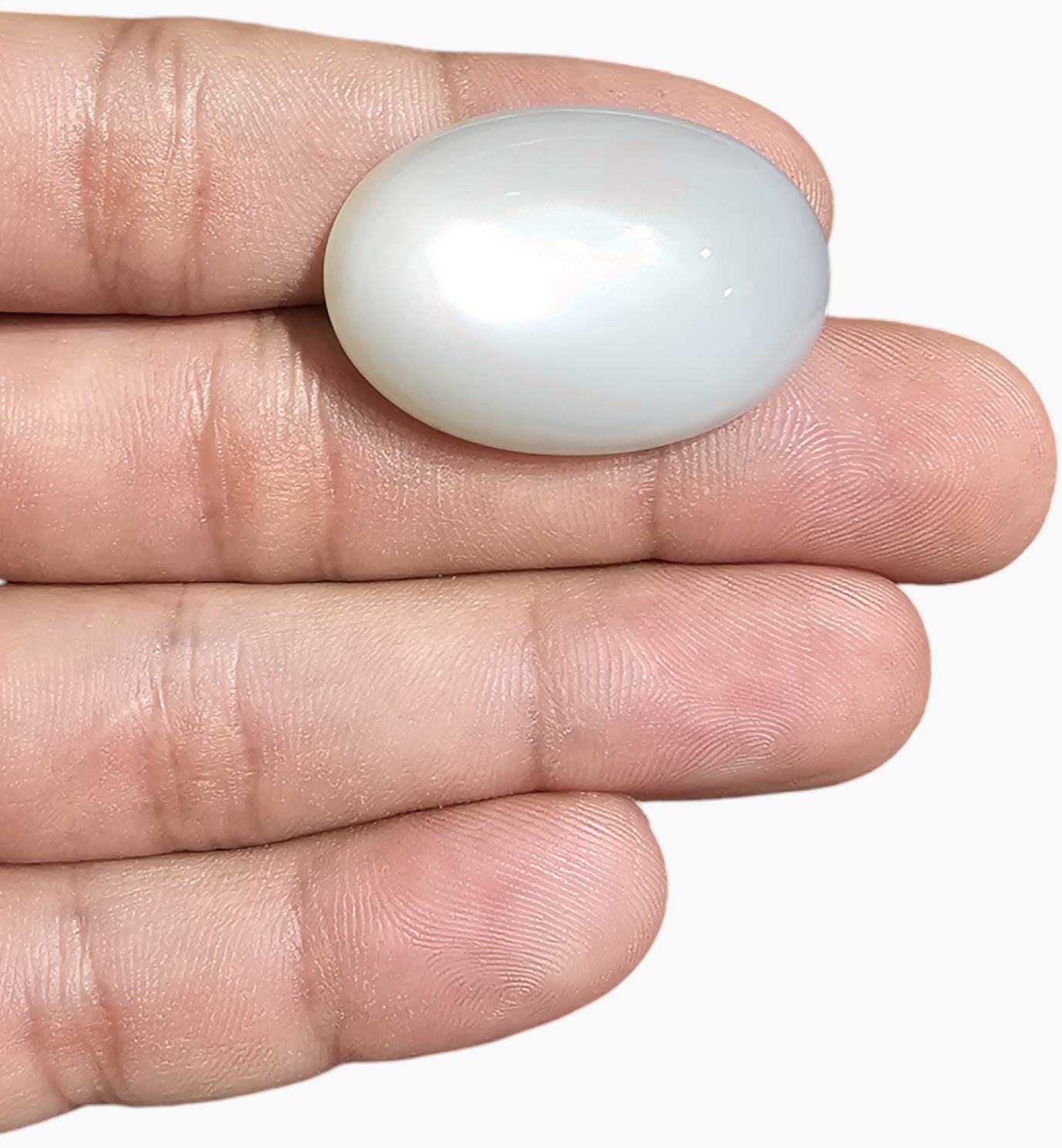
Understanding what real moonstone looks like is just as important as knowing what fake moonstone looks like. Here is exactly what to expect from a genuine stone.
The Adularescence — The Essential Feature
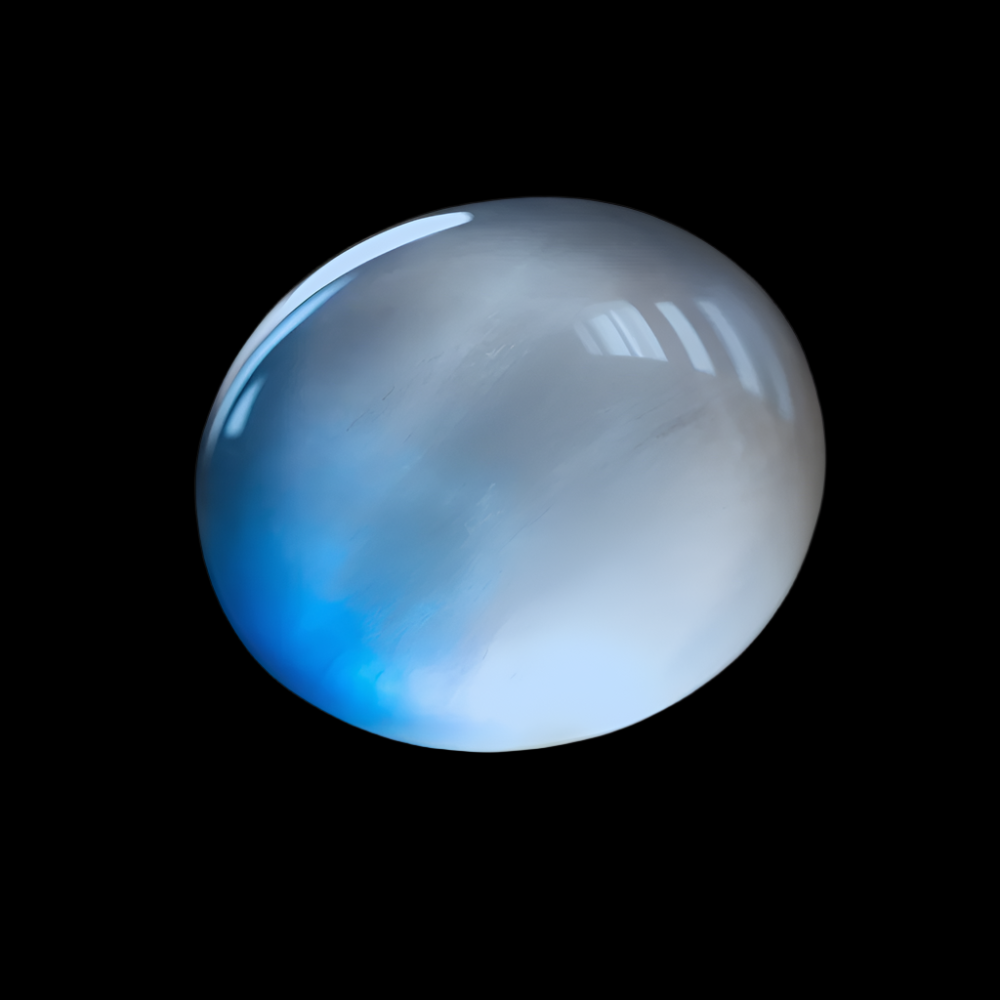
The most important visual feature of real moonstone is its adularescence — the billowing, shifting glow beneath the surface. In the finest quality stones, this glow is vivid blue-white and appears to float in three dimensions within the stone. In lower quality stones, the glow may be white, silver, or less defined — but it is always present to some degree in genuine moonstone.
The key quality of real adularescence is its organic, flowing movement. It does not sparkle or glitter like a disco ball — it moves like clouds or like light on the surface of water. This is the single most distinctive feature that no imitation has successfully replicated in a mass-produced product.
Natural Inclusions — Signs of Authenticity
Real moonstone almost always contains inclusions visible under magnification. The most characteristic is what gemologists call a 'centipede inclusion' — a series of short parallel lines that look like tiny centipede legs. These form from the layered structure of the feldspar minerals within the stone and are considered a positive sign of authenticity.
Other natural inclusions in moonstone include small fractures, tension cracks (called stress fractures), or tiny mineral deposits. None of these significantly affect the beauty of the stone when visible to the naked eye — but they are very reassuring when spotted under magnification.
Color Variations — Natural and Beautiful
Real moonstone rarely has a perfectly uniform color throughout. There are usually slight variations in tone and translucency — some areas slightly cloudier, others more transparent. This unevenness is completely natural and is actually a sign of authenticity.
Moonstone Colors — Complete Guide
Real moonstone comes in a beautiful range of colors — from completely colorless to dark black. Each color variety has its own unique appeal and is used in different types of jewelry. Here is a complete guide.
|
Moonstone Color |
Appearance |
Best Known For |
|
Colorless with Blue Sheen |
Transparent with floating blue glow |
Most valuable — engagement & wedding rings |
|
White / Cream or Milky moonstone |
Soft milky white, gentle glow |
Classic jewelry & everyday wear |
|
Multiple colors shimmer in the light |
Statement jewelry & collectors |
|
|
Peach / Pink |
Warm, romantic soft glow |
Love & relationship jewelry |
|
Grey |
Cool, mysterious shimmer |
Modern & contemporary designs |
|
Green |
Earthy green with silver sheen |
Nature-inspired & holistic wear |
|
Black |
Dark base with silver-blue shimmer |
Protection & grounding jewelry |
|
Brown |
Warm earthy tones with subtle shine |
Vintage & boho style jewelry |
The most valuable and sought-after variety is colorless moonstone with a vivid blue adularescence — particularly stones from Sri Lanka and India where the blue glow is strongest and most defined. Rainbow moonstone — which shows multiple colors in its glow — is the second most popular and is widely used in modern jewelry design.
What Are Fake Moonstones Made Of?
Understanding what fake moonstones are made of helps you understand why they look the way they do — and why they fail certain tests.
Plastic Imitations
The most common and cheapest moonstone fakes are made from plastic — usually opalescent or pearlescent plastic that mimics the milky appearance of real moonstone. These are the easiest to identify: they are very light, warm up quickly in the hand, scratch with a fingernail, and have none of the genuine adularescence of real stone.
Glass Imitations
Glass fakes are more convincing than plastic because glass is denser, harder, and clearer. Some glass imitations even have a partial adularescence-like effect created by adding metallic foil layers during manufacturing. However, the glow in glass fakes sits on the surface and does not have the three-dimensional floating quality of real adularescence. Glass fakes also tend to be perfectly flawless inside — no natural inclusions.
Opalite — The Most Commonly Mislabelled Fake
Opalite is one of the most frequently mislabelled and confused stones in the gemstone market. It is a man-made glass that produces a blue-white glow when held to the light — which superficially resembles real moonstone. Many sellers — both online and in physical stores — knowingly or unknowingly sell opalite as moonstone. Opalite is a beautiful material in its own right, but it is NOT natural moonstone and should never be sold as such.
How to spot opalite: it looks too perfect, has no inclusions whatsoever, its glow is more uniform and less organic than real moonstone, and it is usually very cheap. If you see round, perfectly smooth stones with a milky blue-white glow being sold at very low prices, they are almost certainly opalite.
Synthetic Moonstone
Laboratory-created synthetic moonstone also exists — made from the same minerals as natural moonstone but grown in controlled conditions. High-quality synthetic moonstone can be very difficult to distinguish from natural moonstone without gemological testing. A gemological certificate from a reputable laboratory is the only reliable way to confirm natural vs synthetic origin in these cases.
How to Buy Real Moonstone — Practical Buying Guide
Now that you know what to look for, here is a practical guide to buying genuine moonstone with confidence.
Buy from Certified and Reputable Jewellers
✦ Always purchase from a jeweller who can provide documentation — a gemological certificate or at minimum a written description of the stone
✦ Reputable jewellers will welcome questions about their stone's origin, treatment history, and authenticity
✦ Physical stores allow you to examine the stone in person — always test the adularescence under different lighting conditions before buying
✦ Be cautious with online purchases unless the seller has strong reviews, a clear return policy, and provides detailed photographs
Ask the Right Questions
✦ Is this natural moonstone or synthetic? (Both are real — but you should know which you are buying)
✦ Has the stone been treated? (Some moonstones are treated to enhance their appearance — this is acceptable when disclosed)
✦ Where does this stone come from? (Sri Lanka and India produce the finest quality moonstone)
✦ Can you provide a gemological certificate for this stone?
Price as a Guide
✦ Genuine loose moonstone (1–3 carats, good quality): $15 to $80 per stone
✦ High-quality blue sheen moonstone (per carat): $50 to $150
✦ Rainbow moonstone (per carat): $20 to $80
✦ Moonstone set in silver jewelry: $30 to $200+ depending on design
✦ If a price is dramatically below these ranges — it is almost certainly not real moonstone
Moonstone Benefits & Properties
Real moonstone has been associated with a powerful set of healing and spiritual properties for thousands of years — particularly in South Asian, European, and ancient Roman and Greek traditions.
✦ Associated with the energy of the moon — believed to bring emotional balance, intuition, and calm
✦ Said to enhance communication skills and help people express themselves more clearly
✦ Believed to bring good fortune, particularly in new beginnings — new jobs, new relationships, new chapters of life
✦ Associated with peaceful, restful sleep and protection from nightmares when worn or placed nearby at night
✦ Said to support women's health and hormonal balance in traditional holistic practice
✦ Believed to help people connect with their intuition and inner wisdom
✦ Associated with travel protection — particularly travel over water
These benefits are based on traditional beliefs, cultural practices, and crystal healing folklore. They are not scientifically proven medical facts. Please consult a qualified healthcare professional for any health concerns. See full disclaimer at the end of this article.
Moonstone Care and Maintenance
Real moonstone requires a little extra care compared to harder gemstones. Here is how to keep it beautiful.
✦ Clean gently with warm soapy water and a very soft cloth — avoid harsh chemicals or ultrasonic cleaners
✦ Moonstone rates 6 to 6.5 on the Mohs scale — it can scratch if rubbed against harder stones in storage
✦ Store separately in a soft pouch to prevent surface damage
✦ Avoid exposing moonstone to extreme temperature changes — the internal layered structure can be damaged
✦ Remove moonstone jewelry before swimming, heavy exercise, or using cleaning products
✦ Moonstone can be worn in water for short periods without harm — but prolonged exposure is not recommended
✦ To cleanse the stone's energy, many people leave moonstone under the light of a full moon overnight — a beautiful and completely safe practice
Frequently Asked Questions
Q: Is moonstone an expensive gemstone?
A: Moonstone is not considered an expensive gemstone compared to precious stones like diamond, ruby, or sapphire. Good quality moonstone is moderately priced and widely accessible. Price depends on color (blue sheen varieties are most valuable), clarity, size, and origin.
Q: Does moonstone crack easily?
A: Moonstone is a relatively soft stone (6–6.5 on Mohs) and can crack or chip if struck against hard surfaces or subjected to sudden temperature changes. It should be worn with awareness and stored carefully. It is not as fragile as its softness suggests — but it does require more care than harder gemstones.
Q: Is it safe to wear moonstone every day?
A: Yes, moonstone can be worn daily — but with care. Avoid exposing it to harsh chemicals, rough physical activities, or environments where it might be struck against hard surfaces. Rings need more care than pendants or earrings because they are more exposed to accidental impact.
Q: Does moonstone bring luck?
A: In traditional belief systems, moonstone is strongly associated with good fortune, new beginnings, and improved intuition. It is also believed to enhance communication skills and bring emotional balance. These are traditional beliefs and not scientific claims.
Q: Can moonstone go in water?
A: Brief exposure to water — like washing hands — will not harm moonstone. Prolonged soaking in water, saltwater, or chlorinated pools is not recommended as it can affect the stone's surface over time.
Q: Can I wear moonstone to sleep?
A: Moonstone is traditionally associated with peaceful dreams and protection from dream-related fear. Many people wear or place moonstone near their bed for this purpose. There are no known harmful effects of wearing moonstone while sleeping.
Final Thoughts
Knowing the difference between real and fake moonstone is not as difficult as it might seem — once you know what to look for. The adularescence test alone will catch most fakes. Combined with the temperature test, magnification check, and a price reality-check, you will be able to identify genuine moonstone with confidence in almost any buying situation.
Real moonstone is a genuinely special gemstone. Its floating, billowing glow is one of nature's most beautiful optical phenomena — and there is still no man-made material that fully replicates the organic depth and movement of genuine adularescence. When you hold a real moonstone in the right light and watch the glow move, you will understand why this stone has been treasured by humans for thousands of years.
Buy from trusted sources, ask questions, use the tests in this guide — and enjoy one of the most uniquely beautiful gemstones the natural world has to offer.
⚠️ DISCLAIMER
The healing properties, astrological benefits, and wellness claims mentioned in this article are based on traditional beliefs, cultural practices, and gemstone folklore. They are not scientifically proven medical facts and should not be used as a substitute for professional medical advice, diagnosis, or treatment. Always consult a qualified healthcare professional for any health concerns. Price ranges are approximate market estimates and may vary by seller, quality, treatment, and origin. Home testing methods described in this article are for general guidance only — for definitive gemstone authentication, always consult a certified gemologist or gemological laboratory.