

Amber is linked with warmth, calm, joy and protection. These are the natural amber stone benefits people have talked about for thousands of years. They come from tradition and folklore, not science, and amber is not a medicine.
What amber really is: fossilised tree resin. It began as sticky resin on ancient trees and hardened over millions of years into a light, golden gem. Some pieces still hold insects, plants or air bubbles from that time.
This guide covers amber's meaning, beliefs, colours, price, who can wear it, how to spot fakes and how to care for it. You can see real stones in our natural amber collection.
Natural amber stone: quick facts
| Property | Detail |
|---|---|
| Type | Organic gemstone — fossilised tree resin |
| Age | 10 to 320 million years |
| Hardness | 2 to 2.5 on the Mohs scale — handle with care |
| Colours | Yellow, golden, orange, red, brown, white, green, blue (rare) |
| Main sources | Baltic Sea region — Latvia, Lithuania, Poland, Russia, Germany |
| Best known for | Warm golden colour and fossil inclusions |
What is natural amber stone?
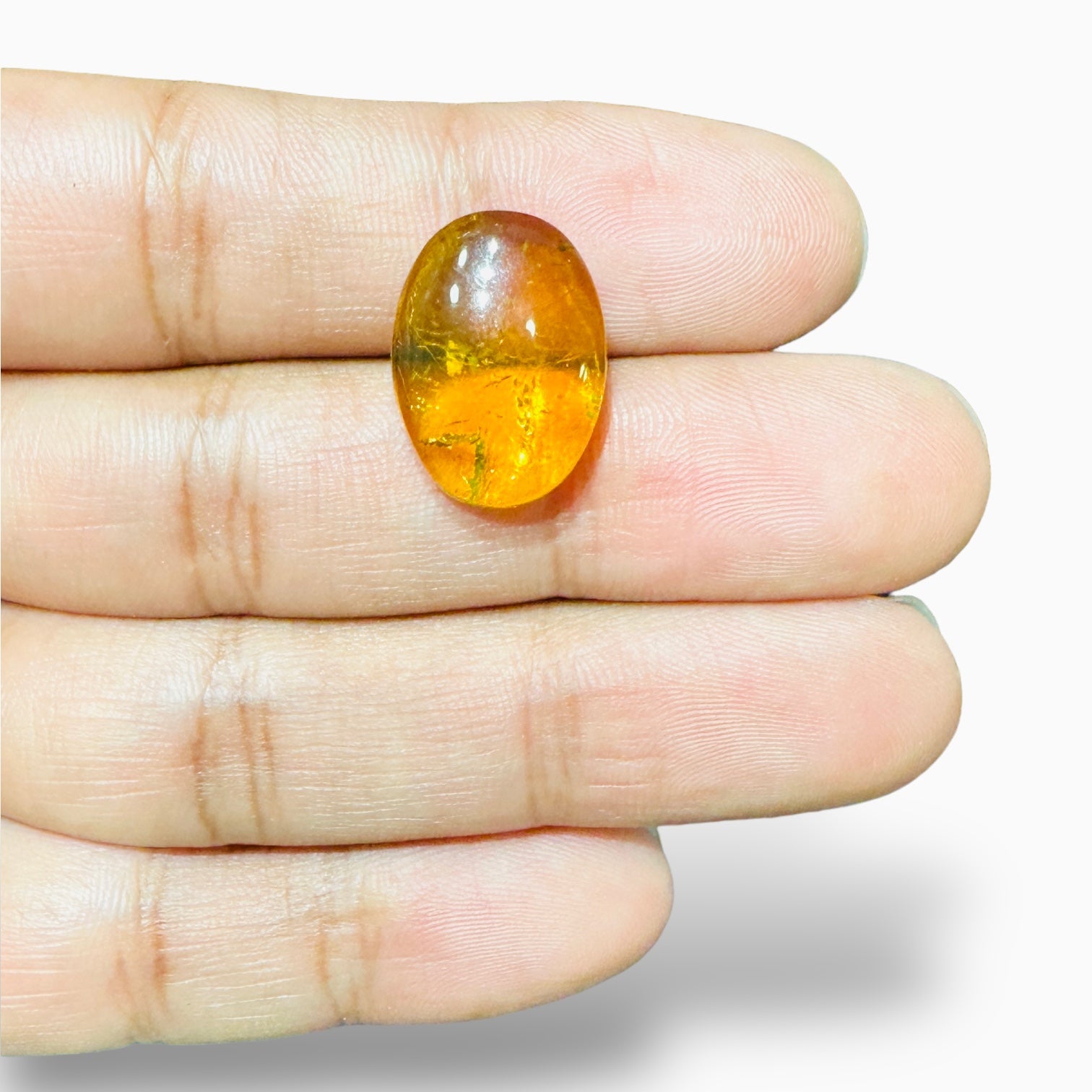
An organic gemstone. Amber is not a mineral in the technical sense. Like pearl and coral, it comes from living things rather than from rock, so it is classed as an organic gemstone.
It came from ancient trees. Pine, spruce and fir trees grew in warm, humid forests millions of years ago. When insects, wind, fire or disease damaged them, they made thick resin to seal the wound.
A window into the past. The resin trapped whatever it touched — insects, plant bits, air bubbles, even small animals. That is why some amber holds a perfectly kept piece of the ancient world.
How amber forms, step by step
- A tree, usually a conifer, is damaged by insects, storms or disease.
- It makes resin — thick, sticky and fragrant — to seal the wound.
- The resin flows down the bark, trapping insects, plants and air bubbles.
- Over hundreds of thousands of years, the lighter oils evaporate and the resin hardens into copal, the stage between fresh resin and amber.
- Over millions of years, burial, pressure, heat and chemical change turn copal into true amber, which is stable and no longer breaks down.
- Erosion, rivers or rising land bring it back to the surface, where it is mined or washed ashore.
At least 10 million years. True amber is at least 10 million years old. Baltic amber is about 44 million years old, and the oldest known amber is more than 300 million years old.
Where natural amber comes from
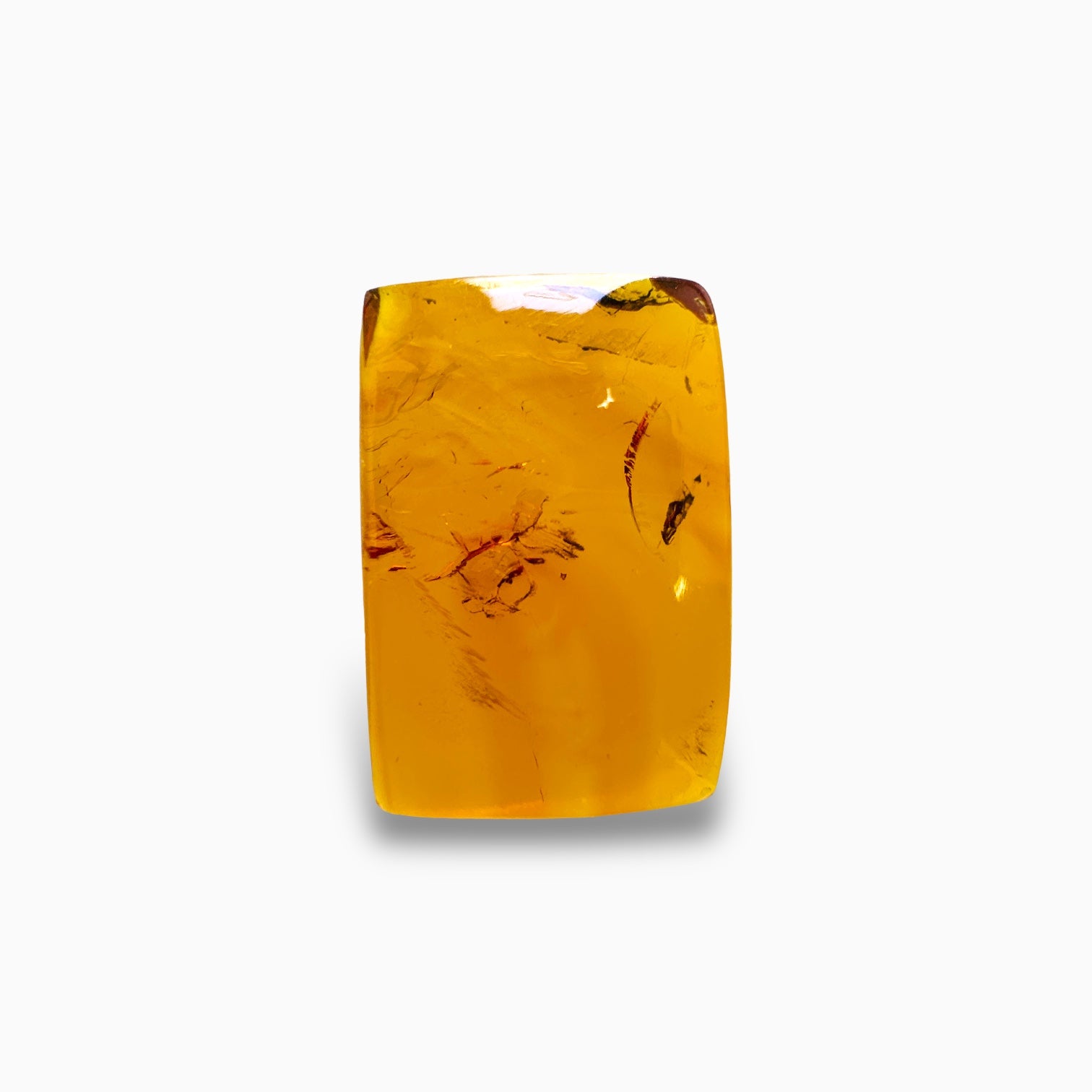
Where amber comes from shapes its colour, character and value.
Baltic amber — the richest source
Most of the world's amber. The Baltic coast — Latvia, Lithuania, Poland, Russia (Kaliningrad), Germany, Denmark and southern Sweden — produces more amber than anywhere else. It is the benchmark for quality and the source of most amber on the market.
"Sea gold". The Samland Peninsula in Kaliningrad holds one of the densest amber deposits in the world. Storms often wash amber onto Baltic beaches, which earned it the folk name "sea gold".
Dominican Republic — rare blue amber
Dominican amber is about 15 to 40 million years old. Its rarest form, blue amber, glows blue under certain light, especially UV. It is prized by collectors and often holds fine insect inclusions.
Myanmar — ancient Burmite
Burmite from Myanmar is about 99 million years old, from the Cretaceous period. It has given some remarkable fossil finds, including feathered dinosaur tail segments. It is mainly of interest to scientists and collectors.
Other sources
Amber is also found in Mexico, Canada, Romania, Ukraine and parts of Africa. Each source gives slightly different colours, ages and inclusions.
Natural amber stone meaning
The meanings and beliefs in this guide are cultural traditions, shared for interest. They are not proven facts.
- Cleansing and renewal: just as the tree used resin to seal its wounds, amber is said to clear away stale, negative energy and bring in fresh, warm vitality.
- Ancient wisdom: Baltic amber existed 44 million years ago, long before humans. Many people wear it as a link to the slow, patient strength of the natural world.
- Sun and warmth: its golden glow made amber a sun symbol in many cultures. In many traditions it is worn to invite the sun's positive energy into daily life.
- Protection and sacred use: ancient Greek priests burned amber as incense, Roman soldiers wore amber amulets in battle, and Baltic peoples saw it as a sacred gift from the sea.
Natural amber stone benefits and traditional beliefs
In crystal traditions, amber is a warm, sunny stone that people like to keep close. These are the beliefs people ask about most.
Amber and calm
Amber's warm, golden colour is widely linked with calm and peace of mind. It is said to bring a busy mind back to quiet focus and to give a feeling of warmth and security.
The succinic acid belief. Baltic amber contains a natural compound called succinic acid. In folk traditions, people believed this acid gave amber its calming character.
Amber and bedtime traditions
Some adults like to keep amber close in the evening because its warm colour feels safe and cosy to them. A common habit is placing a small stone under the pillow.
Amber and energy
Amber is seen as a sunny, lively stone full of warm energy. Some people put it on in the morning as they get ready, as a small daily reminder to start the day brightly.
Joy and positivity
- Linked with simple, warm happiness — the feeling of being safe, loved and alive.
- Said to bring clarity to people who feel confused, lost or overwhelmed by life.
- Believed to help end a run of bad luck by clearing negative energy.
- Thought to bring a sense of flow and harmony to daily life.
- Linked with gratitude for the small, good things.
Protection and good luck
Some people believe amber works like a shield, keeping away bad energy and bringing good luck.
Does amber really work? The honest truth
Amber is not a medicine. Everything above is tradition. Some doctors and scientists say more studies are needed, and they are not sure amber works the way people say.
Why people still love it. In folk tradition, body warmth is said to bring out amber's natural energy. What is certain is that amber feels warm and light on the skin, and many people wear it every day for its beauty and long history.
If you are in pain or feel unwell, always ask a doctor. Do not use amber in place of medical care.
Is amber safe? Never for babies
Safe for adults as jewellery. Amber is safe for grown-ups to wear. Just don't wear it too tight.
Important safety warning: in some cultures, parents once put amber teething necklaces on babies. Health authorities, including the US FDA, warn parents not to use amber teething necklaces, bracelets or anklets on babies or young children. They can cause choking or strangulation, and there is no proof they ease teething pain.
Raza Gems does not recommend amber jewellery for babies or young children. Ask your doctor about safe ways to soothe teething.
Amber stone colours
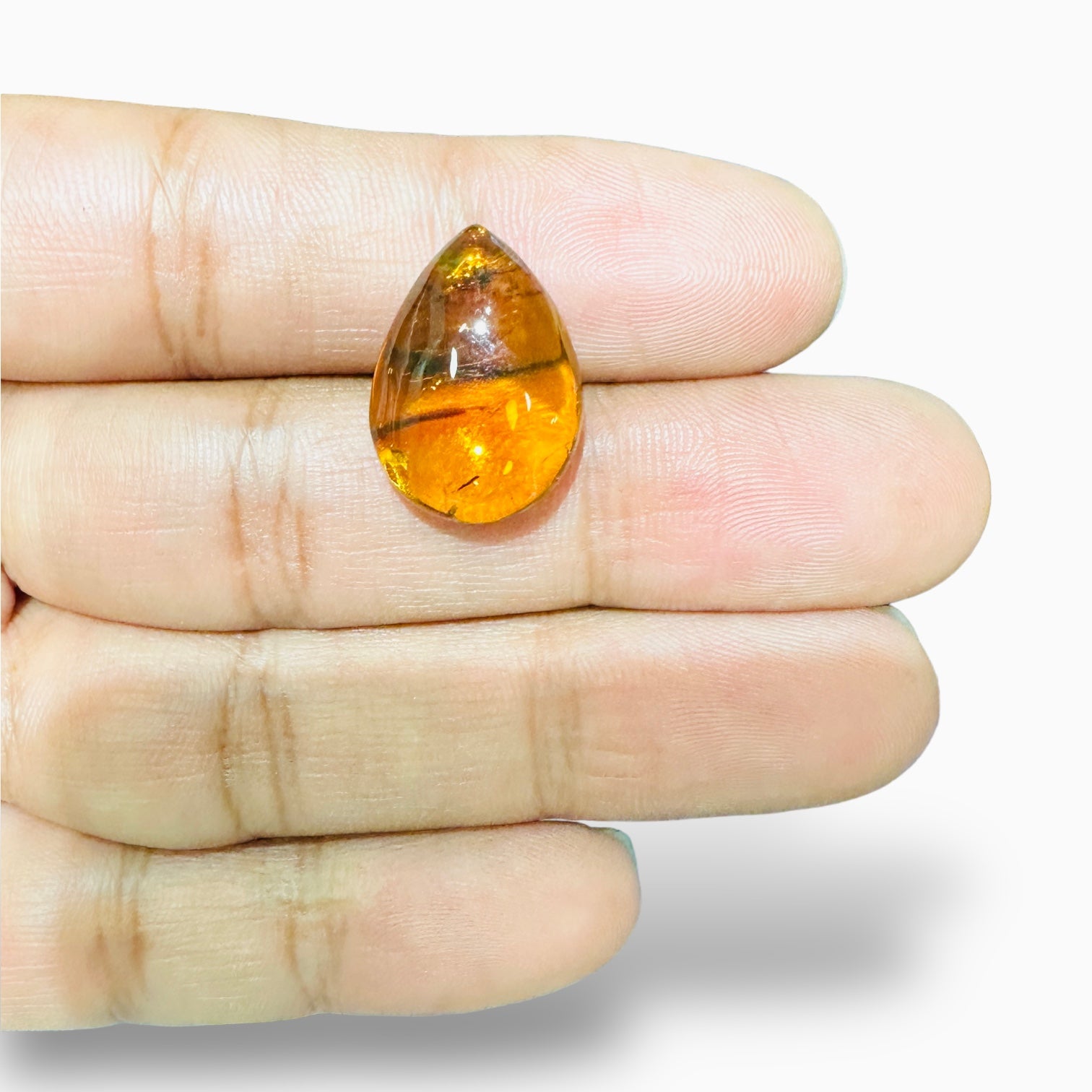
Each colour depends on the origin, age and make-up of the piece, so no two stones look exactly alike.
- Golden yellow: the classic honey colour that glows in light. It is the most common Baltic colour and has the longest history in jewellery.
- Cognac: a rich orange-brown, named after aged brandy. One of the most wearable colours, it looks good in gold or silver.
- Butterscotch: a creamy yellow-orange between golden and cognac, popular for larger statement pieces.
- White (bone amber): milky and opaque, from millions of tiny air bubbles. It is lighter than clear amber and is linked with purity.
- Red (cherry): a deep reddish brown, caused by surface oxidation over time or by heat treatment. Natural red amber is highly prized.
- Green: a rare tint from plant material or special conditions during fossilisation. Much green amber on the market is treated, so always ask if the colour is natural.
- Blue: the rarest. Dominican blue amber looks golden brown in normal light but shows a vivid blue under UV or strong daylight, thanks to a compound in the ancient resin.
Raw or polished. Amber is sold raw, with a natural unpolished look, or polished smooth and shiny. Beads are one of the easiest ways to wear it.
Amber stone price guide
Amber is one of the most affordable organic gemstones. These ranges are approximate and change with seller, quality, origin and the market.
| Amber type | Price range | Best for |
|---|---|---|
| Baltic golden amber | $40 – $150 per piece | Fine jewellery and spiritual use |
| Baltic cognac amber | $30 – $120 per piece | Rings and pendants |
| Baltic white / milky | $25 – $100 per piece | Spiritual use and everyday wear |
| Green amber (natural) | $60 – $200 per piece | Collectors and rare jewellery |
| Blue amber (Dominican) | $100 – $400+ per piece | Rarest — collectors only |
| Amber with inclusions | $50 – $500+ | Scientific and collector value |
What sets the price: colour rarity (blue and green cost the most), clarity, size and inclusions. Pieces with trapped insects or plants can sell at a big premium.
Who can wear amber stone?
Amber is one of the most welcoming stones. In traditional guidance, almost anyone can wear it.
- Leo (Simha): the sign most linked with amber. Its sun-like glow is said to match Leo's warmth, confidence and leadership.
- Cancer (Karka): in astrology, amber's gentle, nurturing character is linked with emotional balance and a happy home.
- Taurus (Vrishabh): its link with warmth and comfort is said to suit Taurus.
- Everyone else: anyone drawn to its warm symbolism can wear it. Tradition names no sign that should avoid amber.
How to wear amber
- Necklace: worn close to the skin, this is the most traditional way. Skin contact is believed to strengthen its energy.
- Ring: keeps the stone in touch with your hands and is linked with grounding and warmth. Rings need the most care, as amber is soft.
- Bracelet or anklet: popular for daily wear and lovely in every amber colour.
- Belt or pocket stone: some people wear an amber belt or simply carry a piece with them.
- At home: a larger piece in the living room or bedroom is believed to fill the space with warm, positive energy.
- Meditation: holding amber while meditating is a popular way to quieten the mind.
Some people wear amber for a few hours a day and some all day long. Just make sure it feels comfortable.
How to tell real amber from fake
Amber is one of the most copied gems. Plastic, glass and copal (young resin that has not yet become amber) are often sold as amber. Try these simple checks.
Salt water float test
Stir about one tablespoon of salt into a glass of water. Real amber is lighter than salt water and floats. Most plastic and glass fakes sink, and so does copal.
Warmth test
Real amber feels warm and light in your palm — warmer than glass or stone. Fakes often feel cold or heavy for their size.
Smell test
Rub real amber firmly and it gives off a soft piney, woody smell, like an old forest or incense. Plastic smells of chemicals or of nothing. Copal smells more strongly of resin and feels stickier.
Static test
Rub amber on a cloth and it will pick up small bits of paper or hair. Most fakes don't, although some plastics do.
Buy from a trusted seller. These tests are a guide only. For a firm answer, ask a certified gemmologist.
How to care for amber stone
- Clean gently: wipe with a soft, damp cloth. No soap, no hot water, and never soak it.
- Keep it dry: take it off before a shower or bath.
- Avoid chemicals: keep it away from perfume, hairspray, sunscreen and household cleaners, which can cloud the surface.
- Store it alone: amber scratches very easily, so keep it in its own soft pouch.
- Limit sun and heat: long sunlight can crack or fade it, and high heat can melt, crack or change its colour.
- No machines: skip ultrasonic cleaners, steam and rough polishes.
- Handle with care: it can chip or crack if dropped on a hard floor.
- Bring back the shine: now and then, polish with a soft cloth lightly moistened with olive oil.
FAQs
What is amber stone used for?
Mostly jewellery — rings, necklaces, bracelets and pendants. It is also used in spiritual practice, and pieces with fossil inclusions are valued by scientists and collectors.
Is amber an expensive stone?
Usually not. Good everyday amber costs around $25 to $150. Dominican blue amber and pieces with inclusions can cost much more.
Can you wear amber every day?
Yes. It is light and comfortable for daily wear. Because it is soft, rings need more care than pendants or earrings.
Does amber attract wealth?
Not directly. In traditional belief, amber brings clarity and a positive outlook, which people link with clearer thinking and better decisions. This is a belief, not a promise.
Gemstone traditions are cultural beliefs, not medical advice. See our gemstone and healing disclaimer.