

The July birthstone is ruby. It is the red variety of the mineral corundum, it scores 9 on the Mohs hardness scale, and for thousands of years it has stood for love, passion and power.
Ruby has long been called the "King of Gemstones". As the official birthstone for July, it is more than a beautiful gem — it is a piece of history you can wear. You can see real stones in our natural ruby (Manik) collection.
What is the July birthstone?
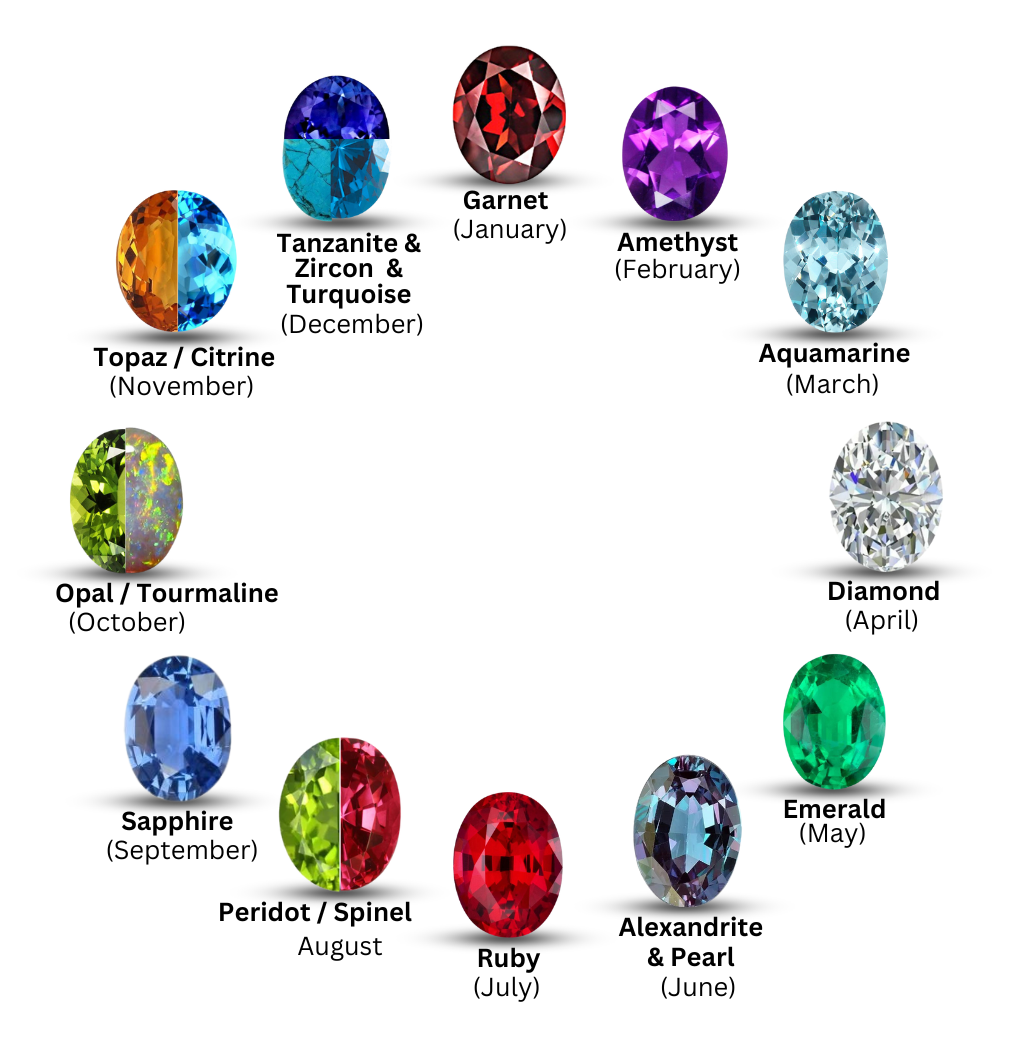
Every major list agrees: July is ruby. That includes the modern list set by the American National Association of Jewelers in 1912 and updated by the American Gem Trade Association in 2002, the older traditional lists, and the Vedic (Hindu) gemstone system.
A ruby is red corundum. Corundum is the same mineral family as sapphire. A trace of chromium inside the crystal gives ruby its red colour — the more chromium, the deeper the red. Pure corundum with no chromium is colourless.
Tough enough for daily wear. At 9 on the Mohs scale, ruby is second only to diamond among natural gems. It resists scratches well, so it suits rings and bracelets that are worn every day.
Why ruby is the birthstone for July
July sits at the height of summer in the Northern Hemisphere, when the sun is at its strongest. Ruby, with its fiery red and its old link with the Sun, was seen as the natural match. The 1912 list simply made official what tradition had said for centuries.
Ruby birthstone meaning and symbolism
These meanings come from culture and tradition, passed down over many centuries. Many people born in July wear ruby as a reminder of them.
- Love and romance: red has been the colour of love in almost every culture. Ruby rings and pendants have been given as tokens of deep affection for thousands of years.
- Love that lasts: because ruby is so hard, it stands for a love that does not break. That is why ruby is the gift for a 40th wedding anniversary.
- Passion and life: the bright red glow is a reminder to enjoy life and stay motivated.
- Courage and confidence: from Burmese warriors to medieval knights, ruby has been tied to bravery. Wearing one is a traditional way to feel bold.
- Protection and good fortune: in Hindu, Buddhist and folk traditions, rubies were worn as a charm against bad luck and enemies.
- Success and wealth: it was a favourite stone of royalty, and its link with the Sun ties it to authority and achievement.

A short history of the ruby
Ruby has been treasured for at least 2,500 years. Here is how different cultures saw it.
Ancient India
Ratnaraj, the king of precious stones. Sanskrit texts over 2,000 years old give ruby this name. In Hindu tradition it was linked with the Sun and with divine fire, and kings placed rubies in the foundations of temples as offerings.
Burma (Myanmar) and the Silk Road
The world's most famous ruby source. The Mogok Valley in northern Myanmar has produced rubies since at least the 6th century CE. Rubies were also traded along China's North Silk Road as early as 200 BC.
The stone of soldiers. Warriors in Burma and China decorated their armour with rubies for protection. Some Burmese warriors even set rubies under their skin before battle, believing it would keep them safe.
Born from a collision. Many Asian ruby deposits formed when the Indian subcontinent pushed into Asia. The huge pressure and the right minerals in that zone created the conditions for ruby to grow.
Ancient Greece and Rome
A burning coal. The Greeks called ruby anthrax, meaning coal, because it seemed to glow like an ember. In Greek and Roman myth it was linked with both the god of war and the goddess of love.
Written about by Pliny. The Roman writer Pliny the Elder described ruby's hardness and glowing red in his Naturalis Historia in the 1st century CE.
Medieval Europe
A royal stone. Kings and queens wore rubies on crowns, sceptres and rings as symbols of authority. An old belief said a ruby turned darker to warn its owner of danger.
The famous "ruby" that is not a ruby. The Black Prince's Ruby, recorded since 1367 and now set at the front of England's Imperial State Crown, is actually a large red spinel that was long mistaken for ruby.
Ruby (Manik) in Vedic astrology
The stone of the Sun. In Vedic astrology, ruby — called Manik — is the gemstone of the Sun (Surya). Wearing a natural ruby is traditionally believed to strengthen the Sun in a birth chart, linked with confidence and success in public life.
Ring finger, gold or silver. By tradition, a ruby ring is worn on the ring finger, which astrology links with the Sun. Men often wear it on the right hand and women on the left, set in gold or silver.
Ask an astrologer first. In this tradition, ruby is suggested by birth chart, not by birth month. Millions of people across South Asia still follow these customs today.
Ruby colour: what "pigeon's blood" means
The name means red. "Ruby" comes from the Latin ruber, which simply means red. Its colours run from pinkish red to deep red, sometimes with a slight purple tone.
Pigeon's blood is the top grade. The most valuable rubies show a vivid, pure red with a slight bluish tint and strong brightness. Traders call this "pigeon's blood red".
Not too dark, not too pale. Very dark stones can look almost black in some light. Very light stones are not rubies at all — they are classed as pink sapphires.

How to choose a ruby birthstone
Not all rubies are the same. These are the things that matter most when you buy.
Colour comes first
In ruby, colour is everything. A great ruby should look alive with red even in ordinary light. Use the guide above to judge it.
Clarity and inclusions
Some inclusions are normal. Unlike diamonds, rubies are almost never free of tiny internal features. A ruby with none at all is very rare and very expensive.
What to avoid. Inclusions should not spoil the colour or weaken the stone. Steer clear of large cracks that reach the surface.
Treatment disclosure
Most rubies are heated. Estimates suggest over 90% of commercial rubies have been heat-treated to improve colour and hide inclusions. This is accepted in the trade, as long as it is disclosed.
Always ask. Fine untreated rubies are extremely rare and cost much more. If a seller says a ruby is untreated, check it with a lab certificate from a lab such as GIA, AGL, Gübelin or GRS.
Origin
Burmese rubies are the most prized for their colour and low iron. Mozambique rubies are now well known for vivid, saturated red. Sri Lankan rubies lean lighter and pinker, while Thai and Cambodian stones are often darker, with a brownish tone. For more, read our guide to ruby origins.
Shop by origin:
- Burmese ruby — Myanmar
- Mozambique ruby — Mozambique
- Thai ruby — Thailand
- Indian ruby — India
- Star ruby — found in several places, including Thailand, Sri Lanka and India
- Madagascar and Tanzania also produce rubies
Certificate
For any important ruby, ask for an independent lab certificate. It confirms the stone is natural, records any treatment, and helps if you ever want to insure or resell it.
To see how professional gemmologists grade rubies, explore the GIA ruby quality factors.
Famous rubies in history
- The Sunrise Ruby: a 25.59-carat Burmese ruby of pigeon's blood colour. It sold at Sotheby's Geneva in 2015 for about $30.3 million, a record for a ruby at the time.
- The Rosser Reeves Ruby: named after its former owner and famous for its intense red.
- The DeLong Star Ruby: one of the largest star rubies known, with a clear star effect.
- The Graff Ruby: a large, deep red Burmese ruby bought by Laurence Graff.
- The Carmen Lúcia Ruby: known for its rich colour and clarity.
- The Liberty Bell Ruby: named for its bell shape.
- Elizabeth Taylor's ruby necklace: a famous piece set with Burmese rubies.
How to wear your July ruby birthstone
Ruby is hard enough to be cut into many shapes. The oval is the most popular for showing off colour, the heart suits a romantic gift, and the emerald cut gives a modern look.
- Rings: the classic choice. Yellow gold adds warmth, white gold or platinum makes the red stand out, and rose gold feels romantic. Ruby engagement rings are a popular alternative to diamond.
- Pendants: a simple ruby solitaire on a gold chain is timeless and easy to wear every day.
- Earrings: ruby studs frame the face and add a pop of colour, from casual to formal.
- Bracelets: a ruby bracelet or bangle makes a bold statement and mixes well with gold or diamond pieces.
Browse ready-made pieces in our jewellery collection.
Ruby birthstone gift ideas
A personal gift. Ruby jewellery ties a present to the day someone was born, so it feels more personal than a generic gift. It is also the traditional 40th anniversary stone.
For every budget. Stud earrings or a small pendant are easy everyday gifts. A solitaire ring, alone or with diamonds, is the statement piece. A bracelet with small accent rubies can be just as meaningful.
Real matters more than big. A small natural ruby means far more than a large synthetic or glass-filled copy. Buy from a dealer who tells you plainly what you are getting.
How to care for a ruby
- Clean it simply: use warm, soapy water and a soft toothbrush, then rinse and dry with a soft cloth.
- Careful with machines: avoid steam and ultrasonic cleaners if the stone has big fractures or has been fracture-filled.
- Keep chemicals away: bleach, alcohol, acetone, strong solvents and acids like lemon juice can harm the surface.
- Avoid extreme heat: keep it away from sudden, high temperatures.
- Store it alone: keep it in a soft pouch, apart from other gems, to prevent scratches.
- Take it off for hard work: remove ruby rings before heavy manual jobs to protect the setting.
Where to buy a genuine ruby birthstone
At Raza Gems, we specialise in natural gemstones sourced with full transparency. Our natural ruby stones come in a wide range of sizes, qualities and origins to suit every budget.
Every stone we sell comes with honest disclosure about its origin and any treatments, so you can buy with confidence. You can also explore our full range of certified gemstones.
FAQs
Is ruby the only birthstone for July?
On the modern list, yes. Some older traditions add onyx or carnelian as extra July stones, but ruby is the main July birthstone in every major tradition.
Can people not born in July wear a ruby?
Yes. Anyone can wear ruby for its beauty, history or meaning. In Vedic astrology, ruby is chosen by birth chart rather than birth month, usually after asking an astrologer.
What is the difference between a ruby and a garnet?
They are different minerals. Ruby is much harder (9 against 6.5–7.5 on the Mohs scale) and usually more valuable. Garnet's red often leans deeper or brownish, and under strong light ruby often shows a red glow that garnet does not.
How can I tell if a ruby is real?
Buy from a trusted dealer and ask for a certificate from a lab such as GIA, AGL, Gübelin or GRS. A real ruby will not be scratched by glass, but other hard red stones pass that test too, so professional testing is the only reliable check.
Does a ruby birthstone need to be a certain size?
No. A small, good-quality natural ruby is worth more than a large, poor one. Choose the size that fits your budget and style.
Gemstone traditions are cultural beliefs, not medical advice. See our gemstone and healing disclaimer.