

Gemstones have held deep meaning across cultures and religions for thousands of years, and Islam is no exception. Among the many precious stones referenced in Islamic tradition, the ruby holds a particularly honored place. Known for its striking deep red color and its association with vitality and divine blessing, the ruby has been treasured by Muslims for centuries, not merely as a decorative gem, but as a stone carrying spiritual weight and historical significance.
This article explores the ruby stone through an Islamic lens, covering its traditional name, its connection to Prophetic tradition, its role in Islamic art and culture, its believed spiritual properties, and the proper Islamic guidelines around wearing gemstones.
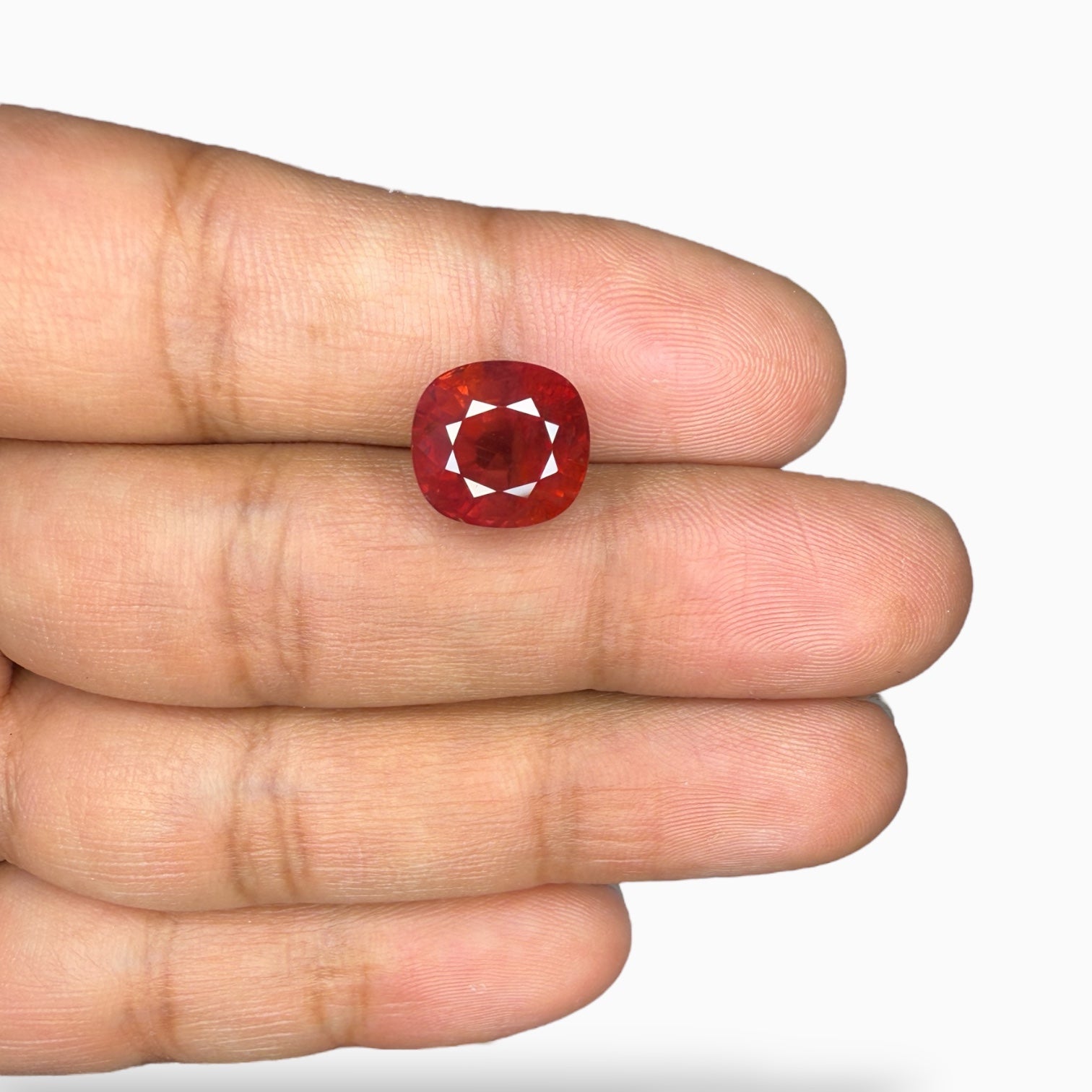
What Is the Ruby Stone Called in Islam?
In Arabic and Islamic tradition, the ruby is known as Yaqoot Ahmar, with Yaqoot referring to the broader category of corundum gemstones and Ahmar meaning red. The word Yaqoot appears in classical Islamic texts, poetry, and scholarly writings, and it has been used for centuries to describe this gem in the context of both earthly beauty and divine metaphor.
The ruby stone belongs to the corundum mineral family and gets its vivid red color from trace amounts of chromium within its crystal structure. In Islamic scholarship, its color has long been associated with life force, passion, nobility, and the blessings of Allah.
Ruby in the Light of Prophetic Tradition
The significance of the ruby in Islam is deeply connected to Hadith literature and the broader tradition of the Prophet Muhammad, peace be upon him. While a single definitive hadith specifically dedicated to rubies is not universally authenticated, classical Islamic scholars and historians have recorded numerous references to the Prophet's appreciation for beautiful natural creations, including gemstones.
There are narrations in which gemstones including Yaqoot are mentioned in the context of gifts, rewards, and descriptions of paradise. Some scholars reference descriptions of Jannah, the Islamic paradise, where rubies and other precious stones are described as part of its indescribable beauty and splendor. These references elevate the ruby beyond a simple earthly object and place it within a spiritual and eschatological framework.
It is important to approach these references with scholarly caution. Believers should rely on authenticated sources and consult knowledgeable Islamic scholars rather than accepting all folk traditions or unverified claims about the religious status of any gemstone.
The Quranic Perspective on Natural Beauty and Gemstones
The Quran does not mention the ruby by name, but it speaks extensively about the beauty of Allah's creation and encourages believers to reflect on the natural world as a sign of divine wisdom and power.
Allah says in the Quran that He has created everything in perfect measure, and that the signs of His creation are visible to those who reflect. Gemstones like the ruby, with their extraordinary color, rarity, and natural formation deep within the earth, can be understood as among the countless signs of Allah's creative power that the Quran invites us to contemplate.
Additionally, the Quran contains vivid descriptions of paradise that reference precious materials, pearls, and adornments of gold and silk. While rubies are not named explicitly, classical commentators and scholars have drawn on these descriptions to understand how Islam views beauty, natural wealth, and the blessings of creation in a positive and spiritually meaningful light.
Ruby Stone in Islamic Art and Architecture
Throughout the golden age of Islamic civilization, rubies and other precious gemstones were prominently featured in architecture, royal artifacts, calligraphic ornaments, and ceremonial objects. From the Mughal Empire in South Asia to the Ottoman Empire in Turkey and the Abbasid Caliphate in Baghdad, rubies adorned the crowns, rings, and swords of Muslim rulers as symbols of power, divine favor, and spiritual authority.
Mosque decorations and sacred objects were often inlaid with precious stones, and the ruby's deep red color gave it a particular visual prominence in these settings. It was seen not as mere luxury but as a reflection of the abundance and beauty that Allah has placed in the world.
Islamic artisans also incorporated the symbolic meaning of the ruby into their craft. In poetry, the ruby was used as a metaphor for the heart, for pure love, and for the intensity of devotion to Allah. Sufi poets in particular used the imagery of Yaqoot to describe spiritual states and the burning quality of divine love.
Believed Spiritual and Healing Properties of Ruby in Islamic Tradition
In traditional Islamic folk medicine and the classical literature of scholars who wrote about the properties of gemstones, rubies were attributed with a range of spiritual and physical benefits. Medieval Islamic scholars including Ibn Sina, known in the West as Avicenna, wrote about the properties of gemstones in the context of natural medicine, and rubies were among the stones discussed.
Traditionally, the ruby has been associated with the following qualities in Islamic folk tradition:
Strengthening the heart and increasing vitality and life energy. Promoting courage and mental clarity in times of difficulty. Offering protection from envy, negative energies, and spiritual harm. Bringing joy, contentment, and a sense of spiritual abundance. Enhancing the spiritual awareness and mindfulness of the wearer.
It must be clearly stated that these are traditional and cultural beliefs, not binding Islamic theology. Islam does not require belief in the inherent supernatural powers of any stone. The correct Islamic position is that all benefit and harm come from Allah alone, and no object possesses independent power to heal or protect. Wearing a gemstone with the belief that it has power in itself would be contrary to Islamic creed. However, wearing it as an adornment while maintaining correct belief is generally considered permissible.
Islamic Guidelines on Wearing Ruby and Other Gemstones
Islam is a religion of balance and clarity, and it provides straightforward guidance on the subject of wearing gemstones and jewelry.
What Is Permissible
Wearing a ruby as a ring, pendant, or other jewelry for adornment is permissible in Islam. Men are permitted to wear silver rings, and some scholars also permit certain other adornments. Women have broader permission to wear gold and gemstone jewelry as part of their natural adornment. Wearing a ruby simply because it is beautiful or meaningful is entirely acceptable within Islamic boundaries.
What Is Not Permissible
Wearing any gemstone with the belief that it has power in itself to protect, heal, or bring good fortune is not permissible in Islam. This belief, known as placing trust in an object rather than in Allah, falls into the category of shirk or association, which is among the most serious matters in Islamic theology. The ruby is a creation of Allah, and like all creation, it has no independent power.
Using gemstones as amulets inscribed with symbols, names, or incantations that are not from the Quran and Sunnah is also prohibited. Some cultural practices around gemstones cross this boundary, and Muslims should be aware of the distinction between permissible adornment and impermissible superstition.
The Balanced Approach
The correct approach is to appreciate the ruby for what it genuinely is: a beautiful, rare, and remarkable creation of Allah. Wear it if you wish as a form of lawful adornment. Admire its color and its natural origins. But place your trust, your hope, and your reliance entirely in Allah, not in any stone.
Ruby as a Symbol of Paradise in Islamic Thought
One of the most spiritually uplifting aspects of the ruby in Islamic tradition is its association with Jannah, the paradise promised to believers. Classical scholars and commentators have described the rivers, palaces, and structures of paradise using imagery of rubies, emeralds, pearls, and gold, drawing on Quranic descriptions and authenticated narrations.
In this sense, the ruby serves as a worldly reminder of a heavenly reality. When a believer looks at a fine ruby and sees its deep red glow, it can serve as a moment of reflection on the eternal blessings that await the righteous. This is entirely in keeping with the Islamic practice of using the beauty of this world to inspire gratitude, remembrance of Allah, and longing for the hereafter.
Buying Ruby Stones: What Muslims Should Know
For those interested in purchasing a natural ruby, whether for its beauty, as a gift, or as an adornment, Islam encourages honesty, transparency, and fairness in all transactions. The Prophet Muhammad, peace be upon him, placed enormous emphasis on truthful commerce and warned strongly against deception in trade.
When buying a ruby or any precious gemstone, always seek a certified natural stone from a reputable and trustworthy dealer. Request gemological certification from recognized laboratories to verify the stone is natural and that any treatments have been disclosed. Avoid sellers who make exaggerated spiritual claims about the powers of their stones, as this can lead buyers toward impermissible beliefs.
A genuine ruby of natural origin, purchased through honest and transparent dealings, is a lawful and beautiful possession that a Muslim can enjoy with a clear conscience.
Conclusion
The ruby stone, known as Yaqoot Ahmar in Islamic tradition, carries a rich and layered significance that spans theology, history, art, and culture. It appears in descriptions of paradise, in the writings of classical Islamic scholars, in the architecture of great Muslim civilizations, and in the hearts of believers who have long admired it as one of Allah's most beautiful creations.
Its deep red color speaks of vitality, devotion, and the warmth of divine blessing. Its rarity speaks of the precision and generosity of the Creator. And its enduring presence across Islamic history speaks of a tradition that has always recognized beauty as a pathway to gratitude and reflection.
Whether you wear a ruby as jewelry, gift it to someone you love, or simply admire it as a remarkable work of natural art, let it serve as a reminder of the One who created it and of the paradise where such beauty exists in its most perfect and eternal form.
Disclaimer
This article is intended for educational and informational purposes only. The spiritual and historical perspectives shared here are drawn from classical Islamic tradition, scholarly commentary, and cultural history. They do not represent a formal religious ruling or fatwa. Readers seeking specific Islamic guidance on matters related to gemstones, amulets, or beliefs should consult a qualified Islamic scholar. Any references to healing or spiritual properties of the ruby reflect traditional folk beliefs and cultural history, not established Islamic theology or medical advice. Always purchase gemstones from certified and reputable dealers and request proper gemological documentation before any significant purchase.