

If you have ever held an emerald up to the light and watched that deep, rich green come alive, you already know there is something almost magical about this gemstone. But what if that magic is actually science? What if the breathtaking color you are admiring is the result of atomic-level events happening inside the crystal itself?
This guide breaks down exactly why emeralds are green, what chemicals are responsible, how light interacts with the stone, and why no two emeralds look exactly alike. Whether you are a gemstone enthusiast, a buyer, or simply curious, this is the most complete and easy-to-understand explanation you will find.
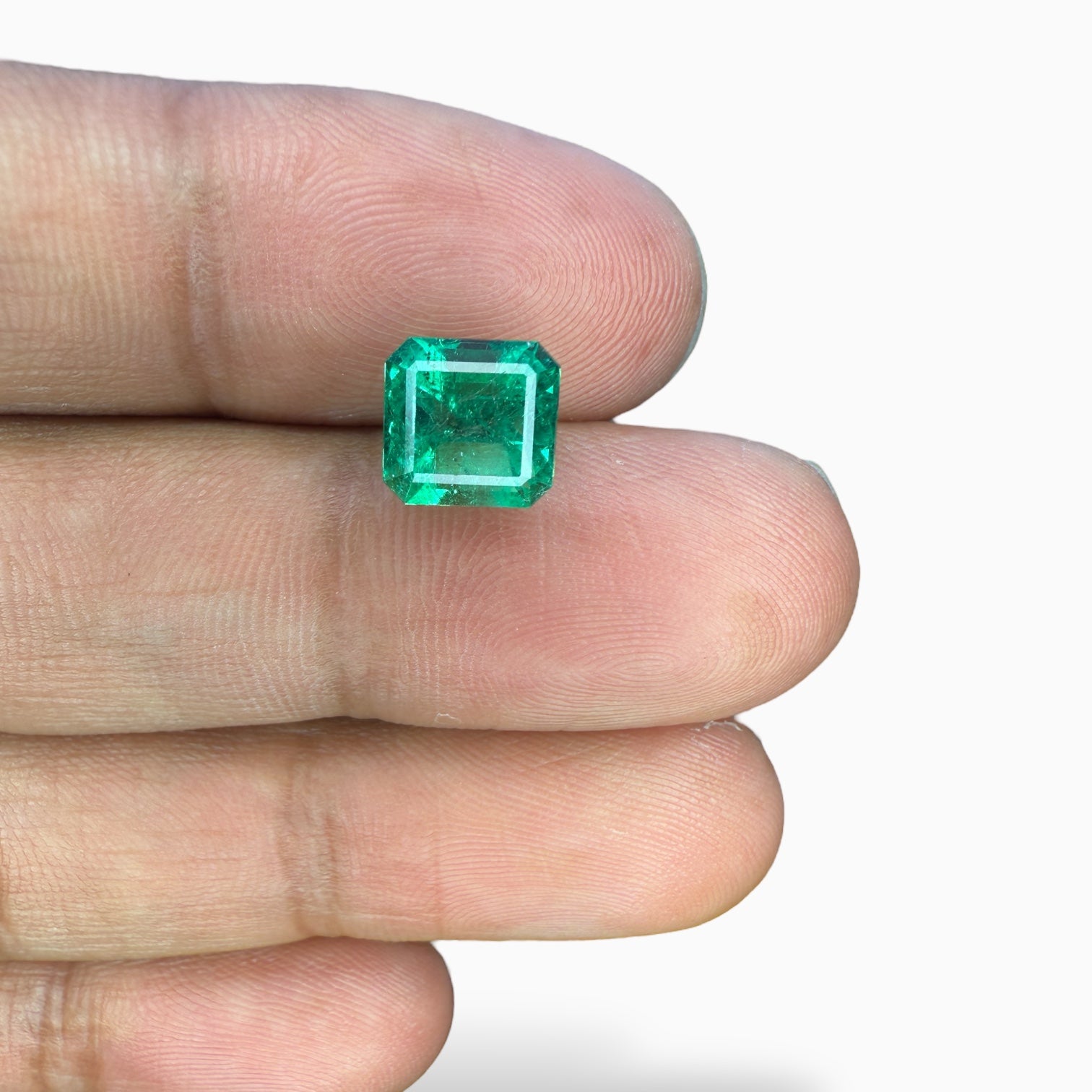
Why Color Matters in Gemstones
Before we dive into emeralds specifically, it helps to understand how color works in gemstones generally.
A gemstone gets its color from the way it interacts with light. White light, the kind that comes from the sun or a light bulb, is actually a mix of all visible colors. When light enters a gemstone, certain wavelengths get absorbed by the atoms inside the crystal. The colors that are NOT absorbed get reflected or transmitted back to your eye. That is what you see as the color of the stone.
So when you look at a red ruby, what you are actually seeing is a stone that has absorbed most colors except red. When you look at a blue sapphire, you are seeing a stone that lets blue wavelengths through while absorbing others.
Emeralds work on the same principle, but what makes them special is which atoms are doing the absorbing and why the result is such a uniquely vivid and saturated green.
What Is an Emerald Made Of?
Emeralds belong to the beryl family of minerals. Beryl in its pure form is actually completely colorless. The chemical formula for pure beryl is beryllium aluminum silicate, a combination of beryllium, aluminum, silicon, and oxygen arranged in a hexagonal crystal structure.
Pure beryl has no color because none of its atoms absorb visible light in a significant way. Light passes straight through it without much interference.
So where does the green come from?
The answer lies in trace impurities. Deep inside the earth, when beryl crystals are forming under intense heat and pressure, tiny amounts of other elements sometimes sneak into the crystal structure. These impurities replace some of the aluminum atoms in the lattice. And when those replacement atoms happen to be chromium or vanadium, something extraordinary happens.
The stone turns green.
This is the foundation of emerald science. It is not the beryl itself that creates the color. It is the uninvited guests inside the crystal structure.
Chromium: The Main Reason Emeralds Are Green
Chromium is the primary reason most emeralds display their famous green color, and it is worth taking a close look at how this element works its magic.
Chromium belongs to a group of elements known as transition metals. What makes transition metals special in the world of color science is that their electrons can exist in multiple energy states. When a photon of light hits a chromium atom, it can be absorbed if its energy matches the energy gap between two electron states in that atom. The electron jumps up to a higher energy level, absorbs the photon, and the light at that wavelength disappears from what reaches your eye.
Chromium atoms inside an emerald crystal absorb light strongly in two regions of the visible spectrum: the red end and the violet end. These are the wavelengths that get swallowed up inside the stone. What is left over, the wavelengths that pass through or reflect back, falls in the green and blue-green region of the spectrum.
This is why emeralds are green. It is chromium selectively eating red and violet light and leaving green behind.
What is even more fascinating is that the exact shade of green depends on how much chromium is present and how perfectly it fits into the crystal lattice. A small concentration of chromium produces a lighter, more yellowish green. A higher concentration, combined with ideal crystal conditions, produces the deep, intense green that makes Colombian emeralds so valuable and famous.
The Electronic Dance Inside the Crystal
When chromium absorbs light and its electrons jump to higher energy states, those electrons do not stay excited forever. They fall back down to their original energy levels almost immediately. When they do, they release that absorbed energy.
In chromium specifically, some of this released energy comes back out as visible light, specifically in the deep red portion of the spectrum. This is why emeralds, when illuminated with a strong UV light or even just bright sunlight, sometimes show a faint reddish glow. This phenomenon is called fluorescence, and it is a direct result of chromium's electronic behavior.
This same electronic property is what makes rubies red, by the way. Rubies also get their color from chromium, but in a different host crystal (corundum instead of beryl), which changes how the chromium atoms are arranged and which wavelengths they absorb. The host crystal matters enormously. Same element, completely different color outcome.
Vanadium: The Supporting Actor
While chromium gets most of the credit, vanadium plays an important supporting role in many emeralds, particularly those from certain geographic origins.
Vanadium is also a transition metal, and it behaves in a somewhat similar way to chromium inside a crystal lattice. It absorbs certain wavelengths of light and transmits others. On its own, vanadium produces a green color, but slightly different in character from chromium-green. Some gemologists describe vanadium-influenced green as slightly more bluish or cooler in tone.
In many natural emeralds, both chromium and vanadium are present simultaneously. Their effects combine inside the crystal, and the resulting green is a blend of both influences. This is part of why emeralds from different mines around the world have subtly different greens even when the quality appears similar on paper.
Interestingly, there is an ongoing debate in the gemological world about stones that contain vanadium but little to no chromium. Some laboratories classify these as emeralds, while others classify them as simply green beryl. The distinction matters commercially because emerald commands a much higher price than green beryl. The International Colored Gemstone Association and most major gemological labs have their own standards for making this call, and buyers should always seek certified stones from reputable sources.
Iron: The Complicating Factor
Iron is another trace element that sometimes appears in beryl crystals, and its presence adds another layer of complexity to emerald color science.
When iron is present alongside chromium and vanadium, it tends to shift the green toward a more yellowish tone. High iron content is generally considered undesirable in premium emeralds because it dulls the vivid, pure green that collectors and buyers prize. Colombian emeralds, widely considered the world's finest, tend to have low iron content, which allows the chromium-driven green to shine through with exceptional purity and intensity.
Brazilian and Zambian emeralds often have somewhat higher iron content, which gives them a slightly different character, not necessarily worse, just different. Zambian emeralds in particular are known for a deeper, more bluish green that many buyers find extremely attractive even though the chemistry producing it differs from the classic Colombian profile.
The Role of the Crystal Structure
It is not enough to just have chromium or vanadium present in a stone. The way the crystal is structured around those atoms makes an enormous difference in the final color.
In beryl, the crystal structure creates a specific geometric environment around each aluminum atom site. When chromium replaces an aluminum atom, it sits inside this geometric cage of surrounding oxygen atoms. The shape and size of that cage, technically called the ligand field, determines exactly which wavelengths of light the chromium will absorb.
This is why the same element produces different colors in different minerals. Change the host crystal, change the ligand field geometry, change the color. It is a beautifully precise system.
The regularity and perfection of the crystal lattice also matters. Crystals that grew slowly under stable conditions tend to have more uniform structures, which means more consistent and vivid color distribution throughout the stone. Crystals that experienced temperature fluctuations or chemical changes during growth may have uneven color, with some zones appearing darker or lighter than others. Gemologists call this color zoning, and it is visible in many natural emeralds when examined closely.
Inclusions: The Jardin of an Emerald
Unlike diamonds, which are prized for clarity above almost everything else, emeralds are almost universally included. The network of internal features inside an emerald, which includes liquid-filled fractures, mineral crystals, and growth irregularities, is given the poetic French name jardin, meaning garden.
These inclusions are not just beauty flaws. They are scientific records of the conditions under which the crystal grew. A gemologist examining the jardin of an emerald can often determine roughly where in the world it came from, because different geological environments produce characteristic inclusion patterns.
From a color science perspective, inclusions interact with light in important ways. Fractures filled with liquid can refract and scatter light, sometimes creating a soft, velvety appearance in the interior of the stone. This velvet quality, known in the trade as jardin glow, is actually considered desirable in high-quality Colombian emeralds and contributes to their visual warmth.
Heavily included stones, on the other hand, can appear hazy or dull because the inclusions scatter too much light before it can properly interact with the chromium and vanadium atoms and return to your eye as vivid green.
Why Colombian Emeralds Are Considered the Finest
Colombia has produced emeralds for centuries, and the stones from mines like Muzo, Chivor, and Coscuez are still considered the global benchmark for quality. The science behind this reputation is real, not just marketing.
Colombian emeralds typically form in a hydrothermal sedimentary environment quite different from the metamorphic or magmatic environments where most other emeralds form. This unique geological setting results in stones with relatively high chromium content, low iron content, and a characteristic set of inclusions involving three-phase inclusions of liquid, gas, and solid crystals.
The combination of high chromium and low iron is essentially the chemical recipe for the most vivid, pure, saturated green possible in a beryl crystal. This is not opinion. It is chemistry.
That said, fine emeralds come from many other countries including Zambia, Brazil, Zimbabwe, Afghanistan, Ethiopia, and Pakistan. Each origin has its own geological signature and its own characteristic style of green. None of them are inferior by definition. They are simply different expressions of the same underlying science.
How Light Source Affects Emerald Color
One thing many buyers do not realize is that an emerald does not have a single fixed color. Its appearance changes depending on the light source illuminating it.
Under daylight or daylight-equivalent lighting, emeralds typically show their most balanced and true green. Under incandescent light, which is warmer and richer in red wavelengths, some emeralds can appear slightly more yellowish. Under fluorescent lighting, they may appear cooler and more blue-green.
The fluorescence response of emeralds, triggered by ultraviolet components in sunlight, can also make stones appear to glow with extra intensity outdoors compared to indoor lighting. This is the chromium fluorescence effect described earlier, and it is one of the reasons fine emeralds look so alive and vibrant in natural sunlight.
When shopping for emeralds, always view them under multiple light sources before making a decision. A stone that looks magnificent under one type of light but flat under another may not deliver the experience you expect in everyday wear.
Treatments and How They Affect Color
The vast majority of natural emeralds on the market have been treated in some way, most commonly with colorless oils or resins that are filled into surface-reaching fractures. This treatment, known as clarity enhancement, improves the transparency of the stone by filling fractures that would otherwise scatter light chaotically.
From a color science perspective, clarity enhancement works because the filling material has a refractive index closer to that of beryl than air does. This reduces the light scattering at fracture surfaces and allows more light to travel deeper into the stone and interact with the chromium and vanadium atoms, producing richer, more vivid color in the final appearance.
Cedar oil and synthetic resins are the most common filling materials. Treated emeralds are not fraudulent as long as the treatment is disclosed, and virtually all reputable dealers and gemological laboratories disclose enhancement levels ranging from none to minor, moderate, or significant.
Untreated emeralds of fine quality are extremely rare and command substantial premiums in the market. If a seller claims an emerald is untreated, always ask for a certificate from an independent gemological laboratory confirming this.
Synthetic Emeralds and Color Science
Since the mid-20th century, it has been possible to grow emeralds in laboratories. Synthetic emeralds have the same chemical composition as natural ones, including chromium and vanadium impurities, and they follow the exact same color science principles.
Lab-grown emeralds are often exceptionally vivid in color because their growth conditions can be precisely controlled to optimize chromium content and minimize iron. They are also typically very clean, with few inclusions.
From a pure color science standpoint, synthetic emeralds are often more perfect than natural ones. Their value, however, is substantially lower because the rarity and geological story of natural stones drives their desirability in the market.
Knowing the difference matters. A reputable gemological certificate will identify whether a stone is natural, synthetic, or treated, and buyers should always request certification for any significant purchase.
Quick Summary of the Science
Emeralds are green because trace amounts of chromium and sometimes vanadium replace aluminum atoms inside a colorless beryl crystal. These transition metal atoms absorb red and violet light while transmitting green wavelengths back to your eye. The exact shade of green depends on the concentration of chromium and vanadium, the presence of iron, the geometry of the crystal lattice, and the geological conditions under which the stone formed. Inclusions affect how light travels through the stone. Light source affects how the color is perceived. And treatments can enhance or alter the stone's appearance without changing its fundamental chemistry.
That is the science of emerald color in full.
Final Thoughts
Emeralds are one of the few gemstones where the science of their color is as captivating as the color itself. Every green emerald you see is essentially a tiny laboratory experiment conducted by the earth over millions of years, with chromium and vanadium as the chemists, heat and pressure as the equipment, and a beryl crystal as the reaction vessel.
Understanding this science does not diminish the beauty of these stones. If anything, it deepens it. When you look at a fine emerald now, you are not just seeing green. You are seeing the result of atomic-level interactions between light and matter, a process so precise and so elegant that it took scientists decades to fully understand it.
For those looking to purchase natural emeralds, always buy from trusted and knowledgeable dealers who can provide proper gemological certification, disclose any treatments, and offer transparent sourcing information. The beauty of an emerald is real. Make sure the stone is too.
Disclaimer
This article is written purely for educational and informational purposes. The scientific explanations provided are based on established gemological and mineralogical research. This content does not constitute professional gemological advice, and readers should consult certified gemologists or accredited laboratories such as GIA, AGL, or Gübelin before making any purchasing decisions. Color characteristics, quality grades, and valuations of individual gemstones can vary significantly and should always be assessed in person by a qualified professional. Any mention of specific gemstone origins or dealers is for illustrative purposes only and does not constitute an endorsement.