

Labradorite Stone Meaning, Benefits, Price, And Side Effects
There is a moment that happens the first time most people see labradorite. You are holding what looks like a plain, dark gray stone — and then the light catches it at just the right angle. Suddenly the entire surface erupts in a flash of electric blue, deep teal, vibrant green, golden yellow, and sometimes even violet and orange. All at once. From a single stone.
That flash of color is called labradorescence — and it is one of the most breathtaking optical phenomena found anywhere in the natural world. It is not a coating or a treatment. It is not painted on. It is a physical property that lives deep inside the mineral structure of labradorite itself, created by the way light bounces between ultra-thin layers within the stone.
Labradorite stone is genuinely unlike any other gemstone. Its beauty is dramatic and theatrical. Its energy is considered powerful and protective. And its history — from the indigenous people of Canada who believed it contained the frozen fire of the Northern Lights — is as rich and colorful as the stone itself.
This guide covers everything you need to know about labradorite — its formation, meaning, benefits, price, uses, care tips, side effects, and who should wear it. All in simple, easy language.
Let us dive in.
What Is Labradorite Stone?
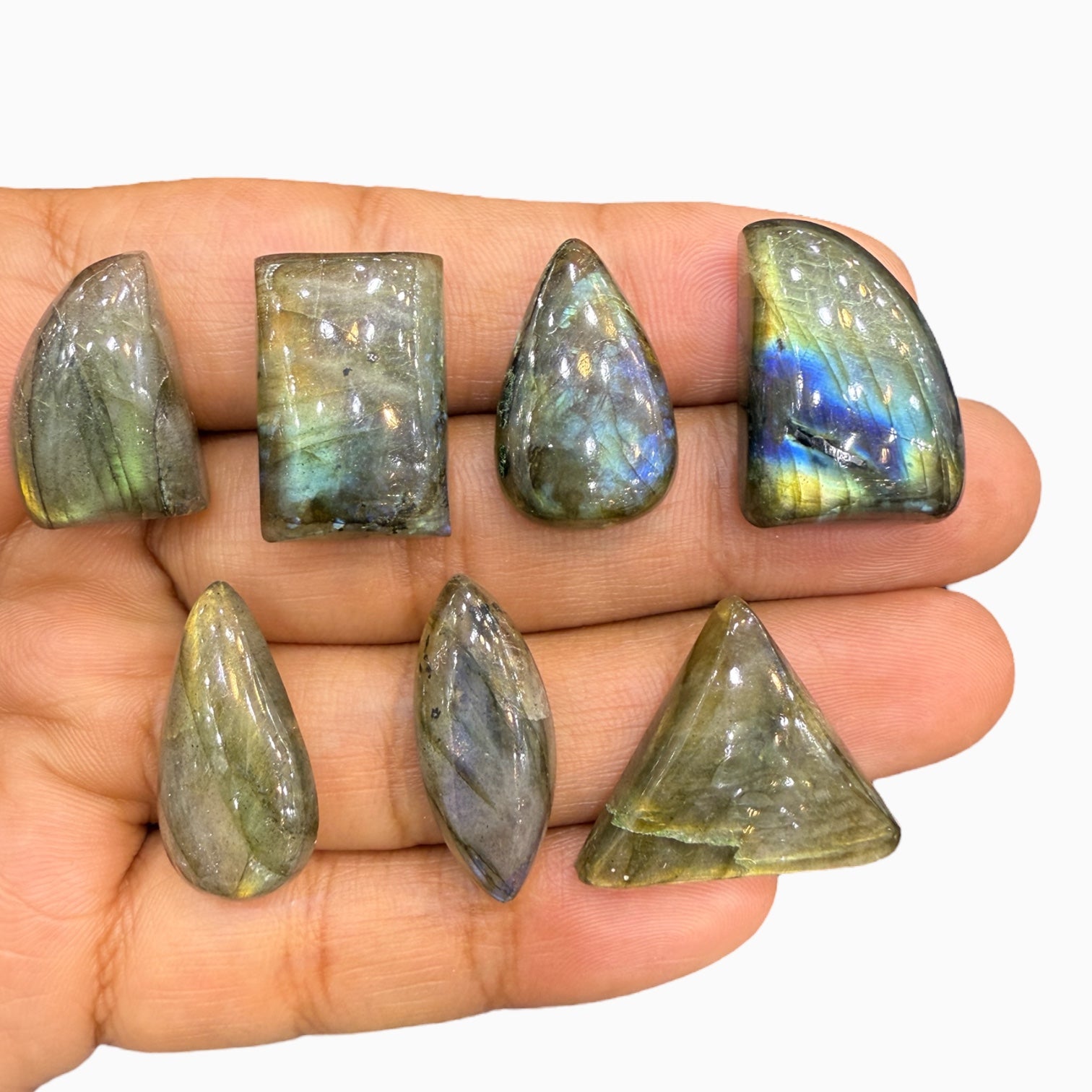
Labradorite is a naturally occurring feldspar mineral gemstone. It belongs to the plagioclase feldspar group — a family of minerals that form some of the most common rocks in the earth's crust. What makes labradorite extraordinary within this group is its unique and spectacular optical effect known as labradorescence.
On the Mohs hardness scale, labradorite ranks at 6 to 6.5 — making it a moderately hard stone that is suitable for many types of jewelry but requiring a little more care than harder gems like sapphire or topaz.
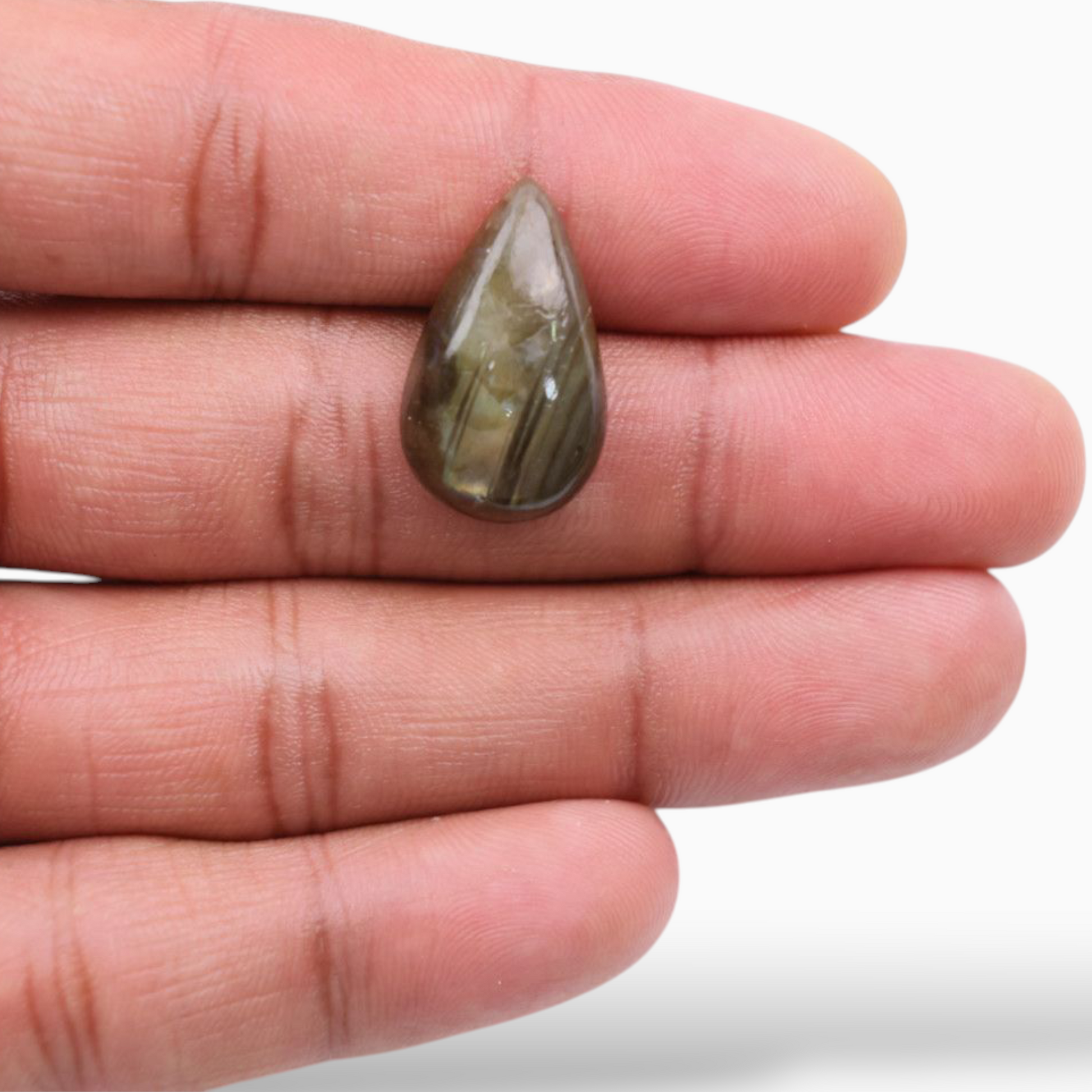
Labradorite is typically found in dark gray, gray-green, or grayish-black base colors. Without light hitting it at the right angle, it can look almost unremarkable. But the moment light enters the stone and interacts with its internal structure, it transforms completely — displaying a spectacular range of iridescent colors that shift and change as the stone moves.
This color play is caused by a phenomenon called thin-film interference. Inside labradorite, there are extremely thin alternating layers of two different feldspar compositions. When light enters the stone, it bounces back and forth between these layers, and different wavelengths of light are reinforced while others cancel out. The result is those stunning flashes of color — and they are completely natural, completely permanent, and completely unique to each stone.
How Does Labradorite Form?
Labradorite's formation story is a journey that begins deep inside the earth with molten rock.
Labradorite forms primarily in igneous rocks — rocks that are created when magma (molten rock from inside the earth) cools and solidifies. As the magma cools slowly over time, different minerals begin to crystallize at different temperatures. Labradorite crystals form when specific conditions of temperature, pressure, and mineral chemistry — particularly the right balance of calcium and sodium — combine to allow the feldspar crystals to grow.
The unique layered internal structure that creates labradorescence develops as the stone crystallizes — the alternating layers of slightly different mineral compositions form naturally during this slow cooling process, essentially becoming part of the stone's permanent structure.
Labradorite is often found alongside other minerals including quartz, other feldspars, mafic minerals, and accessory minerals in the host igneous rock. It is commonly found in basalt, gabbro, and anorthosite rock formations.
The stone gets its name from Labrador, Canada — specifically from the Isle of Paul in Labrador — where it was first described in the scientific literature in 1770. Indigenous Inuit people in the region had known and used the stone for generations before European scientists formally identified it.
Today, labradorite is found in many locations around the world including Canada, Madagascar, Finland, Australia, Russia, the United States, and India. Madagascar in particular is known for producing high-quality labradorite with exceptional color play.
The Legend of Labradorite — Frozen Northern Lights
Before we go any further, it is worth sharing the legend that has followed labradorite for centuries — because it is genuinely one of the most beautiful stories in the gemstone world.
According to an old Inuit legend from the Labrador coast of Canada, the Northern Lights — the Aurora Borealis — were once trapped inside the rocks along the coast. A great Inuit warrior, seeing the lights imprisoned within the stones, struck the rocks with his spear to free them. Most of the lights were released into the sky, but some remained caught inside the rocks — and those are the flashes of color we see in labradorite today.
Whether or not you believe in legends, there is something deeply poetic about this story. Because when you see labradorite flash its colors in the light, it genuinely does look like the Northern Lights are trapped inside.
Labradorite Stone Meaning
Labradorite carries some of the most powerful and widely recognized symbolic meanings in the gemstone world.
At its core, labradorite is considered the stone of transformation, protection, and magic. It is believed to be a stone for those who are standing at a crossroads — facing major changes, new beginnings, or unknown territory — and need both the courage to step forward and the protection to do so safely.
Labradorite is strongly associated with the concept of the "veil between worlds" — the idea that there are layers of reality beyond what we see on the surface of everyday life, and that labradorite can help the wearer access deeper levels of awareness, intuition, and inner knowing. This makes it highly popular among spiritual practitioners, healers, and anyone engaged in inner work.
The stone is connected to the third-eye chakra and the crown chakra — energy centers associated with intuition, higher consciousness, and spiritual awareness. It is believed to awaken these centers and help the wearer access their own deeper wisdom and inner guidance.
Labradorite is also strongly associated with protection from negative energy. It is believed to create a powerful energetic shield around the aura — the energy field that surrounds the body — filtering out negative influences and preventing energy drain from other people or environments.
In many traditions, labradorite is also considered a stone of good fortune, synchronicity, and unexpected positive opportunities — a belief that wearing it can open you up to fortunate coincidences and timely encounters that would otherwise have gone unnoticed.
Labradorite Stone Benefits
⚠ Disclaimer: The benefits described below are based on traditional beliefs, metaphysical practices, and cultural folklore. They are not scientifically proven and should not be used as a substitute for professional medical, psychological, or therapeutic advice. Labradorite and all gemstones are not medical treatments. Always consult a qualified healthcare provider for any physical or mental health concerns.
Here is a detailed look at the benefits most commonly attributed to labradorite:
1. Boosts Energy and Reduces Physical Fatigue
Labradorite is widely considered an energizing stone — believed to activate the body, reduce feelings of physical tiredness, and help people push through periods of low energy and fatigue. Unlike stimulant-like stones that can feel overpowering, labradorite's energy boost is thought to be steady and sustainable — more like a deep charge than a sudden spike. It is particularly recommended for people who feel consistently drained by their work environment or daily responsibilities.
2. Supports Radiant Skin and Physical Wellbeing
In traditional crystal healing practices, labradorite has long been associated with skin health and physical radiance. It is believed to support the body's natural processes of regeneration and renewal, contributing to a healthier, clearer, more glowing complexion. It is also traditionally used in practices aimed at supporting the body's detoxification processes. Please note that these are traditional beliefs and not medically verified claims.
3. Promotes Mental Peace and Reduces Overthinking
One of labradorite's most consistently reported benefits is its calming effect on an overactive mind. If you are someone who lies awake at night running through worries, what-ifs, and tomorrow's to-do lists, labradorite is believed to gently quiet that mental noise. It is thought to reduce the kind of obsessive, circular overthinking that drains mental energy, and replace it with a more settled, present-minded awareness.
4. Opens the Mind to New Ideas and Creative Thinking
Labradorite is considered a stone of the imagination as much as a stone of protection. It is believed to stimulate creative thinking, open the mind to new perspectives and possibilities, and help people break free from habitual thought patterns that limit their potential. For anyone who feels stuck in a creative or intellectual rut, labradorite is thought to be a powerful catalyst for fresh ideas and innovative thinking.
5. Supports Respiratory Health and Lung Function
In traditional healing practices, labradorite has been associated with supporting respiratory health — particularly for people who experience lung discomfort, breathing difficulties, or respiratory weakness. It is thought to bring a clearing, opening energy to the respiratory system. Please note this is a traditional belief and should never replace medical advice or treatment for respiratory conditions.
6. Promotes Overall Wellbeing, Self-Respect, and Good Fortune
Labradorite is considered a stone that works holistically across multiple areas of life simultaneously. It is believed to attract good fortune, open new pathways for financial growth and opportunity, build a stronger sense of self-respect and personal value, and encourage positive, generous behavior in social settings. Many wearers describe a sense of things "flowing better" in multiple areas of life when they regularly wear labradorite.
7. Protects from Negative Energy and Psychic Drain
This is perhaps labradorite's most celebrated property. It is widely regarded as one of the strongest protective stones available — particularly for people who are empathic or sensitive to other people's energy, who work in environments full of stress or conflict, or who simply feel energetically drained by the world around them. Labradorite is believed to form a protective barrier around the aura that filters out negative influences without shutting the wearer off from genuine connection and experience.
8. Awakens Intuition and Inner Wisdom
Labradorite is deeply connected to the intuitive mind — the part of us that knows things before we can logically explain why. It is believed to activate and strengthen this inner knowing, making the wearer more attuned to their own instincts, more perceptive about the people and situations around them, and more able to trust their gut feelings when making important decisions. This makes it particularly valued by those in leadership roles, creative fields, or any situation requiring strong instinctual judgment.
Labradorite Stone Colors — The Full Spectrum
While labradorite's base color is typically dark gray or grayish-green, the colors it displays through labradorescence can cover an extraordinary range:
Blue Labradorite — The most common and most sought-after flash color. Deep electric blue is considered the most classic labradorite display and is highly valued.
Teal and Green Labradorite — A beautiful blue-green combination that creates a vivid, ocean-like flash. Very popular for jewelry.
Golden Yellow Labradorite — A warm, glowing golden flash that appears in higher-quality stones. Particularly striking in pendant settings.
Purple and Violet Labradorite — A rarer flash color that is considered especially desirable by collectors.
Full Spectrum Labradorite — The most prized variety displays multiple colors simultaneously across the same stone — blue, green, gold, and violet all at once. This is sometimes called "spectrolite" when the full spectrum is particularly vivid.
Rainbow Moonstone — A white variety of labradorite that displays a blue or multi-color adularescence (a slightly different but related optical effect). Technically a labradorite but sold under its own name.
Labradorite Stone Price
Labradorite is one of the most accessible beautiful gemstones available. Here is a general price guide:
Standard labradorite with good blue or teal flash: $4 to $10 per carat — widely available, perfect for everyday jewelry.
Good quality labradorite with strong vivid color display: $10 to $25 per carat — popular for statement jewelry pieces.
High-grade labradorite with exceptional multi-color flash: $25 to $60 per carat — for fine jewelry and collectors.
Top-grade full-spectrum spectrolite with vivid complete color range: $60 to $150+ per carat — rare, collector-grade pieces.
A standard 5-carat labradorite stone of good quality is available for approximately $20 to $25, making it one of the best value gemstones for the visual impact it delivers. Very few other stones offer this level of visual drama at this price point.
Labradorite Stone Uses — How Is It Worn?
Labradorite's dramatic color display makes it one of the most eye-catching stones in any jewelry setting. Here are the most popular ways it is used:
Pendants and Necklaces — Labradorite pendants are arguably the most popular jewelry form for this stone. The large surface area of a pendant allows the full labradorescence to be seen and appreciated as it catches light from different angles throughout the day.
Rings — Labradorite rings make bold, distinctive statement pieces. They require protective settings due to the stone's moderate hardness.
Earrings — Labradorite drop earrings and studs are stunning choices that frame the face beautifully and display color flashes with every head movement.
Bracelets — Labradorite beaded bracelets and cabochon stone bracelets are popular for daily wear. The multiple stones in a bracelet create a continuous shifting display of color.
Home Decor and Meditation — Raw labradorite slabs, spheres, and tumbled stones are widely used as decorative objects in homes and workspaces, and as meditation tools held in the hands or placed on the body during practice.
Who Should Wear Labradorite?
Labradorite is considered broadly compatible with most people, but is traditionally most recommended for:
People born in February, March, and August — the birth months most traditionally associated with labradorite.
Leo, Scorpio, and Sagittarius zodiac signs — the signs with the strongest traditional affinity for labradorite's protective and transformative energy.
Anyone going through major life changes or transitions.
Empaths and highly sensitive people who need strong energetic protection.
Creative professionals, artists, writers, and anyone who relies on imagination and fresh ideas.
Spiritual practitioners, meditators, and those engaged in inner work or self-development.
People in high-stress work environments who feel regularly drained by their surroundings.
How to Care for Labradorite
Labradorite requires thoughtful care to preserve both its beauty and its optical display:
Clean labradorite gently with lukewarm water and a soft cloth with mild soap. Rinse well and pat dry. Avoid ultrasonic and steam cleaners as these can damage the stone's internal layered structure.
Store labradorite separately from harder stones that could scratch its surface. A soft pouch or padded jewelry box compartment is ideal.
Avoid prolonged exposure to direct sunlight and extreme heat, which can affect the stone's color over time.
Handle labradorite with care — while moderately hard, it can be susceptible to chipping if dropped or struck on hard surfaces.
Remove labradorite jewelry before physical activity, swimming, or working with harsh chemicals.
Are There Any Side Effects of Labradorite?
⚠ Disclaimer: The following are based on traditional metaphysical beliefs only and are not scientifically verified. They should not be treated as medical or psychological guidance.
While labradorite is widely considered a beneficial and positive stone, some traditional beliefs suggest potential concerns for certain wearers:
Labradorite is considered a high-vibration stone, which means that very sensitive individuals may occasionally feel overstimulated or energetically overwhelmed when first wearing it. Starting with short wear periods and gradually increasing is recommended.
Some wearers report heightened emotional sensitivity when wearing labradorite — meaning suppressed feelings and unresolved emotions may surface more readily. While this is generally considered part of the healing process, it can feel uncomfortable for some people at first.
Wearing any gemstone continuously without breaks — including labradorite — is not generally recommended. Most crystal practitioners suggest removing stones periodically to allow both the stone and your own energy field to reset naturally.
Wearing labradorite without any personal intention or awareness is traditionally considered less effective. Like many powerful stones, it is thought to work best when worn with conscious purpose.
Frequently Asked Questions About Labradorite Stone
Q: Is labradorite good for sleeping? A: Yes, labradorite is traditionally considered beneficial for sleep. It is believed to promote patient, restful sleep and reduce nighttime anxiety and restlessness. Placing it on your nightstand or under your pillow is a common practice. Some very sensitive individuals find that labradorite's high vibration occasionally leads to vivid dreaming — which is generally considered positive but worth noting.
Q: Is labradorite an expensive stone? A: No, labradorite is one of the most affordable striking gemstones available. A good quality 5-carat stone costs approximately $20 to $25. Even high-grade collector-quality pieces with full-spectrum color display are accessible compared to most other premium gemstones.
Q: What is labradorite's birth month? A: Labradorite is traditionally associated with the birth months of February, March, and August. People born in these months are thought to have the strongest natural affinity with the stone's energy.
Q: What makes labradorite flash with color? A: The color flash in labradorite is caused by a phenomenon called labradorescence — a type of thin-film interference that occurs within the stone's natural internal layered structure. Light enters the stone, bounces between ultra-thin alternating mineral layers, and different colors of light are reflected back depending on the angle. This is completely natural and permanent.
Q: What zodiac signs is labradorite best for? A: Labradorite is traditionally most associated with Leo, Scorpio, and Sagittarius. However, it is considered broadly compatible with most people, particularly those drawn to its protective and transformative energy.
Q: Can labradorite be worn every day? A: Yes, labradorite can be worn daily with appropriate care. Its hardness of 6 to 6.5 makes it suitable for most jewelry styles, though protective settings are recommended for rings. Remove it before physical activity, swimming, and exposure to harsh chemicals.
Q: What is the difference between labradorite and moonstone? A: Both are feldspar minerals and both display optical phenomena. Labradorite is typically darker in base color and displays strong flashes of blue, green, and gold. Moonstone (including rainbow moonstone, which is technically a white labradorite) has a lighter, more translucent body and displays a softer, floating glow called adularescence. Both are beautiful but have distinct visual characters.
Q: How do I know if my labradorite is real? A: Genuine labradorite displays its characteristic color flash only from specific angles — you have to move the stone to see it. Fake or glass imitations often show color from all angles or have a uniform, artificial-looking iridescence. Real labradorite also feels cool and heavy for its size. Buying from reputable gemstone sellers and requesting certification is always the most reliable approach.
Final Thoughts
Labradorite is a gemstone that carries a kind of quiet magic that very few stones can match. It sits there looking ordinary — and then the light finds it and everything changes in an instant.
That transformative quality is not just visual. Labradorite is considered a stone of inner transformation too — of change, protection, intuition, and the courage to step into the unknown. It is the companion stone of people who are becoming, not just people who have already arrived.
Whether you are drawn to labradorite for its jaw-dropping color display, its powerful protective energy, its connection to intuition and creativity, its history among the Inuit people of Canada, or simply because you have never seen anything quite like it before — it is a stone that will reward your curiosity every single time the light finds it.
There are very few gemstones in the world that can stop a conversation with a single flash of color. Labradorite is one of them.
⚠ Final Disclaimer: This article is for informational and educational purposes only. All healing, metaphysical, and spiritual properties described are based on traditional beliefs and cultural folklore, not scientific research. Labradorite and all gemstones are not substitutes for professional medical, psychological, or therapeutic treatment. Always consult a qualified healthcare professional for any health or mental health concerns.
Tags:
Previous
Kunzite Stone Benefits, Surprises, Meaning, Price, And How To Use
Next
What Does Ruby Stone Symbolize? Unveiling the Mysteries
Related Articles

Garnet That Changes Color? Yes, It Exists
Jan 15 2026