

Have you ever wondered what rubies look like before they become shiny red gems in jewelry? A raw ruby stone straight from the earth looks completely different!
This guide will show you exactly how to recognize natural, uncut rubies—with real examples, easy tests, and fun facts. Perfect for kids, rock collectors, and future gemologists!

Quick 3-Step Real Ruby Check (Before Reading Further!)
Here’s how to tell if your raw ruby stone is likely real:
🔴 Color Test: Natural rubies are deep red (sometimes pinkish or purplish)—not neon or paint-like.
💎 Hardness Test: Rubies are VERY hard (9/10 on Mohs scale)—they can scratch glass.
🔦 Flashlight Test: Shine a light through it—real rubies often glow slightly (not completely opaque).
If your stone passes these checks, keep reading to learn more!
What Does a Raw Ruby Stone Look Like?

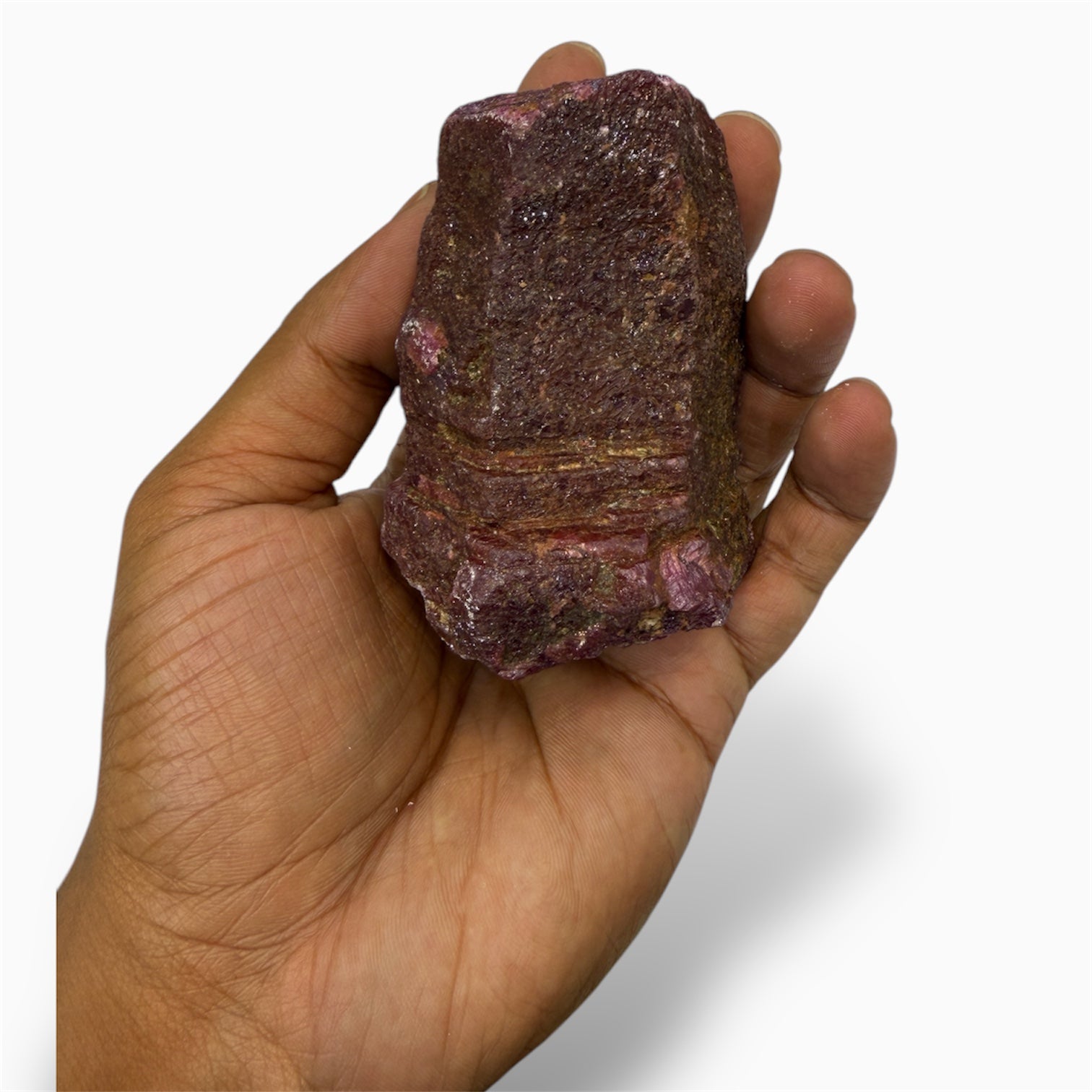
A raw ruby stone in its natural form:
✔ Shape: Lumpy, uneven, or hexagonal (not perfectly round or smooth).
✔ Color: Blood red, pink-red, or purple-red (not bubblegum pink or orange).
✔ Texture: Rough, sometimes with cracks or "fingerprint" marks inside.
✔ Size: Usually small (pea-sized to thumb-sized)—big ones are rare!
Fun Fact: Raw rubies are often found mixed with white or gray rock (called "matrix").
Real Raw Ruby vs. Fake: Spot the Difference!
| Feature | Real Raw Ruby Stone | Fake Ruby |
|---|---|---|
| Color | Deep red (natural variations) | Too bright, neon, or painted-looking |
| Surface | Rough, uneven, natural cracks | Too smooth, plastic-like |
| Weight | Heavy for its size | Light (like plastic or glass) |
| Scratch Test | Can scratch glass | Gets scratched easily |
| Price | Expensive (even raw) | Suspiciously cheap |
Example: A real raw ruby stone might look like a "red peanut" stuck in gray rock, while a fake one looks like a shiny red candy.
Where Do Raw Ruby Stones Come From?
Rubies form deep underground when:
🔥 Heat + Pressure work on aluminum-rich rocks for millions of years!
Top Ruby Sources:
-
Myanmar (Burma) – Famous for "pigeon blood" red rubies.
-
Madagascar – Bright red/pink rubies.
-
Africa (Tanzania, Kenya) – Darker red rubies.
Cool Fact: The sun can fade some rubies over time—so miners keep them in dark bags!
Why Do People Cut & Polish Raw Rubies?
-
More Sparkle: Cutting makes them reflect light beautifully.
-
Higher Value: Well-cut rubies sell for much more.
-
Jewelry Use: Smooth rubies won’t snag on clothes.
But… some collectors prefer raw rubies because they look more natural and unique!
Fun Things to Do With Raw Ruby Stones
-
Start a Collection (Label where each is from!)
-
Use in Crystal Healing (Some believe raw rubies boost courage!)
-
Make Wire-Wrapped Jewelry (Protects the stone’s natural shape!)
-
Study Under a Magnifying Glass (Look for natural "silk" inside!)
Warning: Don’t put raw rubies in water—some can crack or fade!
Where to Buy Real Raw Ruby Stones?
✅ Gem Shows (Experts can verify)
✅ Reputable Rock Shops (Read reviews!)
✅ Certified Online Sellers (Ask for lab reports!)
Avoid:
❌ "Too perfect" rubies (might be lab-made)
❌ Sellers who won’t answer questions
FAQ
Q: Can raw ruby stones be blue?
A: No! Blue corundum is called sapphire—rubies are only red/pink.
Q: Do raw rubies glow under UV light?
A: Some do (especially Burmese rubies)!
Q: How old are rubies?
A: Most are 50–500 million years old—older than dinosaurs!
Now you’re a raw ruby stone expert! Share this guide with friends who love gems. 💎.