

Here's something most people never realise: some gemstones are hiding a second life inside them, and you only need three everyday things to wake it up — a window, a lamp, and the flashlight on your phone.
Tilt the right stone under a single light and a star slides across it. Carry another from daylight into a warm room and its colour quietly flips. These are phenomenal gemstones — stones that show a moving optical effect you can watch with your own eyes.
This isn't a science lecture. It's a hands-on guide. For each effect below, I'll tell you what it looks like, what's causing it, and exactly how to see it yourself. By the end you'll be able to pick up a gem, run a quick test, and know what it's doing.
Your three-piece "kit"
You already own everything you need:
- A window with daylight — the truest, most neutral light.
- A lamp or ceiling bulb — warm indoor light that some stones react to.
- A phone flashlight — a single, focused beam that reveals stars and cat's eyes.
One quick note before we start. Most of these stones are cut into smooth, rounded domes called cabochons rather than sharp faceted gems. That dome shape is what gathers the light and bounces the effect back to your eye — so if a seller shows you a faceted "star sapphire," be a little suspicious.
Opal's drifting fire
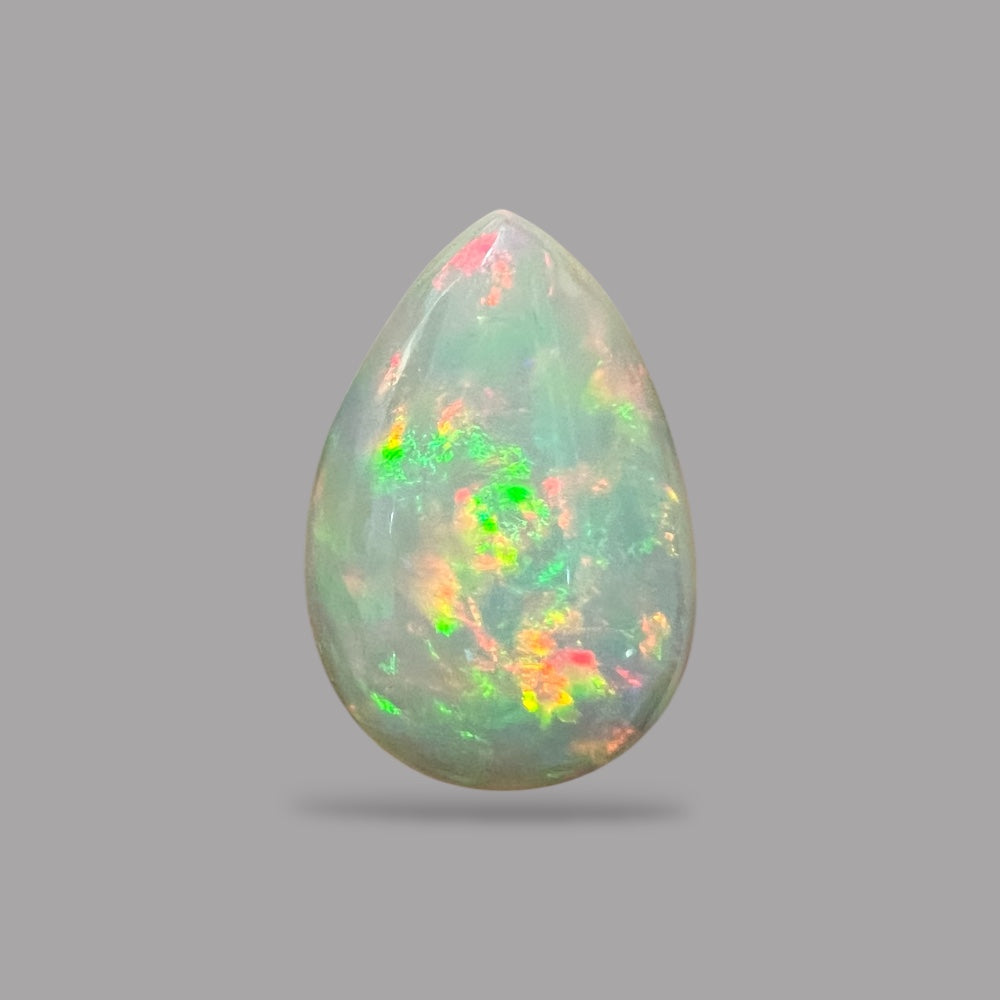
Opal is the show-off of the group. Move it slowly and flashes of green, blue, orange and violet drift across the surface — like sunlight on a soap bubble. The effect is called play-of-colour, and no two opals do it the same way.
The reason is surprisingly tidy: opal is built from millions of microscopic silica balls stacked in a neat grid. Light passing through that grid splits into spectral colours. Bigger, more orderly balls create the rare reds — which is part of why some opals cost so much more than others.
Try this: Hold the opal under a bright light and rock it gently side to side. Watch the colours travel and switch. If the flashes stay frozen and never move, you may be looking at an imitation. Our full opal guide goes deeper into types and value.
The moonstone's floating glow
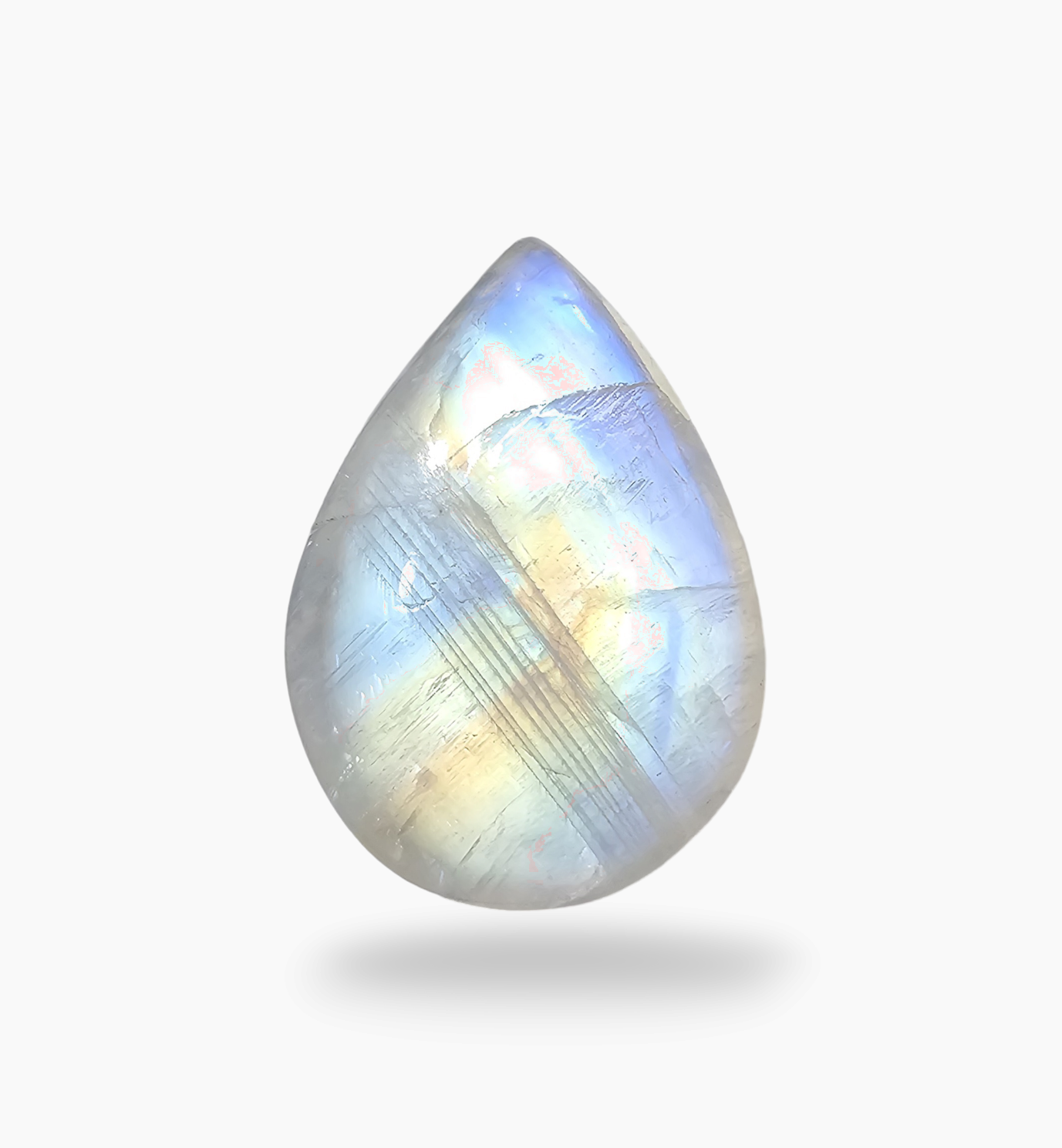
Pick up a good moonstone and you'll notice a soft, milky-blue light that seems to float just below the surface and follow your hand — like moonlight trapped in water. This glow is called adularescence.
It happens because moonstone is made of ultra-thin alternating layers. Light scatters between them and spreads into that dreamy sheen instead of a hard reflection. The best stones show a strong blue glow over a clear, almost colourless body.
Try this: Tilt the stone slowly under soft light and find the angle where the glow suddenly lights up and seems to drift. Because copies are common, it helps to know how to spot real moonstone vs fake.
Labradorite's hidden flash
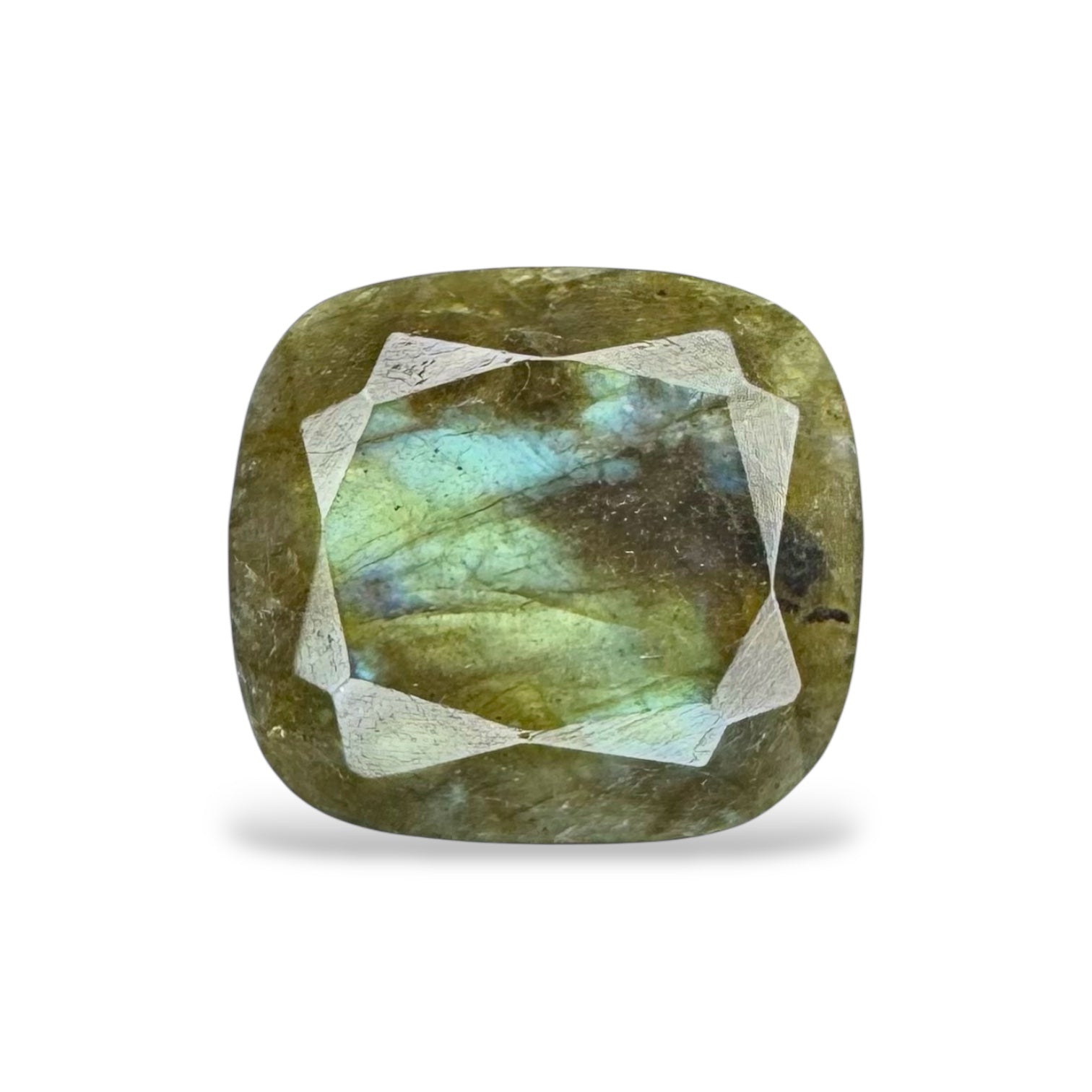
At first labradorite looks like a dull grey rock. Then you tilt it — and a sheet of electric blue, green or gold flashes across the surface and vanishes. That dramatic, angle-only flash is called labradorescence, named after the stone itself.
The colour comes from light bouncing inside the stone's internal layers, so it only appears when you hit the right angle. It makes the stone feel almost alive in your hand.
Try this: Hold it flat, then slowly tip it forward and back until the colour "switches on." Move past that angle and it disappears again. More in our labradorite guide.
Gems that change colour
This is the effect that genuinely surprises people. A true colour-change gem looks one colour in daylight and a completely different colour under indoor light. The most famous is alexandrite — green in daylight, red under a lamp. Collectors call it "an emerald by day, a ruby by night."
The stone absorbs light in a way that sits perfectly balanced between two colours, so the type of light tips it one way or the other. And alexandrite isn't alone — there's even a garnet that changes colour, which most people don't know exists.
Try this: Look at the stone next to a window, then carry it under a warm bulb and look again. A real colour-change gem shifts noticeably. Here's why alexandrite does it.
The cat's eye
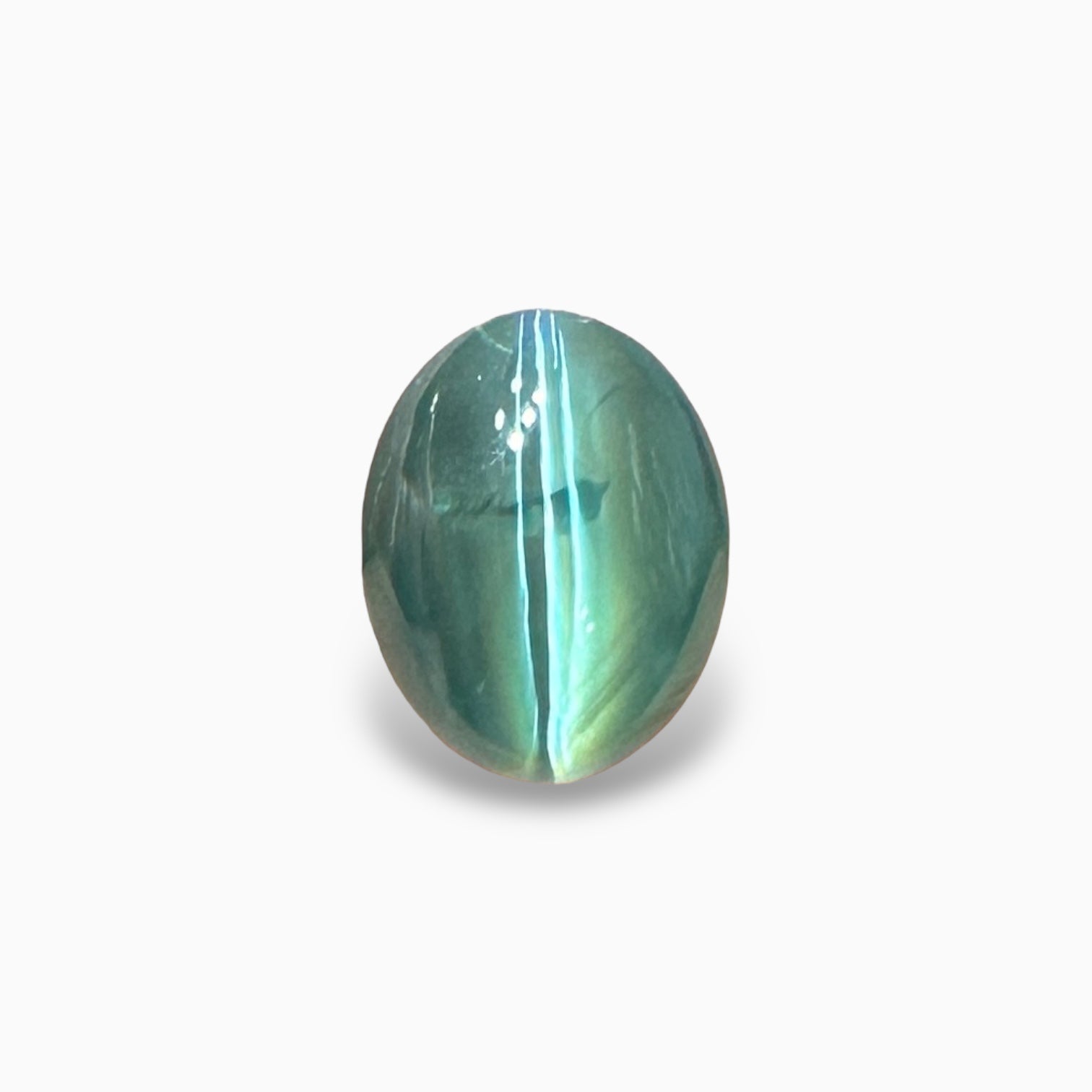
Shine a single light on a fine cat's eye stone and one bright band runs straight across the dome — narrow and sharp, just like the slit pupil of a cat in the dark. The band even seems to open and close as you turn the stone. This is chatoyancy.
It's caused by countless tiny parallel fibres inside the stone, all lined up in one direction. Light reflects off them and gathers into that single ribbon. The sharpest examples come from chrysoberyl, but quartz and moonstone show it too.
Try this: This one needs your phone flashlight. Use a single beam in a dim room and slowly rotate the stone — the bright line should glide across the surface. Learn more in our cat's eye guide.
The moving star
A star is basically a cat's eye multiplied. Instead of one band, you see a star of four or six rays that glides across the stone as you move it. Star ruby and star sapphire are the classics, usually showing a crisp six-rayed star.
The cause is the same idea, just in more directions: the stone holds needle-like inclusions arranged in two or three directions at once. Each direction makes one bar of light, and together they cross into a star.
Try this: Single beam again — phone flashlight in a dark room, held close above the dome. Tilt gently and the star will follow the light. If you're choosing between the two, here's how ruby and sapphire compare.
Sunstone's inner glitter
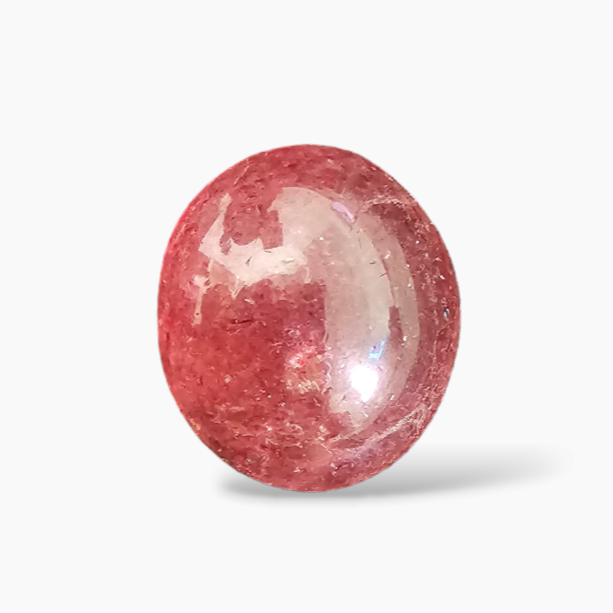
Some stones look like they have tiny flecks of glitter suspended inside, throwing off a warm, metallic sparkle. That shimmer is called aventurescence, and sunstone is its star — a glittering orange-to-red stone that really does look sun-kissed.
The sparkle comes from countless flat, reflective platelets scattered through the crystal, each one acting like a microscopic mirror.
Try this: Turn the stone under direct light and watch the little flashes flicker on and off as different platelets catch the beam. See our sunstone guide.
Bonus: tanzanite's three colours
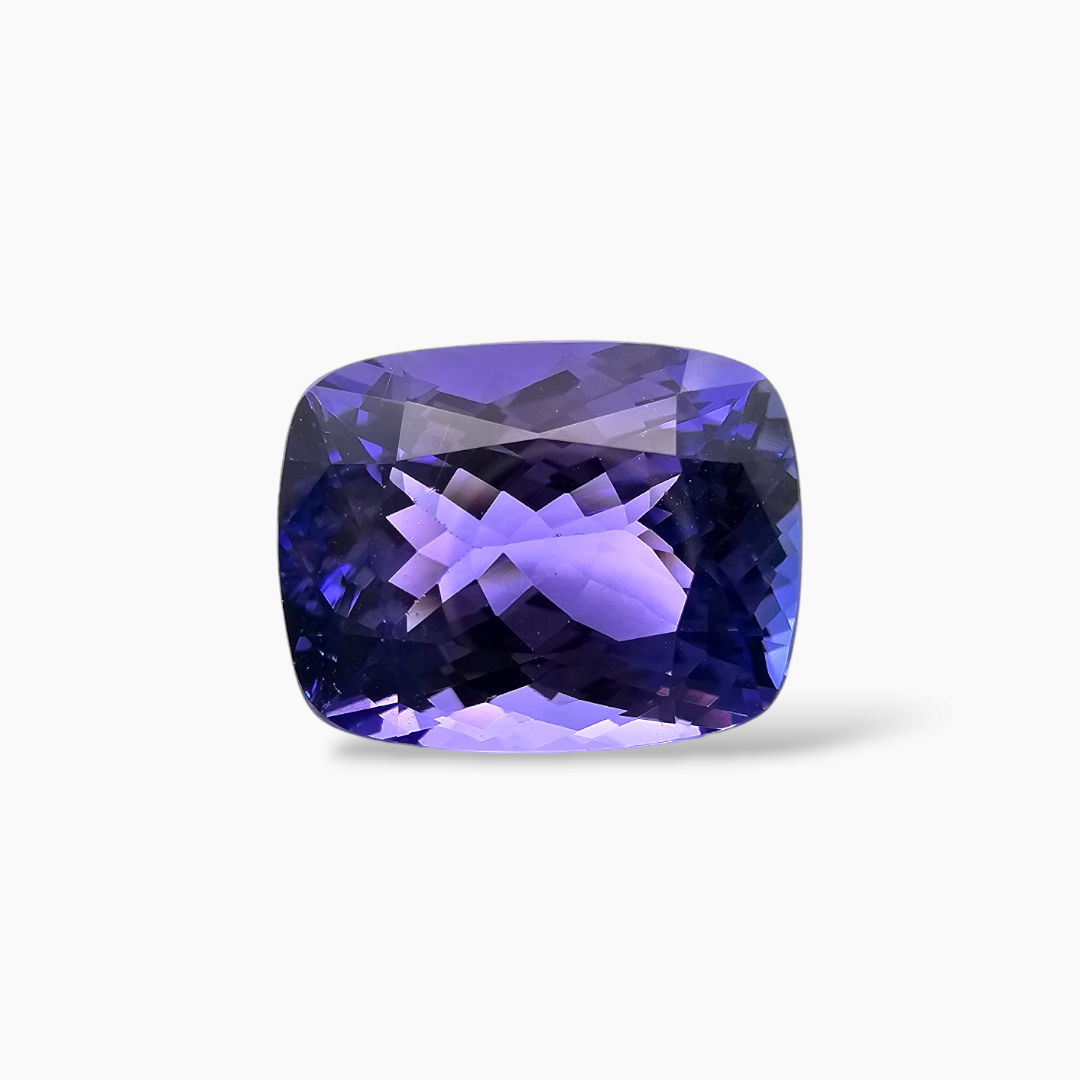
Here's a close cousin worth knowing. Some crystals show different colours depending on which direction you look through them. Tanzanite is the star example — one rough crystal can flash blue, violet and deep burgundy from different angles. This is called pleochroism.
It's different from colour change: colour change depends on the light source, while this depends on your viewing angle. It's a big reason cutters take so much care orienting tanzanite. Read more on tanzanite's three colours.
Try this: Hold the stone up to a window and slowly rotate it in all directions, watching the colour shift as the angle changes.
Quick comparison table
| Effect | What you see | How to test it |
|---|---|---|
| Play-of-colour | Drifting rainbow flashes (opal) | Rock under bright light |
| Adularescence | Floating blue glow (moonstone) | Tilt under soft light |
| Labradorescence | Sudden blue/gold flash (labradorite) | Tip slowly to find the angle |
| Colour change | Colour flips (alexandrite) | Daylight vs warm lamp |
| Chatoyancy | One bright cat's eye band | Single beam, dim room |
| Asterism | Moving 4 or 6-rayed star | Phone flashlight, dark room |
| Aventurescence | Glittery sparkle (sunstone) | Turn under direct light |
| Pleochroism | Colours by angle (tanzanite) | Rotate up to a window |
Keeping the effect alive
Many of these stones — opal, moonstone and labradorite especially — are on the softer, more delicate side. A few simple habits protect them:
- Take rings off before washing up, swimming, or cleaning.
- Skip ultrasonic cleaners and chemicals — a soft, slightly damp cloth is enough.
- Store them apart from harder stones like ruby and sapphire, which can scratch them.
- Keep opal away from strong heat and very dry air.
Treated gently, these gems keep flashing and glowing for generations.
Frequently asked questions
What are phenomenal gemstones?
They are gemstones that show a moving optical effect — a star, a cat's-eye band, a colour change, or flashes of rainbow colour. The effect comes from the stone's natural internal structure, not from dye or coating.
How can I see these effects at home?
You only need three things: daylight from a window, a warm indoor lamp, and your phone flashlight. Tilt the stone under a single beam for stars and cat's eyes, and compare daylight to lamp light for colour change.
Which gemstone changes colour?
Alexandrite is the best known, shifting from green in daylight to red under indoor light. Colour-change garnet does it too.
What is the cat's eye effect called?
Chatoyancy. A single bright band of light crosses the stone, like a cat's eye. The sharpest examples come from chrysoberyl.
Are phenomenal gemstones more expensive?
Often, because the effect is uncommon and the rough must be cut precisely to show it. But the price range is wide, so good options exist at many budgets.
Once you know the simple test for each one, choosing a gem stops feeling like guesswork and starts feeling like a small discovery you make with your own eyes — which is exactly how it should be.