


Labradorite Stone Benefits: Healing, Energy, Chakra, and How to Use It
Labradorite is an amazing gemstone. It looks like a plain gray rock until you move it in the light, and then POOF!—it flashes brilliant blues, greens, golds, and sometimes even purple. This flash is called labradorescence, and it's the reason so many people love this special stone.
What is Labradorite Stone?
Labradorite is a very special type of Feldspar rock, which is a big family of minerals found all over the world. It is known as a mineral or a crystal, and sometimes a gemstone when it is polished and used in jewelry.
The most famous thing about Labradorite is that sudden flash of color. This happens because the stone is made up of many thin, tiny layers stacked on top of each other. When light hits these layers, it bends and reflects the colors back to your eye, like a tiny prism inside the rock.
Is Labradorite a Stone or Crystal?
It’s both! To be clear and simple:
-
It's a Stone/Mineral: Labradorite is a type of mineral that grows naturally inside the Earth's crust.
-
It's a Crystal: It is also a crystal because its tiny parts are arranged in a very neat, repeating pattern as it grows.
-
It's a Gemstone: When people polish and cut it to wear as jewelry, we call it a gemstone.
So, whether you call it a stone, a crystal, or a gemstone, you're right!
Where Does Labradorite Stone Come From? (Where to find labradorite)
Labradorite gets its name from the first place it was officially found: Labrador, which is a part of Canada. The native people in this area, the Inuit, told stories that the colorful lights inside the stone were actually pieces of the Aurora Borealis (the Northern Lights) that had been frozen and trapped in the rock!
Today, Labradorite is found in many places, including:
-
Canada (Labrador): Still a major source.
-
Finland: This is where a similar, very high-quality type called Spectrolite is found, which often has even more colors.
-
Norway, Russia, and the United States (Oregon).
It is usually found in igneous rocks, which are rocks that formed when hot magma (liquid rock) cooled down.
Labradorite Stone Benefits: Healing, Energy, Chakra, and How to Use It
People have loved Labradorite for thousands of years, not just because it's pretty, but because of the special feelings and energy it is said to carry.
Labradorite Stone Energy
Labradorite is often called the Stone of Magic or the Stone of Transformation. This is because its energy is thought to help you see things you couldn't see before, just like the stone itself hides a rainbow until you move it.
-
Seeing Clearly: It encourages you to use your imagination and helps you look at problems in a new, creative way.
-
Protection: Many people carry it to create a shield against negative or draining energy from other people or places. Think of it as an invisible cloak of light.
Labradorite Stone Chakra
A Chakra is like a spinning wheel of energy in your body. Labradorite is mostly linked to the Third Eye Chakra and the Crown Chakra.
-
Third Eye Chakra (Forehead): This chakra is all about thinking, wisdom, and imagination. Placing Labradorite near your forehead (or wearing it high up) is said to help you think clearly, dream bigger, and trust your gut feelings.
-
Crown Chakra (Top of Head): This is the highest chakra and connects you to everything around you. Labradorite helps keep this connection clear and strong.
Is Labradorite a High Vibration Stone?
Yes, many crystal lovers consider Labradorite a high vibration stone. This means it has very active and fast-moving energy.
-
This energy is often used to help you feel connected to the universe and open up your mind to new ideas and spiritual growth. It's a stone that doesn't let you stay stuck; it encourages movement and change.
How to Wear Labradorite Stone
Because Labradorite works best with the upper chakras (Third Eye and Crown), you can wear it in a few great ways:
-
Near the Heart: Wearing it as a pendant or necklace keeps its energy close to your body’s main energy center, helping to balance emotions.
-
Near the Head: Wearing it as earrings or a pin closer to your neck and head helps boost your Third Eye energy for better intuition and dreaming.
-
In Your Pocket: You don't always have to wear it. Carrying a smooth, polished piece (a "tumble stone") in your pocket allows you to hold and rub it when you need a moment of calm or inspiration.
How to Activate Labradorite Stone
Activating a stone just means telling it what you want it to help you with. It's like setting a mission for it!
-
Cleanse It First: (See the section below on cleansing).
-
Hold It: Hold the Labradorite stone gently in your hand.
-
Set the Mission: Think about what you need. Say quietly, "Please help me be brave to try new things," or "Please help me feel protected from negative thoughts."
-
Connect: Look at the flash of color inside the stone and feel a connection to that light. Now, the stone is ready to work with you.
The Practical Side of Labradorite
How Hard is Labradorite?
On a scale called the Mohs Hardness Scale (which goes from 1, like soft chalk, to 10, like super-hard diamond), Labradorite is about a 6 to 6.5.
-
What this means: It’s hard enough for jewelry, but it’s softer than Quartz. You should be careful not to drop it on hard surfaces or let it rub against harder stones like diamonds or sapphires, as it can get scratched.
How Much is Labradorite Worth?
Labradorite is usually not a super expensive gem, but its price can change a lot based on the quality of its color flash:
-
Low Cost: A dull stone with a small, weak flash might only cost a few dollars.
-
High Value: A stone with a very strong, bright flash that covers the entire surface and shows multiple colors (especially the rare pink or purple) will cost much more. The rarest kind is called Spectrolite, which often has the best color play and costs the most.
What Color is Labradorite Stone?
The color you see when it's not flashing is usually:
-
Gray, smoky gray, or dark greenish-gray.
The color when it flashes (labradorescence) is usually:
-
Bright blue (most common)
-
Green, gold, yellow, and sometimes orange.
-
Purple or pink (rarest and most sought after).
How Long Does Labradorite Take to Form?
Like most minerals found deep in the Earth, Labradorite takes a very, very long time to form. The process of the magma cooling down and the different minerals separating and layering can take many, many millions of years (geologists estimate tens of millions of years). You are holding something truly ancient!
How Old Is Labradorite Stone?
Labradorite is typically found in rocks that are hundreds of millions of years old. While the mineral itself has been on Earth for a very long time, the pieces people use today are found in much "younger" volcanic formations, sometimes only a few hundred million years old.
Taking Care of Your Stone
How to Cleanse Labradorite Stone
Cleansing a stone means removing any energy it may have picked up from other people or places, so it can work at its best.
-
Water (Gentle): You can safely rinse Labradorite in cool, running water. Just make sure the water is clean.
-
Smudging: You can pass the stone through the smoke of a natural incense (like sage or palo santo).
-
Sound: Place the stone near a singing bowl or chime while it is being played.
-
Earth: Place the stone on top of or near some clean soil for a few hours.
How to Charge Labradorite Stone
Charging means giving the stone a fresh energy boost.
-
Moonlight (Best Way!): Leave your Labradorite outside or on a windowsill overnight, especially during a Full Moon. Because Labradorite is tied to the night and magic, moonlight is perfect for charging it.
-
Sunlight (Be Careful!): A quick charge in the sunlight is okay, but do not leave Labradorite in direct, strong sunlight for too long.
Does Labradorite Fade?
Yes, it can. While the rock itself won't dissolve, the beautiful flash of color can sometimes look duller if:
-
It is constantly exposed to strong, direct sunlight for many hours over time (which is why you should use moonlight for charging!).
-
It is exposed to harsh chemicals, soaps, or perfumes, which can cloud the surface.
Always store your Labradorite in a soft cloth or pouch when you aren't wearing it.
Where to Place Labradorite Crystal
You can place your Labradorite crystal around your home or workspace based on what you want to achieve:
-
Workspace/Desk: To encourage new ideas, creativity, and finding solutions to difficult problems.
-
Bedside Table: To enhance dreams and help you remember your dreams, as well as providing a feeling of protection overnight.
-
Main Entrance: To shield the entire space from negative energy coming in.
Labradorite and the Stars
Labradorite Stone for Pisces
In astrology, different stones are often linked to different star signs. Labradorite is especially helpful for people who are Pisces (born roughly between February 19 and March 20).
-
Why Pisces? Pisces is a very imaginative and sensitive sign. Labradorite helps Pisces people balance their emotions and protects them from feeling overwhelmed by the feelings of others. It supports their natural, deep intuition.
Labradorite Stone for Which Planet
Labradorite is most often linked to the Moon.
-
The Moon is associated with intuition, cycles, dreams, and hidden knowledge—all things Labradorite is said to help with! The way the stone suddenly lights up in the dark is very similar to how the moon lights up the night sky.
I hope this helped you unlock all the secrets of your beautiful, colorful Labradorite stone! Do you have a favorite color flash in your stone?
Tags:
Previous
Sunstone Crystal Benefits: Meaning, Healing Energy & Uses
Next
How Color and Cut Influence the Look of Lab Grown Diamonds
Related Articles


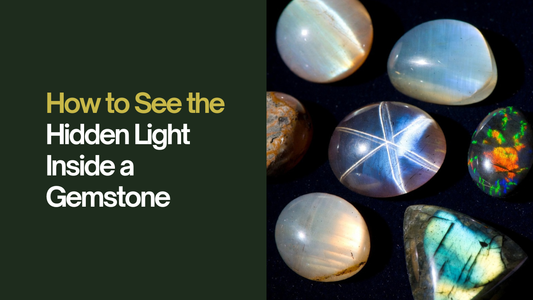
How to See the Hidden Light Inside a Gemstone
Jun 15 2026

Garnet That Changes Color? Yes, It Exists
Jan 15 2026