

Ethiopian opals are more affordable than Australian opals mainly because there are far more of them, they cost less to mine, and their water-absorbing (hydrophane) nature makes them less stable. Australian opals are rarer, more stable and have a long-standing luxury reputation, so they cost more.
Both are beautiful stones that flash with colour like a rainbow trapped in stone. Below we explain each type, why the prices differ, and how to choose and care for your opal. You can compare real stones in our Ethiopian opal and Australian opal collections.
What are Ethiopian opals?
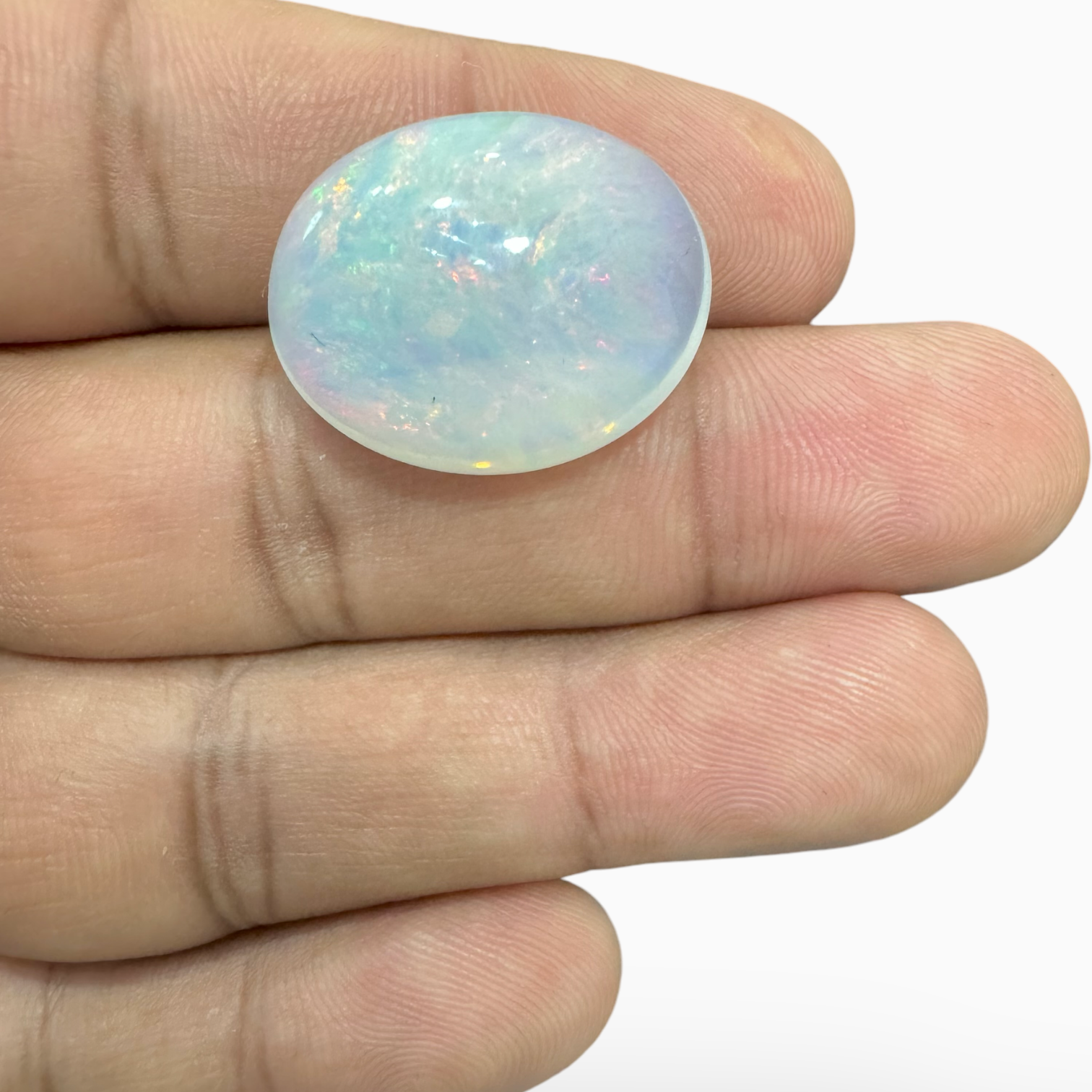
A newer source. Ethiopian opals come from Ethiopia in Africa. They were first found in the early 1990s but became famous after 2008, when miners found a large deposit in the Welo region.
Bold colours. They are known for vibrant patterns with reds, greens, blues and yellows.
Hydrophane. Ethiopian opals can absorb water and turn more transparent. When they dry out, their colours return to normal.
What are Australian opals?
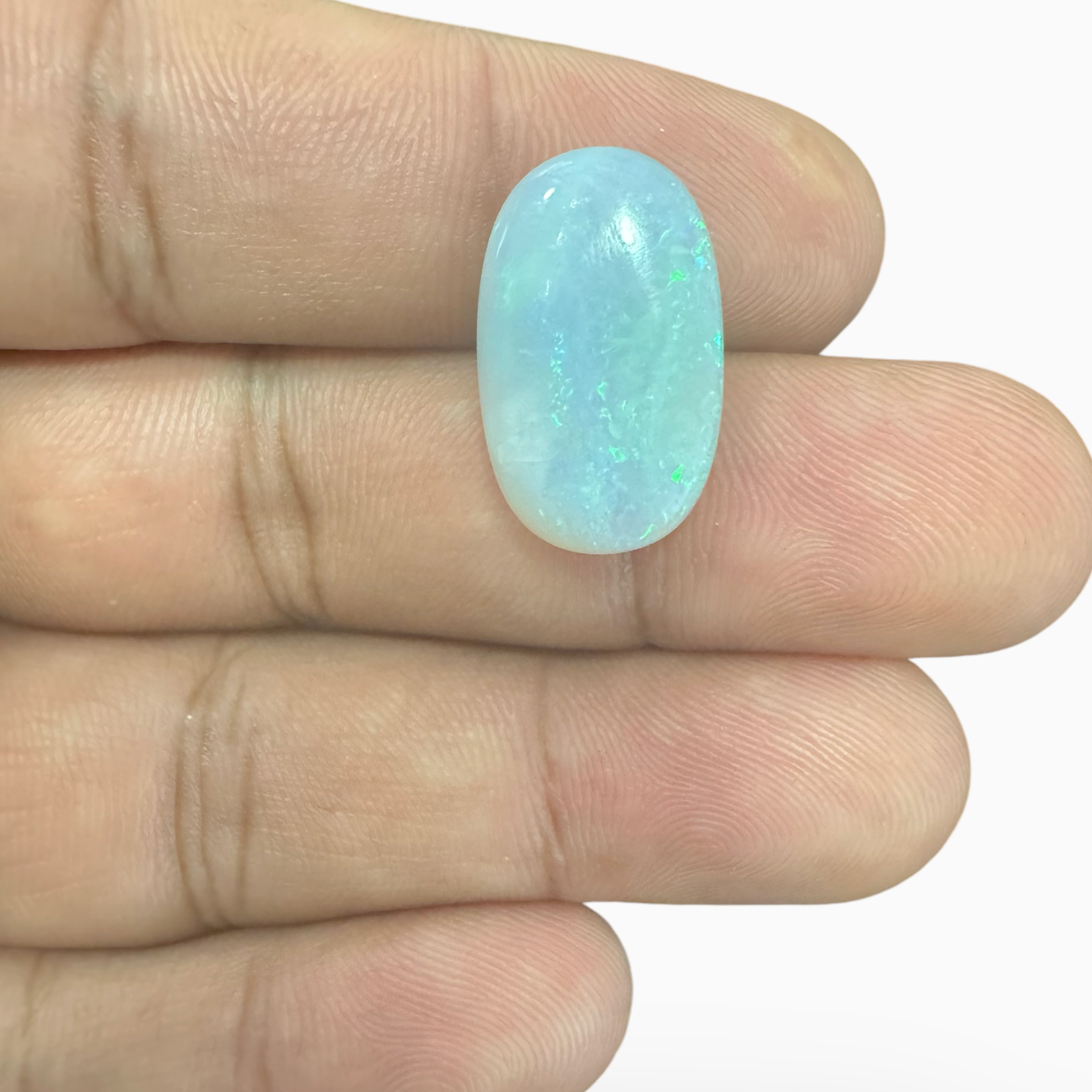
The world's main source. Opals are made of tiny spheres of silica that trap light and split it into colours. Australia is the largest supplier in the world and produces 95% of the world's opals. They have been mined there for over 100 years.
Famous fields. Opals from places like Lightning Ridge and Coober Pedy are highly valued for their bright, stable colours.
Not hydrophane. Australian opals are more solid and less affected by water, which makes them durable and long-lasting.
Types of Australian opal
| Type | Where it is found | What it looks like |
|---|---|---|
| Black opal | Lightning Ridge, New South Wales | Dark background that makes the colours pop. The most expensive type of opal. |
| White opal | Coober Pedy, South Australia | Light or white background with soft colours |
| Boulder opal | Queensland | Colour set in ironstone, often with patterns that look like paintings |
| Crystal opal | Australia | Transparent or semi-transparent with vibrant colours |
For more on every kind of opal, read colour and types of opals.
Why are Ethiopian opals more affordable?
- Plenty of supply. Ethiopian opals are found in large amounts, especially in Welo, so prices stay lower. Australian opals are harder to find, and some Australian mines are running out.
- Lower mining costs. Labour and production costs are cheaper in Ethiopia. In Australia, stricter rules, high labour costs and advanced equipment make mining more expensive.
- Hydrophane nature. Because Ethiopian opals absorb water, they need extra care to avoid damage. Some buyers prefer the stability of Australian opals, which adds to their value.
- Fewer treatments for Australian opals. Australian opals usually come out of the ground looking beautiful and need very little treatment. Ethiopian opals sometimes need cleaning or other processes to bring out their best colours.
- Reputation. Australian opals have been famous for a long time and are seen as a luxury item. Ethiopian opals are newer to the market and do not yet have the same prestige.
Why are Australian opals so expensive?
Beyond limited supply and high mining costs, a few more things push Australian prices up.
- Rarity: opals are rare gemstones, and Australian opals are the rarest of all. A high-quality black opal is especially hard to find.
- Top quality: Australian opals are known for the brightest, most vivid colours.
- Tough mining: miners dig deep into the earth in harsh conditions, and it takes a lot of time and effort to find good stones.
- One of a kind: no two opals are the same. Some show patterns that look like landscapes, stars or paintings.
- National pride: opal is Australia's national gemstone, loved for its link with Australian history and culture.
A short history of Australian opals
Aboriginal legend. Australian Aboriginal people believe opals were created when a rainbow touched the earth, and they see opals as full of spiritual power.
Discovery. Opals were first found in Australia in the late 1800s. Since then, Australia has become the top producer.
Record holders. The largest opal ever found is called the "Olympic Australis". Coober Pedy in South Australia is known as the "Opal Capital of the World".
Why Ethiopian opals are still a great choice
- Affordable beauty: you can own a beautiful gemstone without spending too much.
- Unique patterns: many show rare, striking patterns that look like works of art.
- Light to wear: their hydrophane nature makes them lighter, which suits earrings and pendants.
- Vibrant colours: their colours can rival far more expensive stones.
Which opal should you choose?
Choose Ethiopian if you want a high-quality, colourful and unique opal that fits your budget.
Choose Australian if you want a stone with a long history and extra durability.
Are Australian opals worth the price?
For many buyers, yes. You are paying for rarity, top colour, stability and a stone that is part of Australia's culture and history. Each one is unique, like a small work of art.
Whichever you choose, make sure it is genuine. Our guide on how to check if an opal stone is real can help.
How to care for opals
Caring for Ethiopian opals
- Avoid soaking: do not leave it in water for long, as this can change its look for a while.
- Protect from heat: keep it away from high heat and sudden temperature changes.
- Store safely: wrap it in a soft cloth to avoid scratches.
Caring for Australian opals
- Clean simply: use warm water and a soft cloth. Avoid soap and harsh chemicals.
- Store softly: keep it in a soft pouch to prevent scratches.
- Not too dry: avoid storing it in very dry places, as opals can lose moisture.
- Handle gently: do not wear opals during rough activities.
Browse all our opal stones to see the difference in person.