
Pukhraj (Yellow Sapphire): Colour, Price and Buying Guide
Pukhraj is natural yellow sapphire. Learn how colour, clarity, origin and heating change its price, how to avoid look-alikes, and what to check before you buy.
On this page
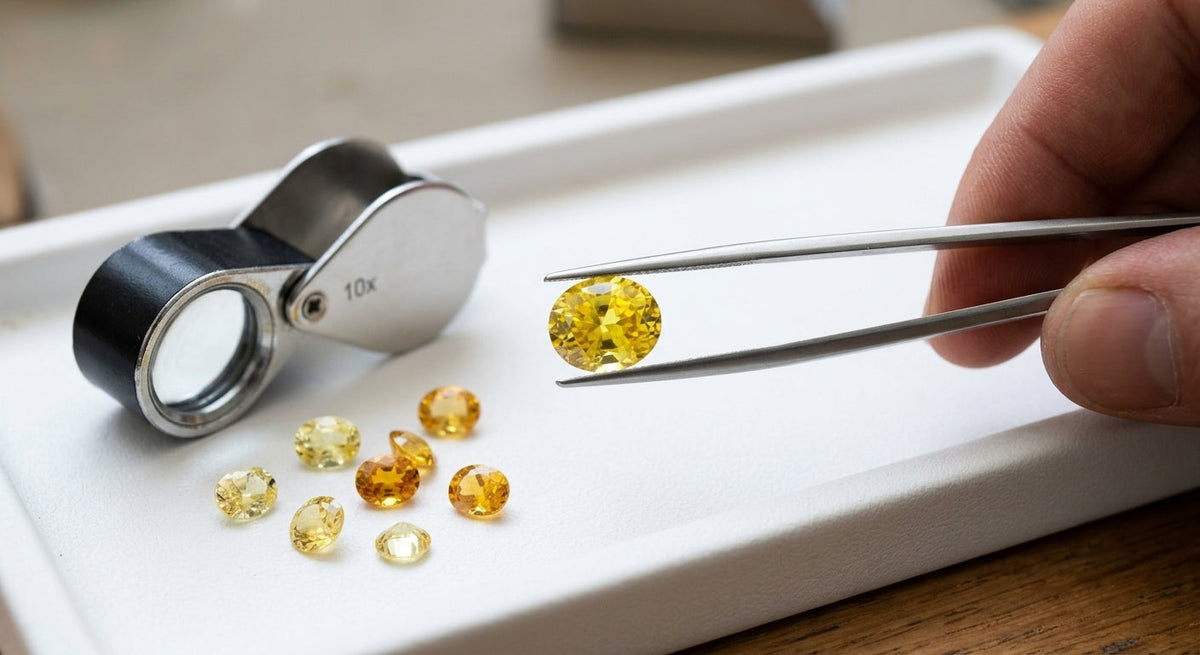
Pukhraj is yellow sapphire, the same mineral as blue sapphire and ruby, coloured yellow by traces of iron. It is one of the nine Navratna stones and one of the most requested gems in our Dubai showroom.
The short version: colour sets the price, clarity comes next, and a lab report tells you what you are really buying. This guide shows you how to judge all three.
What is Pukhraj stone?
Pukhraj (also written Pukhraaj or Pushparaga) is the Hindi and Urdu name for natural yellow sapphire. Gemmologists call it corundum, a very hard and tough mineral.
- Hardness: 9 on the Mohs scale, second only to diamond. See our Mohs hardness guide.
- Colour range: pale lemon to rich canary and golden yellow.
- Daily wear: it handles rings and everyday jewellery very well.
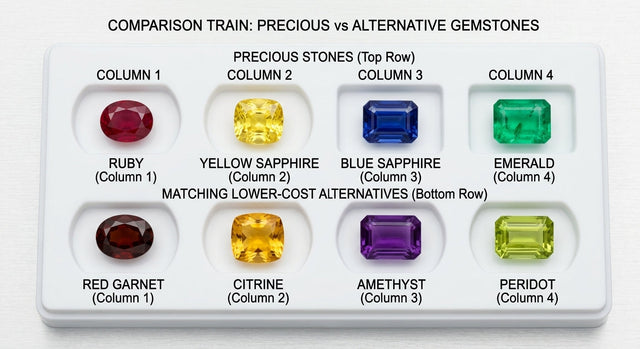
Yellow topaz and citrine are sometimes sold as "pukhraj". They are different, cheaper stones. Only sapphire is true pukhraj.
Pukhraj colour: the biggest price factor
Most buyers want a bright, even yellow that is neither too pale nor too brown.
- Canary yellow: vivid and saturated. The most sought-after.
- Lemon yellow: lighter and fresh. Popular and more affordable.
- Golden yellow: warmer, with a hint of orange.
- Brownish yellow: priced lower, as the brown dulls the stone.
Tip: look at the stone in daylight and indoor light. A good pukhraj stays bright in both.
Clarity, cut and size
Clarity: buyers expect yellow sapphire to look clean to the eye. Small inclusions you can only see with a loupe are normal and do not hurt beauty.
Cut: a well-cut stone sparkles evenly. A badly cut one has a dark or "see-through" centre, called a window.
Size: price per carat rises with size, because fine large stones are rarer. Our guides on price per carat and carat vs size explain why.
Many traditional buyers think in ratti, not carats. Use our carat, ratti and tola converter to switch between them.
Where does Pukhraj come from?
- Sri Lanka (Ceylon): the best-known source for bright, lively yellow.
- Thailand: often deeper, golden tones.
- Madagascar and East Africa: growing sources with good colour.
- Australia: often greener or more golden yellows.
Origin can affect price, but only a lab can give an opinion on it. Our sapphire origin guide explains why.
Heated vs unheated Pukhraj
Most yellow sapphire is heated to improve colour. Standard heating is permanent and widely accepted.
- Heated: natural sapphire, better colour for the money.
- Unheated: rarer and priced higher. Many astrology buyers ask for it.
- Beryllium-diffused: a deeper treatment that changes colour a lot. It must be disclosed and is worth much less.
Some natural, unheated yellows from Sri Lanka can fade slightly in strong light. Read can Sri Lankan yellow sapphires fade and our heated vs unheated sapphire guide before you choose.
Real vs fake Pukhraj: what to watch for
- Yellow topaz or citrine: softer and much cheaper. A lab test separates them instantly.
- Synthetic sapphire: lab-made, chemically the same, but worth a fraction.
- Glass: scratches easily and often shows round gas bubbles.
- "Too perfect for the price": a large, flawless canary stone at a low price is a warning sign.
The safest step is a lab report. Learn how to read a gemstone lab report, or see our authentication page.
Pukhraj in tradition
In Vedic astrology, Pukhraj is linked with Jupiter (Guru). Traditionally it is set in gold and worn on the index finger, often first put on during a Thursday morning.
These are cultural beliefs, not proven effects. Please read our gemstone disclaimer. If you follow these traditions, ask your astrologer for the weight they suggest, then choose the best-quality stone within that range.
Comparing Navratna stones? See our Navratna guide.
How to choose your Pukhraj: a quick checklist
- Colour first: bright, even yellow with little brown.
- Eye-clean: no inclusions you can see at arm's length.
- Lively cut: no dark centre or window.
- Treatment in writing: heated, unheated, or anything else.
- Lab report: for any important stone.
- Return window: so you can get a second opinion.
Buy natural Pukhraj from Raza Gems
Browse our natural yellow sapphire (Pukhraj) collection, each listed with its weight, size and details. You can also see our wider sapphire collection.
- Want it in a ring? We make custom jewellery in about one week after you approve the design.
- Delivery: 3–5 working days in the UAE, 5–10 working days internationally.
- Returns: 30 days.
- Payment: cash on delivery for smaller stones; larger stones need a part payment in advance.
Not sure which stone suits your budget? Message us on WhatsApp at +971 58 585 8602 or visit us at Gold & Diamond Park, Al Quoz, Dubai.
FAQs
Is Pukhraj the same as yellow sapphire?
Yes. Pukhraj is the traditional name for natural yellow sapphire. Yellow topaz and citrine are different stones.
Is heated Pukhraj real?
Yes. Heated pukhraj is natural sapphire whose colour has been improved by heat. It is not synthetic.
Which is better, Ceylon or Thai Pukhraj?
Neither is better in every case. Ceylon stones are known for bright, lively yellow; Thai stones are often more golden. Judge the stone in front of you.
How can I check if my Pukhraj is real?
By eye you usually cannot be sure. A gem lab can confirm it is sapphire and whether it is natural and treated.
Keep reading
Ready to find your stone?
Natural gemstones and jewellery from our Dubai showrooms, shipped worldwide with tracking.