
Heated vs Unheated Sapphire: Which Should You Buy?
Heated and unheated sapphires are both natural. Learn what heat does, why most sapphires are heated, how labs detect it and what to ask before you buy.
On this page
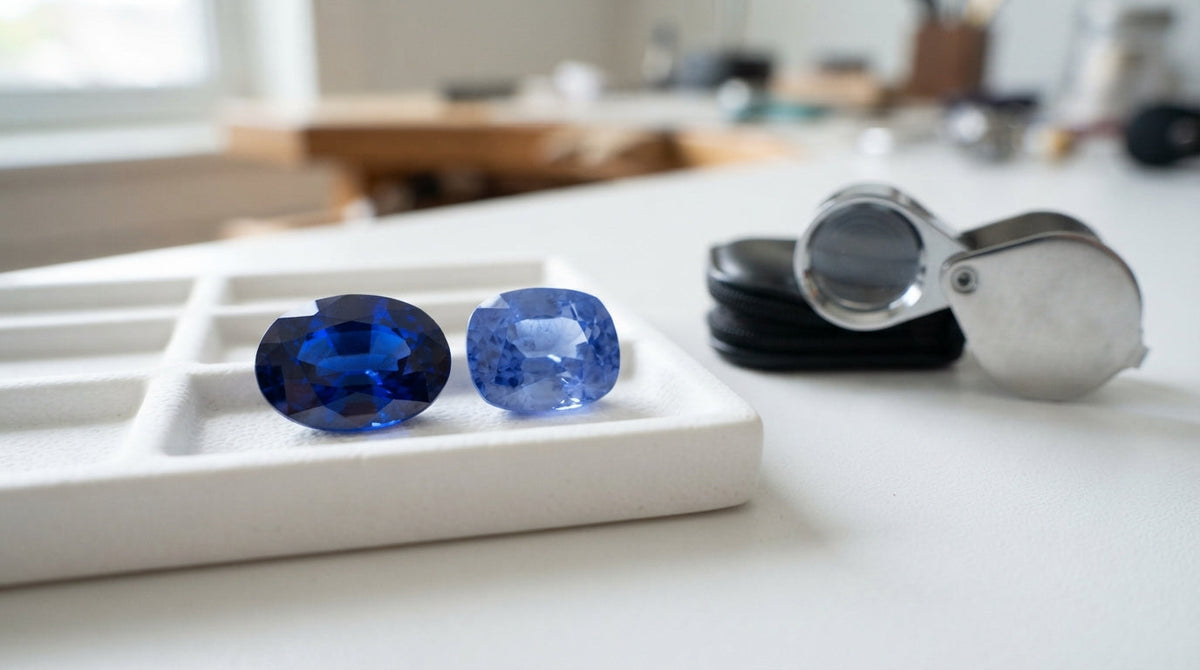
The short answer: a heated vs unheated sapphire choice is about rarity and price, not about real versus fake. Both are natural sapphire. Heating is a permanent, widely accepted treatment used on most sapphires, while a stone proven unheated by a lab is rarer and usually costs more for the same look.
So the right pick depends on your budget and what matters to you. This guide explains what heat does, how labs tell the difference and what to ask before you buy.
What heating does to a sapphire
Sapphire is heated in a controlled furnace, often at very high temperatures. The heat changes how the colour-causing elements and tiny inclusions sit inside the crystal.
- Clears silk: fine rutile needles (called silk) can make a stone look hazy. Heat can dissolve them, so the sapphire looks brighter and cleaner.
- Improves blue: heat can deepen a pale blue, lighten an overly dark one or remove a grey or purple tint.
- Evens out colour: it can reduce patchy colour zoning.
- Develops yellow and other colours: some pale stones turn yellow or richer pink after heating.
A well-known example is Sri Lankan "geuda": milky, pale sapphire rough that can turn into clear blue stones after heating.
Why most sapphires are heated
Very little sapphire rough comes out of the mine with fine colour and clarity. Heating turns much more of it into stones people want to wear.
- It is permanent: the colour from standard heating does not fade with normal wear.
- It is traditional: heating sapphire and ruby has been practised for centuries.
- It is accepted: the trade treats it as normal, as long as it is disclosed.
- It makes sapphire affordable: without heat, good blue sapphire would be far scarcer and pricier.
Because of this, it is safest to assume a sapphire is heated unless a lab report says otherwise. Browse our sapphire collection with that rule in mind.
Heated vs unheated sapphire: the key differences
| Point | Heated | Unheated (no indications of heating) |
|---|---|---|
| Natural sapphire? | Yes | Yes |
| How common | The majority of the market | A small share |
| Colour stability | Permanent in normal wear | Natural colour (some yellows can fade, see below) |
| Look | Often cleaner and brighter | May show more silk or softer glow |
| Price at same quality | Lower | Higher premium |
| Proof needed | Disclosure | A report from a recognised lab |
How labs detect heating
Labs look at inclusions first, then use instruments. No single clue proves the answer, so they combine several.
Clues under the microscope
- Intact silk: long, sharp, unbroken rutile needles suggest the stone has not been heated much.
- Broken or dotted silk: needles that look like dotted lines can point to heating.
- Altered crystals: tiny mineral crystals that look melted, or have disc-like stress fractures ("halos") around them.
- Healed fissures and residue: glassy material in fine cracks may show heating with a flux.
Instrument tests
Labs also use spectroscopy (such as infrared and UV-visible) and chemical analysis. These help confirm heat and also catch other treatments that look similar to the eye.
Why some stones are hard to call
Gentle, low-temperature heating can leave few visible signs. Gem labs keep researching this, as in GIA's study of visual clues to corundum heat treatment.
That is why reports say "no indications of heating" rather than promising a stone was never heated. It is the lab's opinion based on current methods.
Other treatments not to confuse with heat
Standard heating is one thing. Some other treatments also use heat but change the stone far more, and they lower the value a lot more.
- Beryllium (lattice) diffusion: heating with beryllium to create yellow, orange or padparadscha-like colours. It needs advanced lab testing to detect.
- Surface diffusion: blue colour added to a thin outer layer. Re-polishing can remove it.
- Glass filling: low-grade, cracked sapphire filled with glass. It is fragile and worth much less.
- Newer heating methods: research also covers heating under pressure, which is one more reason to rely on a recent report from a recognised lab.
If a report mentions anything beyond "heated", read the comments carefully and ask what it means. Our guide to synthetic vs natural sapphires covers a different issue: lab-grown stones.
A note on yellow sapphire
Yellow sapphire adds a twist. Some natural yellow colours, especially in certain Sri Lankan stones, can fade a little in strong light, while heated yellow is generally stable.
We explain this in can Sri Lankan yellow sapphires fade. If you are choosing a yellow sapphire (pukhraj), ask the seller about colour stability as well as heat.
Value: how much does heat matter?
We will not give numbers, because they change with every stone. But the logic is simple.
- Unheated carries a premium: a lab-confirmed unheated sapphire usually costs more than a heated one of similar colour, clarity, cut and size.
- The premium grows with quality: the finer and larger the stone, the bigger the gap tends to be.
- Quality still comes first: a fine heated sapphire can be worth more than a dull, very included unheated one.
- Origin plays a part: origin, as stated on a lab report, also affects price.
For the full picture, see the 4Cs of sapphire.
Which one is right for you?
- Choose heated if: you want the best colour and size for your budget for everyday jewellery.
- Choose unheated if: rarity matters to you, you are buying a collector stone, or you prefer untouched material.
- Traditional buyers: some people who wear blue sapphire (neelam) for astrological reasons prefer unheated stones, as it is traditionally believed an untreated gem is better. That is a personal belief, not a gemmological fact.
Do heated and unheated sapphires need different care?
Not really. Sapphire is hard and tough, and the result of standard heating is permanent. Clean either one with warm soapy water and a soft brush.
The exception is a stone with glass filling or fissures with residue. Treat those gently and avoid harsh chemicals and strong heat.
What to ask before you buy
- "Is this sapphire heated?" Get the answer in writing.
- "Is there a lab report, from which lab, and can I see it?" Check the report number matches the stone.
- "Does the report show any other treatment?" Look for diffusion, filling or residue notes.
- "If unheated is claimed, where does it say so?" Look for wording like "no indications of heating".
- "What is your return policy?" A fair window lets you get a second opinion.
Ask for the lab report before you pay — at Raza Gems we show it on major stones. Our certifications page explains how to read one.
FAQs
Is a heated sapphire a real sapphire?
Yes. A heated sapphire is a natural, mined sapphire that has had its colour or clarity improved by heat. It is not synthetic and not fake.
Does a heated sapphire lose its colour over time?
No. Colour from standard heat treatment is permanent in normal wear. Stones with other treatments, such as surface diffusion or coatings, are a different matter.
How can I tell if my sapphire is heated?
Usually you cannot be sure by eye or with a loupe. A gem lab checks inclusions under a microscope and uses instruments to give an opinion on its report.
Is an unheated sapphire worth the extra cost?
It depends on your goal. For rarity or a collector stone, many buyers feel it is; for beautiful everyday jewellery, a heated stone often gives better colour and size for the money.
Can labs always detect heat treatment?
Not always. Low-temperature heating can leave few signs, so reports say "no indications of heating" as an opinion based on current methods.
Keep reading

Ready to find your stone?
Natural gemstones and jewellery from our Dubai showrooms, shipped worldwide with tracking.